Buffalo Nickel Value: What It’s Worth and Why

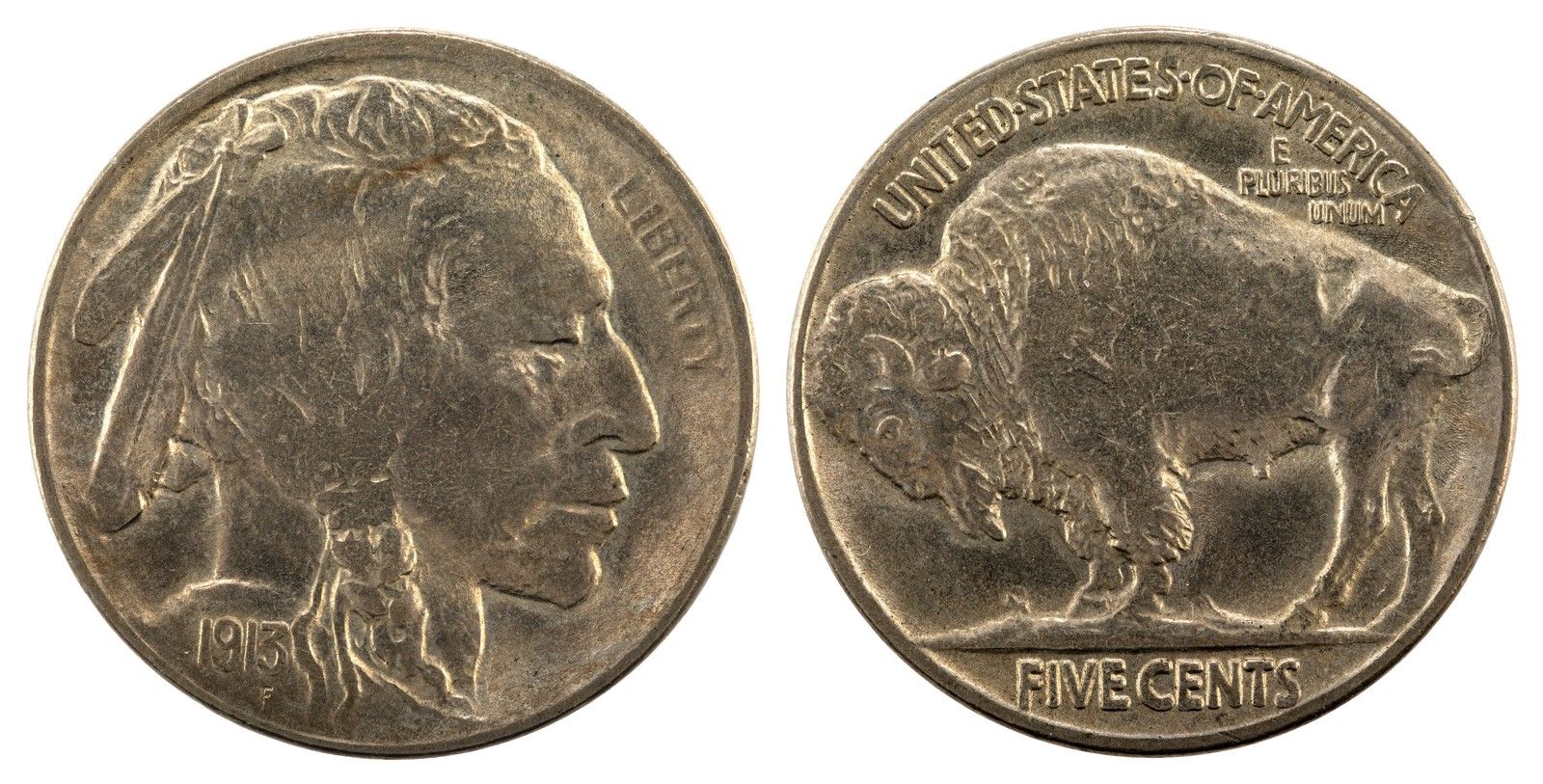
In September 1911, without any commission, the sculptor James Earle Fraser sent the Treasury Secretary his idea for a new nickel: an Indian on one side and a buffalo on the other, a pairing he called “purely American.” The coin entered circulation in 1913 and stayed until 1938, and its most famous weakness, a date that wore off with use, was spotted within weeks.
About 1.2 billion were struck, so most Buffalo nickels, also called Indian Head nickels, are worth a few dollars. This guide explains what drives Buffalo nickel value, which dates and varieties bring real money, and how to check the coin in your hand.
- Worn common dates from the 1920s and 1930s bring about $1 to $6; uncirculated examples run about $35 to $75.
- A coin with its date worn away is worth cents: “20 cents or more,” per CoinWeek.
- Buffalo nickels contain no silver: they are 75% copper and 25% nickel, about 7 cents of metal.
- Check below FIVE CENTS on the reverse: S coins from 1921, 1924, 1926, and 1931 are among the lowest mintages.
- The record: a 1918/7-D overdate in MS-65+ sold for $511,875 in 2024.
The Indian and the Buffalo: Background and History
A Sculptor Pitches a “Purely American” Coin
The idea started inside the Treasury. On May 4, 1911, Eames MacVeagh wrote to his father, Treasury Secretary Franklin MacVeagh, that a new nickel design would be “a permanent souvenir of the most attractive sort.”
The nickel was the one coin the administration could change on its own. The law allowed a new design only once in 25 years, and the Liberty Head nickel it would replace, designed by Chief Engraver Charles Barber, had been in use since 1883.
Fraser, a former assistant to Augustus Saint-Gaudens who had spent his boyhood in South Dakota, moved before anyone asked. His letter of September 19, 1911 made the case: “Most of the heads have been Caucasians with an Indian head-dress; in this case, I have avoided using the war-bonnet and have made a purely Indian type.” MacVeagh gave the go-ahead on January 13, 1912.
Fraser later explained that the portrait combined several men he had modeled from life: “one was Irontail, the best Indian head I can remember; the other was Two Moons; and the third I cannot recall.” Iron Tail was Lakota, and Two Moons Northern Cheyenne. For the bison, the 1913 press placed Fraser’s model at the Bronx Zoo, while tradition names Black Diamond of the Central Park menagerie.
Slot Machines, Lawyers, and a Bag of New Nickels
One objection nearly stopped the coin. C. W. Hobbs of Worcester, Massachusetts, represented the maker of a new slot machine that rejected counterfeit coins, and he demanded a clear space inside the rim and “a radical change in the cheek of the Indian.”
After a hearing with lawyers on both sides on February 14, 1913, MacVeagh refused, writing that the changes would mean “the practical abandonment of the artistic qualities of the design.” His letter closed: “You will please, therefore, proceed with the coinage of the new nickel.”
Philadelphia began striking the new coin on February 17, one press turning out 120 a minute.
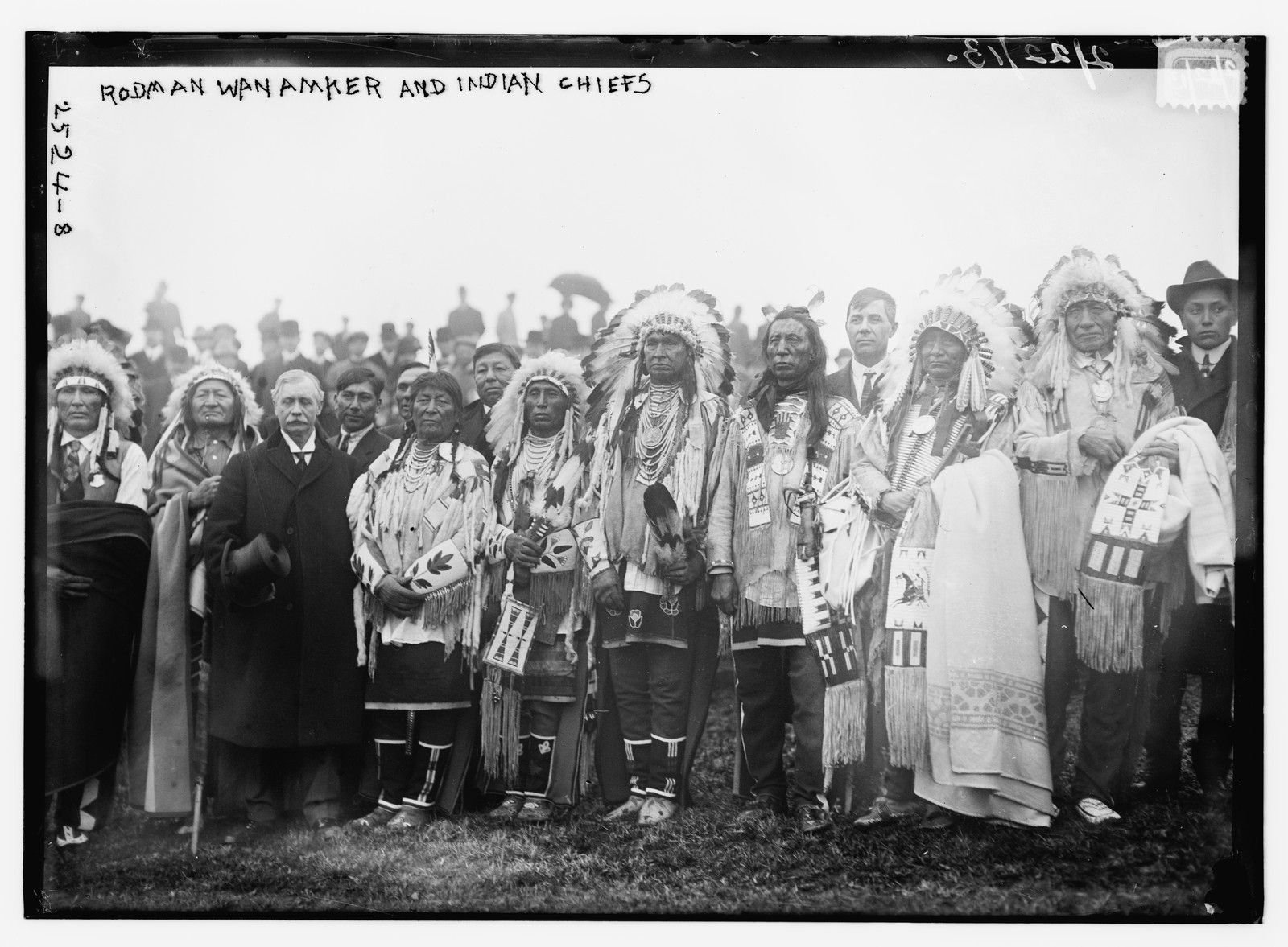
Five days later, on Washington’s Birthday, President Taft broke ground at Fort Wadsworth on Staten Island for a planned National American Indian Memorial, with about 30 chiefs invited, Two Moons among them. The preservationist George F. Kunz opened a bag of the new nickels and handed them out to the President, the chiefs, and the crowd.
Two Flaws Found in Weeks
In March 1913, The Numismatist warned that the date and motto were so faint that “the slightest wear will obliterate them beyond understanding.”
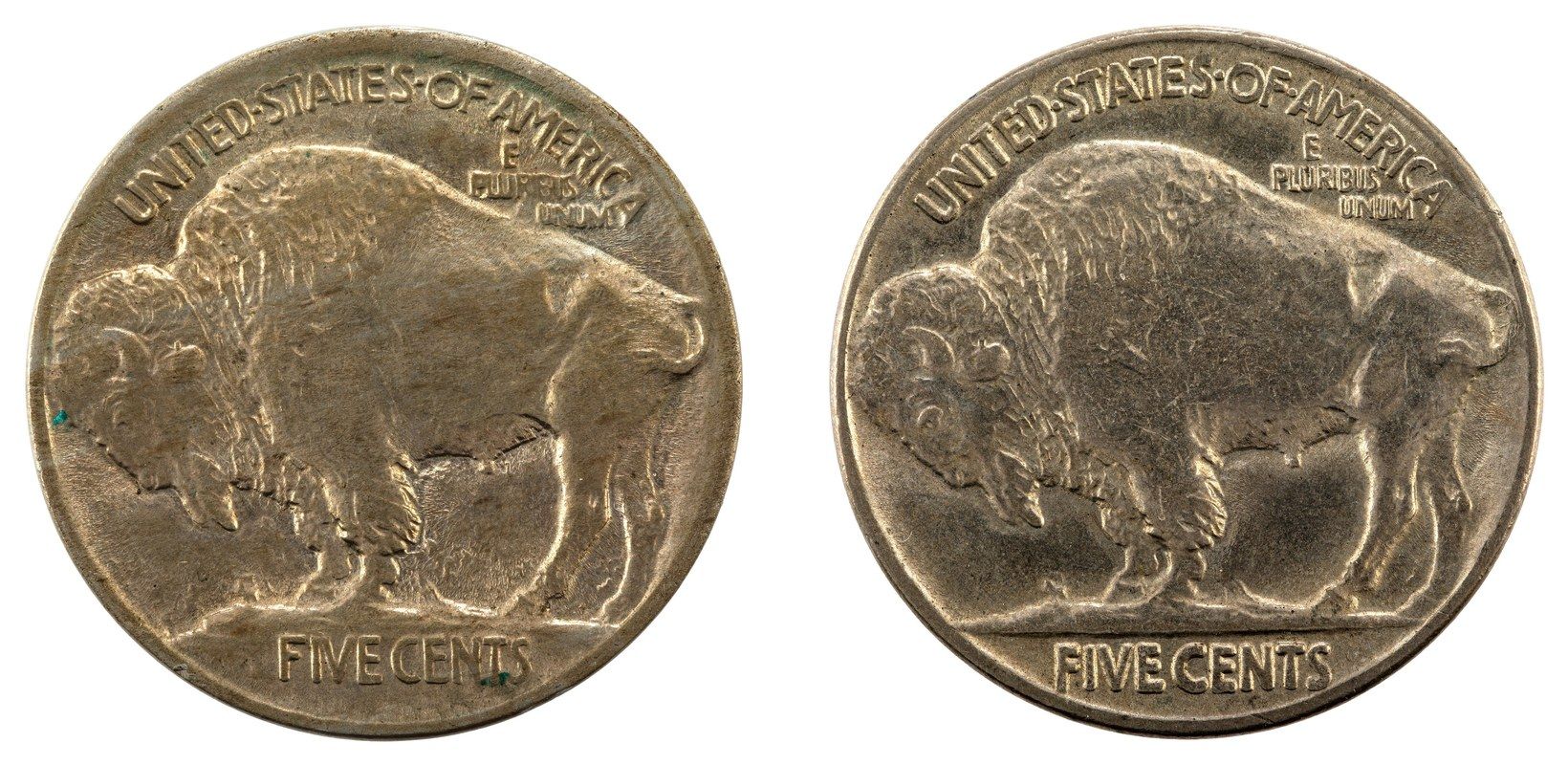
The denomination was fixed first. FIVE CENTS sat on a raised mound beneath the bison, exposed to wear, so that spring Treasury Secretary William G. McAdoo had it recessed below a flat line. Collectors call the two versions Type 1 and Type 2.
The date was harder. Barber explained that it could not simply be cut deeper, because “the date rests upon the shoulder” of the Indian, one of the highest points of the design. “The fact is the design is too large for the size of the coin,” he wrote.
The date was never protected, which is why so many Buffalo nickels turn up today with no date at all.
Twenty-Five Years, Then Jefferson
The Buffalo nickel ran its full 25-year term. Philadelphia, Denver, and San Francisco struck about 1.2 billion in all, though none are dated 1922, 1932, or 1933, and in 1938 only Denver struck them.
When the term ended, a Mint competition drew some 390 entries, and Felix Schlag of Chicago won with the Jefferson design that replaced the Buffalo nickel in late 1938.
Historical context America in 1913
- The 16th Amendment, ratified February 3, 1913, created the federal income tax; that year fewer than 1 percent of Americans paid it, at a rate of 1 percent.
- President Wilson signed the Federal Reserve Act on December 23, 1913.
- Parcel Post service began on January 1, 1913.
- A first-class letter cost 2 cents, so a nickel bought two stamps with change left over.
- A New York subway ride cost a nickel, a fare that held until 1948.
Buffalo Nickel Value: How Much Is Yours Worth?
Start with the honest baseline: most Buffalo nickels are worth a few dollars. Worn coins from the 1920s and 1930s bring about $1 to $6, and a coin whose date has worn away brings less.
The real money sits in three places: low-mintage key dates, a handful of famous die varieties, and coins preserved in top condition.
Dateless Buffalo Nickels
A missing date is ordinary wear, and thousands of dateless Buffalo nickels survive. CoinWeek puts their value at “20 cents or more,” sometimes above $1. A Type 1 reverse still identifies a dateless coin as a 1913, since that design was used only that year.
Acid “date restorer” solutions, sold in coin shops since about the 1950s, bring back a faint date by etching the surface for good. NGC says acid-revealed key dates such as the 1918/7-D “have value, but they are not numerically gradeable,” and they sell for a fraction of what unaltered coins bring.
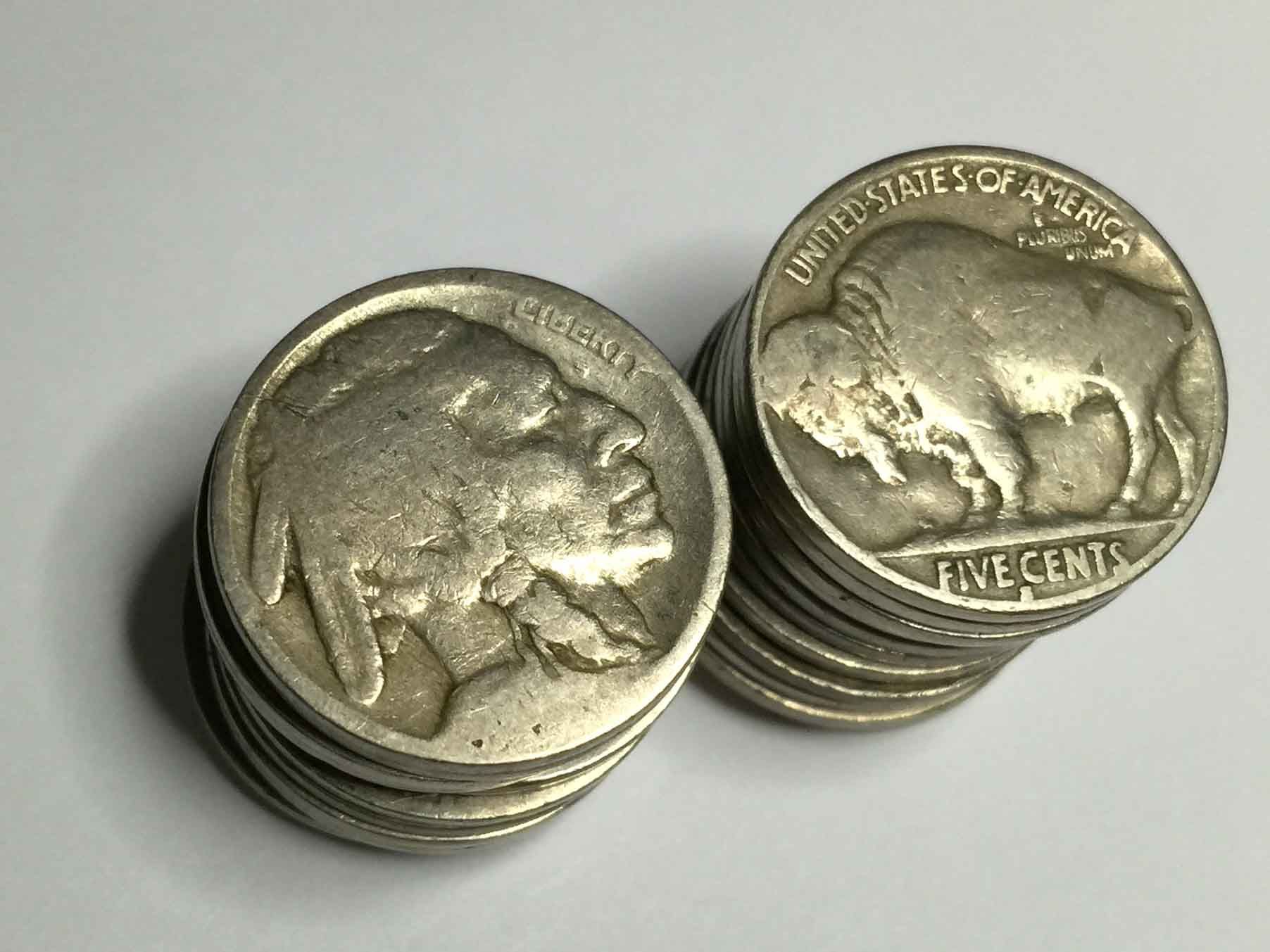
Common Dates: 1936, 1937, and the 1930s
The 1936 and 1937 Philadelphia coins are the two largest Buffalo nickel mintages, with 118,997,000 and 79,480,000 struck. Like the 1935, the 1938-D, and the other 1930s dates, they are worth about $1 to $6 from Good to Very Fine, and about $6 to $13 in Extremely Fine to About Uncirculated.
Worn 1920s Philadelphia dates, such as the 1920, 1925, and 1927 through 1930, run a little higher.
Uncirculated 1937 and 1938-D coins bring about $35 to $45 in MS-63 and $50 to $75 in MS-65; the 1936 and 1935 cost more in gem grades. At MS-67, prices reach about $200 to $290, and the finest MS-68 coins bring four and five figures.
Strike matters too. Dates such as the 1926-D often came from the presses with a weak bison horn and soft details, so a sharply struck example earns a premium within its grade. Professional grading is what separates a $75 nickel from a $285 one.
The Key Dates
Only one Buffalo nickel issue fell below a million coins: the 1926-S, at 970,000.
San Francisco struck most of the rest: the 1913-S Type 2 (1,209,000), 1921-S (1,557,000), 1924-S (1,437,000), and 1927-S (3,430,000). In Good to Very Fine, the 1913-S Type 2 brings about $225 to $400, the 1921-S $75 to $285, the 1924-S $25 to $250, and the 1926-S $40 to $185.
In Mint State the prices climb: the 1921-S, 1924-S, and 1927-S each list near $12,000 in MS-65. The 1926-S, the key of the series, is rare in any Mint State grade: an NGC-graded MS-65 sold for $31,200 in March 2026, while PCGS lists its own MS-65s at $130,000.
The 1931-S tells the opposite story. Only 1,200,000 were struck, but the low figure drew attention, and in 1934 the Treasury was still selling them to collectors at face value plus postage. So many were saved that an MS-65 lists at about $325.
Famous Varieties and Errors
1937-D 3-Legged (FS-901). The best-known Buffalo nickel came from an overused Denver die pair, polished so heavily that the bison’s front right leg vanished above the hoof. The usual explanation is a worker removing clash marks, but specialists still debate it, and estimates of how many were struck run from about 10,000 to 20,000.
In August 1940 a dealer advertised one in Very Fine for 85 cents. Today PCGS lists the 3-Legged at about $475 in Good, $875 in Very Fine, and $32,500 in MS-65.
1918/7-D overdate. One Denver die was hubbed with both 1917 and 1918 dates, so traces of the 7 show under the 8. NGC believes thousands were worn dateless in circulation. Survivors bring about $750 in Good to $3,750 in Very Fine; gems are six-figure coins.
1916 doubled die obverse (FS-101). The date, feathers, and hair ribbon are all doubled, visible without magnification. A few hundred are known, and PCGS lists even a well-worn example in Good at $5,250.
Others worth checking. The 1936-D 3½ Legs came from the same kind of polishing on a different die ($500 to $2,150 from Good to Very Fine). The 1935 doubled die reverse (FS-801) shows its doubling most plainly on FIVE CENTS.
Copper and Nickel, No Silver
Buffalo nickels are 75% copper and 25% nickel, the same alloy as today’s nickel. With copper at $13,955 a metric ton and nickel at $16,095 (LME, November 6, 2026), the metal in a 5-gram Buffalo nickel is worth about 7 cents.
Notable Auction Records
| Coin and Grade | Price Realized | Auction House | Sale Date |
|---|---|---|---|
| 1918/7-D, MS-65+ (PCGS) | $511,875 | GreatCollections | February 2024 |
| 1916 Doubled Die Obverse, MS-64 (PCGS) | $264,500 | Heritage Auctions | September 2005 |
| 1937-D 3-Legged, MS-66+ (PCGS) | $99,875 | Legend Rare Coin Auctions | October 2021 |
| 1913 Type 1 Proof, PR-68 (PCGS) | $96,937.50 | Legend Rare Coin Auctions | September 2021 |
| 1913-S Type 2, MS-67+ (PCGS) | $84,000 | Heritage Auctions | August 2025 |
| 1937-D 3-Legged, VF-20 (PCGS) | $1,037 | Heritage Auctions | April 2026 |
How to Check Your Buffalo Nickel
Four Checks for Any Buffalo Nickel
- The date. Look at the Indian’s shoulder, at the lower left of the obverse. If the date is gone, the coin is dateless; if its reverse shows FIVE CENTS on a raised mound, it is a 1913 Type 1.
- The mint mark. Turn the coin over and look below FIVE CENTS. A D means Denver and an S means San Francisco. Philadelphia coins carry no mint mark, and no Buffalo nickel has a P.
- The F. The small F below the date is Fraser’s initial, found on coins from every mint.
- The variety spots. On a 1937-D, count the bison’s legs. On a 1918-D, look under the 8 for traces of a 7. On a 1916, look for a doubled date.
A genuine Buffalo nickel weighs 5.00 grams, measures 21.2 millimeters across, and has a plain edge.
Altered Coins and Look-Alikes
The valuable coins in this series attract alterations:
- Tooled 3-Leggers. Most fake 1937-D 3-Legged nickels are ordinary coins with the leg scraped away, leaving a freshly polished patch where it stood. A genuine coin keeps the hoof, shows a line of small raised lumps falling from the hind legs toward the ground, and has a thin, rough rear leg and die erosion at the back of the Indian’s neck.
- Added mint marks and altered dates. NGC has examined D mint marks glued or embossed onto Philadelphia coins to imitate the 1926-D, and a 1918/7-D faked with both an added D and an altered date.
- Gold-plated nickels. Gold-plated Buffalo nickels are aftermarket novelties worth no more than the coin underneath.
When Professional Appraisal Makes Sense
For a worn common date, a grading fee costs more than the coin is worth. Certification earns its cost in three cases:
- A 1913-S, 1921-S, 1924-S, or 1926-S, or any Buffalo nickel with full, original luster
- A 1937-D with three legs, a 1918-D with a 7 under the 8, or a 1916 with a doubled date
- A coin you suspect has been altered or acid-treated
Professional services like PCGS or NGC provide authentication and a grade the market trusts. If you’ve inherited a jar or an album of Buffalo nickels and aren’t sure which ones deserve a second look, Blanchard’s numismatists can evaluate coins like these.
What Collectors and Investors Watch
Buffalo nickels sit in two markets. Worn common dates are an inexpensive way to own a classic American design. Key dates, varieties, and top-grade coins trade on scarcity and certified populations, where a single grade point can move a price by thousands of dollars.
The tradeoffs are real: dealer premiums on the expensive coins, wide price gaps between grading services, and a market that rewards patience.
Fraser’s design has outlived the coin. Congress put it on a 2001 silver dollar honoring the National Museum of the American Indian, and all 500,000 sold out in two weeks. Since 2006 it has appeared on the American Buffalo, the first coins of pure 24-karat gold the U.S. government struck for investors and collectors.
Altered dates, added mint marks, and tooled legs are common enough in this series that buying certified coins from an established dealer is the practical safeguard. Blanchard offers certified rare coins graded by PCGS and NGC, the standard any reputable dealer should meet.
Frequently Asked Questions
1. What is a Buffalo nickel with no date worth?
A dateless Buffalo nickel is usually worth cents: CoinWeek puts the value at 20 cents or more, sometimes over $1. The date sat on one of the highest points of the design and wore away in circulation, and acid that brings it back etches the coin permanently.
2. Are Buffalo nickels made of silver?
No. Buffalo nickels are 75% copper and 25% nickel, about 7 cents of metal at November 2026 prices. The only U.S. five-cent nickels with silver are the wartime Jefferson nickels of 1942 to 1945.
3. Where is the mint mark on a Buffalo nickel?
The mint mark is on the reverse, below FIVE CENTS: a D for Denver or an S for San Francisco. A Buffalo nickel with no mint mark was struck in Philadelphia, which is normal for the series. The small F under the date is designer James Earle Fraser’s initial.
4. Is a 2005 Buffalo nickel valuable?
The 2005 bison nickel is a Jefferson nickel from the Mint’s Westward Journey series, with a new bison reverse designed by Jamie Franki. Worn examples are ordinary nickels; collectors pay premiums only for top-grade pieces and recognized die varieties.
5. How can I tell if my 1937 Buffalo nickel is the three-legged variety?
It must have a D mint mark below FIVE CENTS, and the bison’s front right leg must be missing above the hoof. Ordinary 1937-D nickels are often altered by scraping the leg away, so have a candidate authenticated by PCGS or NGC.
6. Which Buffalo nickels are the most valuable?
The 1918/7-D overdate and the 1916 doubled die obverse lead the series: a 1918/7-D in MS-65+ sold for $511,875 in February 2024. The 1926-S, 1913-S Type 2, 1921-S, 1924-S, and 1937-D 3-Legged follow. Claims of Buffalo nickels worth millions have no support in the auction record.
Conclusion
Buffalo nickel value follows a clear order: dateless coins worth cents, worn common dates worth a few dollars, uncirculated coins worth tens of dollars, and above them the low-mintage San Francisco dates and a handful of famous die varieties.
Checking takes a minute: find the date on the shoulder, turn the coin over for the mint mark, and look closely at any 1916, 1918-D, or 1937-D. Most will prove to be an affordable piece of Fraser’s “purely American” design.
Ready to own Fraser’s design in gold? Explore Blanchard’s American Gold Buffalo coins to see the Indian and the bison of 1913 struck in 24-karat gold.
Want to read more? Subscribe to the Blanchard Newsletter and get our tales from the vault, our favorite stories from around the world and the latest tangible assets news delivered to your inbox weekly.