Gold Supercycle: Why Investors Bought the Dip in Gold and Silver
Posted on — Leave a commentInvestors rushed back into precious metals after the late-January sell-off, snapping up gold and silver and driving prices sharply higher. Gold rebounded about 6% and silver about 9% as dip-buyers treated the pullback as a brief hiccup in what many are now calling a powerful gold Supercycle.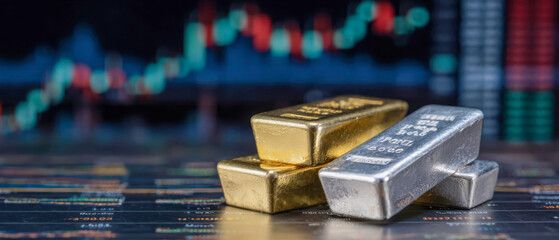
Banks Still Call for Record Highs in Gold This Year
Major global banks continue to forecast higher gold prices this year. Deutsche Bank is sticking with its call for gold to reach $6,000 in 2026. JPMorgan sees prices climbing toward $6,300 by the end of 2026. UBS expects gold could trade near $6,200, calling the recent sell-off a correction in an ongoing bull market. Goldman Sachs says that gold price risk in 2026 is skewed to the upside as both central banks and private investors compete for a limited pool of physical bullion.
Geopolitics: An Ongoing Driver for Gold
Simmering geopolitical tensions are just one of the drivers of the gold Supercycle story. In early February reports that a U.S. jet shot down an Iranian drone near a U.S. aircraft carrier in the Arabian Sea jolted energy markets and reminded investors how quickly Middle East flashpoints can escalate. With the region supplying roughly one-third of the world’s crude oil, any sign of broader conflict tends to push investors into traditional safe-havens like gold. With geopolitical hotspots in nearly every region of the globe, gold’s role as a crisis hedge has become less of a short-term trade and a more permanent safe-haven hedge.
Bonds to Bullion: Structural Portfolio Shift
More importantly, a key reason this cycle looks different is the way gold is increasingly replacing government bonds as a core portfolio asset. Concerns over inflation, fiat currency debasement and mounting government debt have led investors to question the long-term safety of government bonds. Individual investors and wealth managers are now treating gold as a strategic allocation rather than a tactical or speculative trade, often dedicating 10% or more of portfolios to precious metals. This broadens gold’s ownership base and transforms demand into a steady, structural bid that also spills over into silver and other precious metals.
What the January Pullback in Metals Really Was
The January 30 tumble in gold and silver was a classic short-term, shake-out, not a trend-ending pullback. The sell-off flushed out speculative traders who were using high leverage, but didn’t change the long-term structural demand drivers for precious metals.
Safe-haven demand, robust central-bank buying, and long-term U.S. dollar weakness all remain firmly in place, and encouraged investors to step in and buy the dip in gold and silver. Those long-term buyers, especially institutions and private investors diversifying into bullion, are widely expected to hold their positions for years not days or weeks.
Why Gold Deserves the “Supercycle” Label
The gold Supercycle grows off the idea that 2025 marked a structural repricing of gold for a new era, and was not a one-off rally year. Ongoing geopolitical tensions, record levels of government debt and persistent policy and inflation uncertainty have reshaped how global investors view gold and silver, as true forms of currency that are beholden to no nation, currency or government debt. These long-term structural shifts point to a continuation of a multi-year Supercycle in gold, in which pullbacks are buying opportunities. If you are looking to increase your allocation to precious metals, don’t wait. Pullbacks aren’t lasting long.