The Mexican Mint Legacy: Casa de Moneda’s Journey from 8 Reales to Modern Libertads
Posted on — Leave a commentBefore the U.S. dollar dominated global trade, Spanish colonial 8 reales struck at Mexico City circulated from Manila to London as the world’s most trusted currency standard. Casa de Moneda de México was established in 1535, producing these silver coins for nearly three centuries. The history of the Mexican Mint spans Spanish colonial silver that defined global trade, revolutionary independence coinage, and modern Libertad bullion. This article traces Casa de Moneda’s evolution from a colonial supplier to a modern bullion producer.
Casa de Moneda de México: The Americas’ First Mint
Spain’s King Charles V granted royal authorization in 1535 to establish the Western Hemisphere’s first official minting operation, positioning Mexico City as the center of New World silver coinage production.
Foundation and Colonial Era (1535-1821)
Spanish Colonial Establishment
Viceroy Antonio de Mendoza, i.e. Spain’s appointed colonial governor in New Spain, established Casa de Moneda de México following discoveries of massive silver deposits at Zacatecas and Guanajuato. Spain needed local minting capacity to convert New World silver into standardized coinage rather than shipping raw metal across the Atlantic. The Mexican Mint received royal authorization from Charles V, operating as an extension of Spanish Crown authority in the colonies.
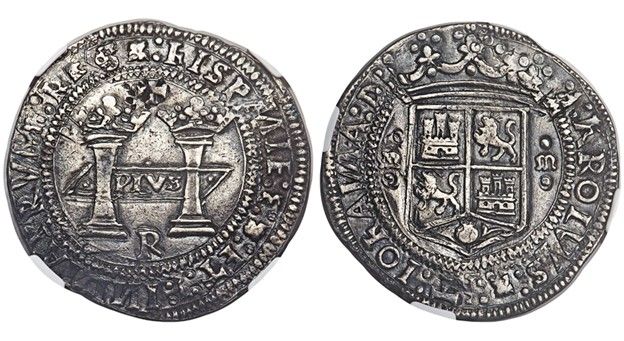
Image: 1538 Charles and Johanna 8 reales obverse and reverse showing Pillars of Hercules and Spanish coat of arms
Source: Antiques and the Arts
Strategic Location and Production Scale
Mexico City’s position near New Spain’s primary silver mining districts made it the logical choice for centralized minting operations. Proximity to Zacatecas, Guanajuato, and other major silver sources reduced transportation costs and security risks. By the 1600s, Casa de Moneda de México had become the New World’s largest coin producer, striking more silver coinage than all other colonial mints combined. The facility operated under strict Spanish oversight, with royal officials monitoring production to ensure proper silver content and prevent fraud.
Technical Innovation Across Centuries
Cob Coinage Methods
Early colonial production used cob (from Spanish “cabo de barra” meaning “end of bar”) techniques. Workers cut silver bar segments to approximate weight, then hand-struck them between dies. This created irregular, often incomplete designs where portions of legends or images fell outside the planchet. Cob coins varied in shape (some nearly round, others distinctly irregular), but met weight standards for commerce.
Transition to Milled Coinage
In 1732, Casa de Moneda de México introduced milled coinage using screw presses that produced uniformly round coins with complete, centered designs. This technological shift aligned Mexican production with European minting standards. The pillar dollar design debuted with this transition, featuring the Pillars of Hercules that would become synonymous with Spanish colonial silver.
Quality Control Systems
Assayer marks identified officials responsible for verifying silver fineness and weight standards. Each assayer’s initials appeared on Mexican coins struck during their tenure, creating accountability and enabling modern collectors to date pieces precisely. This system continued through Mexican independence into the republican era.
Modern Advancement
The 20th century brought electronic refining, automated striking equipment, and computerized quality control. Today’s facility produces bullion to specifications that would have seemed impossible to colonial mint masters.
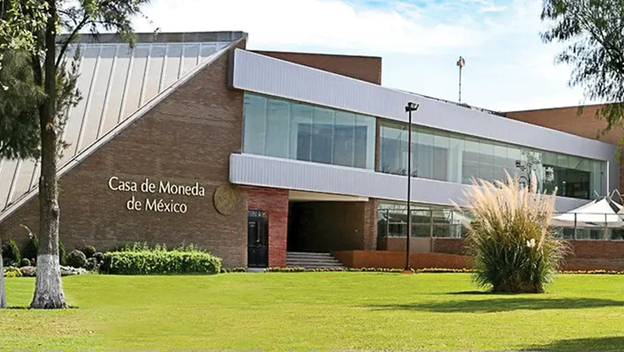
Image: Modern Casa de Moneda de México facility in San Luis Potosí
Source: Milenio
The 8 Reales Coin: Silver Dollar of the Colonial World
The 8 reales silver coin became the most widely circulated currency in world history, serving as the de facto international trade standard for over two centuries. Watch this CoinWeek video to see collectors and dealers discussing historic Mexican coins.
Historical Significance
“Pieces of Eight” Legacy
The term “pieces of eight” originated from the coin’s denomination: eight reales equaling one Spanish dollar. This silver piece circulated across every major trading port from Canton to London to Boston, accepted universally based on its consistent silver content and recognizable design. Pirates and merchants alike preferred 8 reales over any other currency due to its reliable weight and purity. Spanish treasure fleets transported these Mexican coins across the Atlantic, with shipwrecks like the Nuestra Señora de la Concepción preserving thousands of these pieces for modern discovery.
Legal Tender in Early America
The United States Congress declared Spanish 8 reales legal tender from 1792 until 1857, longer than some early U.S. coinage circulated. American merchants sometimes cut these Mexican Mint coins into smaller pieces for making change, establishing the “two bits” terminology that persists today for a quarter dollar. The U.S. dollar’s weight and fineness specifications were modeled closely on the 8 reales coin standard when Congress designed American coinage.
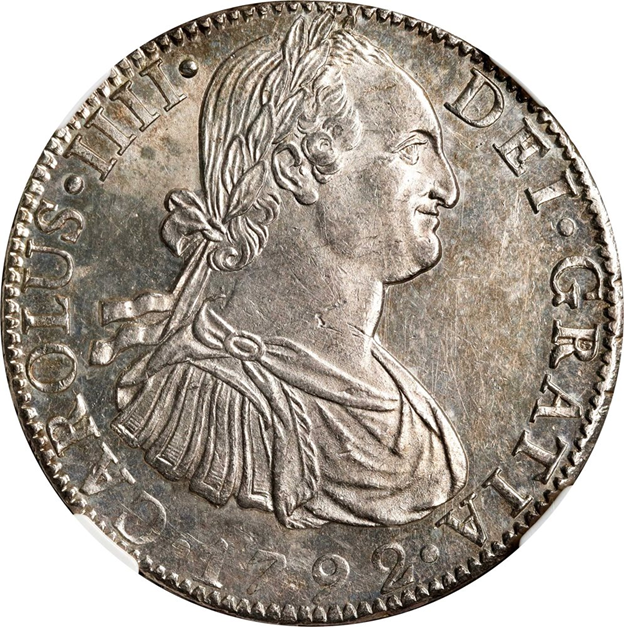
Image: Spanish colonial 8 reales bust type with royal portrait and date 1792
Source: PCGS
Physical Specifications
Silver Content and Weight
Each 8 reales weighed 27.07 grams at .903 fine silver (90.3% pure), yielding approximately 0.786 troy ounces of pure silver per coin. This specification remained remarkably consistent across nearly three centuries of production, enabling global merchants to accept these Mexican Mint silver coins without individual testing. The copper alloy added for durability comprised the remaining 9.7%.
Design Elements and Diameter
Coins measured 38-40mm in diameter depending on striking method and production era. Design elements evolved significantly but typically featured the Pillars of Hercules with “PLUS ULTRA” banners, Spanish coat of arms, or royal portraits, accompanied by denomination and mint marks. Colonial cob pieces showed partial, off-center designs, while later milled coins displayed complete, centered imagery.
Mexican Independence and Republican Coinage 0
Mexico’s break from Spanish rule created new coinage reflecting national identity while maintaining silver standards that preserved international trade acceptance.
Transitional Period (1810s-1820s)
Revolutionary Coinage
Independence insurgents operated makeshift mints in territories they controlled, striking crude coins that funded the revolution. These pieces, often produced in Zacatecas and other rebel-held regions, featured simplified designs and irregular quality but maintained approximate silver content to ensure circulation. Revolutionary coinage represented Mexico’s first assertion of monetary sovereignty.
First Empire Issues
Agustín de Iturbide declared himself Emperor of Mexico in 1822, briefly ruling until 1823. His imperial Mexican Mint coin pieces featured his portrait and title, mimicking European monarchical traditions. These pieces remain scarce due to the empire’s short duration, making them sought after by collectors despite being quickly superseded by republican issues.
Republican Standards and Symbolism
The established Mexican Republic replaced Spanish royal imagery with the eagle-and-snake motif drawn from Aztec legend. This design showed an eagle perched on a cactus devouring a serpent, symbolizing the founding of Tenochtitlan and Mexican heritage. Republican coinage maintained .903 fine silver to preserve acceptance in international commerce where Spanish colonial pieces still dominated.
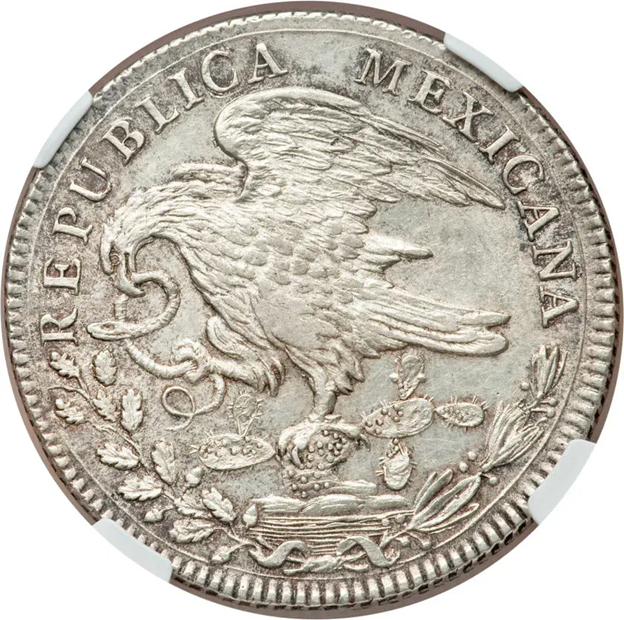
Image: Mexican republican 8 reales with Hook Neck Eagle design from 1823
Source: Numista
19th Century Silver Peso Development
Cap and Rays Design
Early republican silver pesos (1823-1897) featured the distinctive “Cap and Rays” design with a Phrygian liberty cap surrounded by radiating beams. This imagery echoed revolutionary themes while establishing visual distinction from colonial predecessors.
Hook Neck Eagles and Regional Production
The “Hook Neck Eagle” varieties, named for the bird’s curved neck profile, spanned multiple design iterations across decades. Zacatecas, Guanajuato, and other regional mints operated simultaneously under federal authority, each adding mint marks that create collecting varieties. These regional facilities ensured adequate coinage supply across Mexico’s large territory while maintaining consistent silver fineness for trade purposes.
Modern Mexican Mint Production
Casa de Moneda de México transitioned from circulation coinage to bullion production in the late 20th century, establishing the Libertad series as Mexico’s flagship precious metals offering.
Contemporary Bullion Program
Silver Libertad Launch and Design
The Mexican government introduced the Silver Libertad in 1982 as the nation’s official bullion coin. The obverse features the Winged Victory statue (El Ángel de la Independencia) that stands on Mexico City’s Paseo de la Reforma, while the reverse displays the Mexican coat of arms surrounded by historical versions of the national eagle design. This imagery connects modern bullion to Mexico’s numismatic heritage.
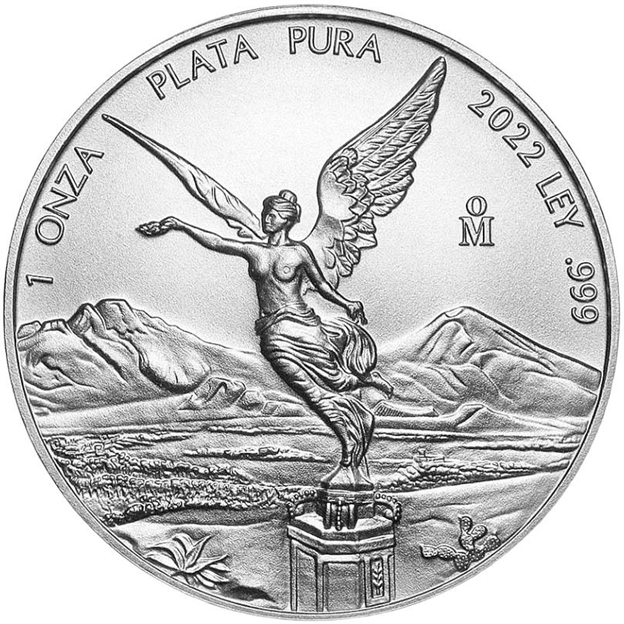
Image: 2022 Mexican Silver Libertad obverse featuring Winged Victory with volcanoes Popocatépetl and Iztaccíhuatl
Source: Numista
Gold and Platinum Offerings
Gold Libertads debuted in 1981, one year before their silver counterparts. These coins mirror the silver design but in multiple fractional weights catering to different investment levels. La Casa de Moneda de México also produced limited platinum Libertads, though these remain far less common than gold and silver issues.
Collector Versions
Beyond standard bullion strikes, the Mexican Mint produces proof Libertads with mirror fields and frosted designs, plus reverse proof and antique finish variations. These collector versions carry substantially higher premiums than bullion strikes due to lower production numbers and enhanced visual appeal.
Technical Specifications of Modern Issues
Silver Libertad Range
Silver Libertads contain .999 fine silver (99.9% pure) in seven standard weights: 1/20 oz, 1/10 oz, 1/4 oz, 1/2 oz, 1 oz, 2 oz, and 5 oz. The mint also strikes large format 1 kilo and 5 kilo versions, though these command significant premiums and see limited production.
Gold Sizes and Mintage Considerations
Gold Libertads are available in 1 oz, 1/2 oz, 1/4 oz, 1/10 oz, and 1/20 oz denominations, all struck in .999 fine gold. Annual mintage figures vary considerably: proof versions typically number only a few thousand pieces, while bullion strikes reach tens of thousands in popular sizes. Lower mintages create collector premiums that exceed bullion value, particularly for proof gold Libertads from early production years.
Collecting Mexican Coins
Mexican coinage spans nearly five centuries, offering collectors both historic silver from colonial and republican eras and modern bullion with numismatic appeal.
Mexican coinage spans nearly five centuries, offering collectors both historic silver from colonial and republican eras and modern bullion with numismatic appeal.
Colonial 8 Reales Pricing
Condition, date, and type determine colonial 8 reales coin value. Cob coinage from the 1500s-1600s trades based primarily on silver content unless exceptionally well-struck or rare. Pillar dollars (1732-1771) and bust types (1772-1821) command premiums for sharp strikes and visible dates. Key dates or low-mintage years can multiply values significantly above silver weight, while common dates in worn condition trade near bullion prices.
Republican Era Rarities and Authentication
Nineteenth-century Mexican silver pesos include numerous scarce dates and mint mark combinations. Hook Neck Eagle varieties from smaller regional mints often carry substantial premiums when properly attributed. Authentication challenges include modern replicas, alterations, and outright counterfeits. Genuine colonial pieces display appropriate weight, correct silver fineness when tested, and die characteristics matching known authentic examples. Replicas often show incorrect dimensions or suspiciously perfect condition for their purported age.
Modern Libertad Investment
Bullion Versus Numismatic Mexican Coins Value
Standard bullion Libertads trade at modest premiums over spot silver or gold prices, typically comparable to other government-issued bullion. Proof versions, low-mintage years, and early-date Libertads (particularly 1980s issues) command numismatic premiums well above metal value. Collectors seek complete date runs or specific finishes, creating demand independent of precious metal prices.
Storage and Liquidity
Modern Libertads tone readily when exposed to air due to .999 fine silver purity. Capsule storage prevents surface oxidation while allowing display. International dealers recognize Libertads, though they may not be as universally liquid as American Eagles or Canadian Maples. Mexican precious metals enjoy strong demand in North American markets but may face buyback spreads in regions where they’re less common.
Authentication and Grading
Professional Certification
Third-party grading services like PCGS and NGC certify both historic Mexican coins and modern proof Libertads. Certification provides authentication and condition assessment, particularly valuable for high-grade proofs or rare colonial pieces where counterfeits exist. Raw (uncertified) colonial coins require dealer expertise to verify authenticity through weight, dimensions, strike characteristics, and silver content testing.
Dealer Selection
Reputable precious metals dealers maintain authentication standards and offer reasonable buyback policies. Established dealers can identify common Mexican counterfeits, including cast fakes of colonial pieces and struck copies of key-date republican silver, protecting buyers from purchasing problematic pieces.
Conclusion
Casa de Moneda de México’s nearly 500-year history encompasses the Mexican 8 reales silver coins that dominated global trade for centuries and modern Libertad bullion serving today’s precious metals investors. Historic 8 reales connect collectors to the currency that financed international commerce across three continents, containing substantial silver content that retains value independent of numismatic premiums. Modern Libertads deliver .999 fine silver and gold in distinctive designs featuring Mexican iconography, trading at modest premiums over spot prices while maintaining international recognition. Explore Blanchard’s selection of Mexican Mint coins to add pieces from the Americas’ oldest mint to your precious metals holdings.
FAQs
1. What is the Mexican Mint called?
The official name is Casa de Moneda de México (Mint of Mexico), established in 1535 as the Americas’ first mint and still operating today.
2. Are Mexican coins worth anything?
Historic Mexican silver coins like 8 reales contain substantial silver content and may carry additional numismatic premiums based on rarity and condition, while modern Libertads trade based on their precious metal content plus modest premiums.
3. Where to buy Mexican Mint coins?
Mexican coins are available through reputable precious metals dealers like Blanchard.