



The 1922 Grant $1 Gold Commemorative: Two Coins, One Legacy
Posted on — 2 CommentsIn the early 1920s, the United States was still grappling with the memory of the Civil War, even as the nation moved deeper into the modern age. Veterans were aging, monuments were rising, and Americans were searching for ways to honor the figures who
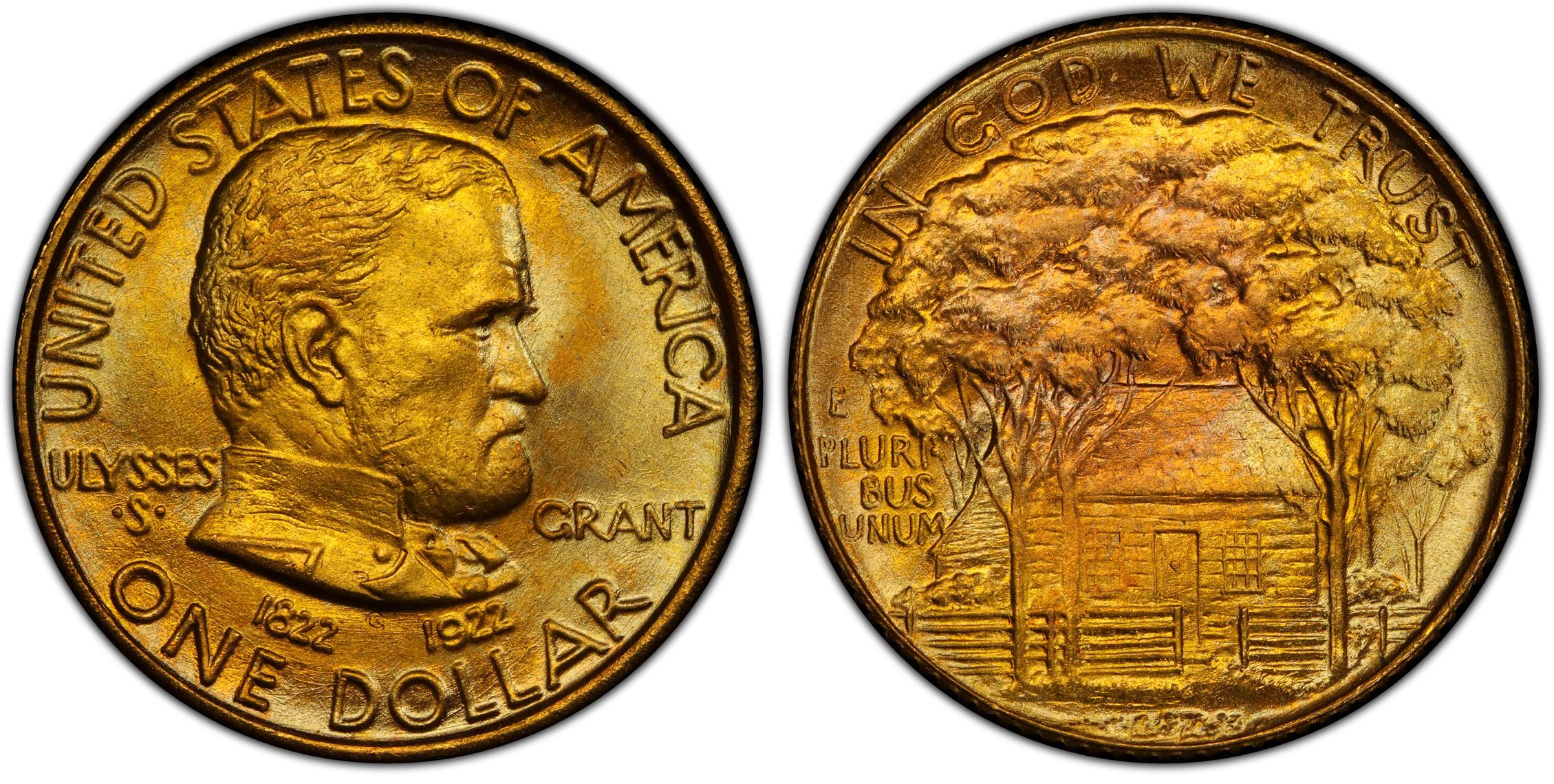
had preserved the Union. Few names carried as much weight as Ulysses S. Grant. Soldier, general, president, and symbol of national endurance, Grant’s legacy was immortalized in gold on one of the most distinctive classic commemorative coins ever struck: the 1922 Grant $1 Gold Commemorative.
What makes this issue especially compelling is that it exists in two varieties, with a star and without a star. Though nearly identical in size and design, the two coins tell subtly different stories, both rooted in remembrance, fundraising, and the way Americans of the early 20th century chose to preserve history.
A Coin Born From Memorialization
The Grant gold dollar was authorized by Congress in 1922 to help fund the construction of the Grant Memorial in Cincinnati, Ohio, Grant’s birthplace. Unlike circulating coinage, commemorative issues like this one were struck specifically to raise money for causes deemed culturally or historically significant. Buyers paid a premium over face value, with the profits directed toward the memorial effort.
Gold was an intentional choice. At one dollar in denomination, the coin was modest in size but rich in symbolism. Gold conveyed permanence, honor, and national gratitude, making it a fitting medium for a figure like Grant, whose leadership had helped shape the course of American history.
The Design: Simplicity With Purpose
The obverse of the coin features a right-facing portrait of Ulysses S. Grant, designed by Laura Gardin Fraser, one of the most respected sculptors of her era. Her work captures Grant with a solemn, steady expression, emphasizing dignity over grandeur. This is not a romanticized hero, but a resolute leader marked by responsibility.
The reverse depicts a laurel wreath encircling the words “Grant Memorial,” along with the denomination and date. The design is restrained, almost understated, which aligns with Grant’s own reputation as a man uncomfortable with excessive praise. Every element serves the larger purpose of commemoration rather than ornament.
The Star and the Story It Tells
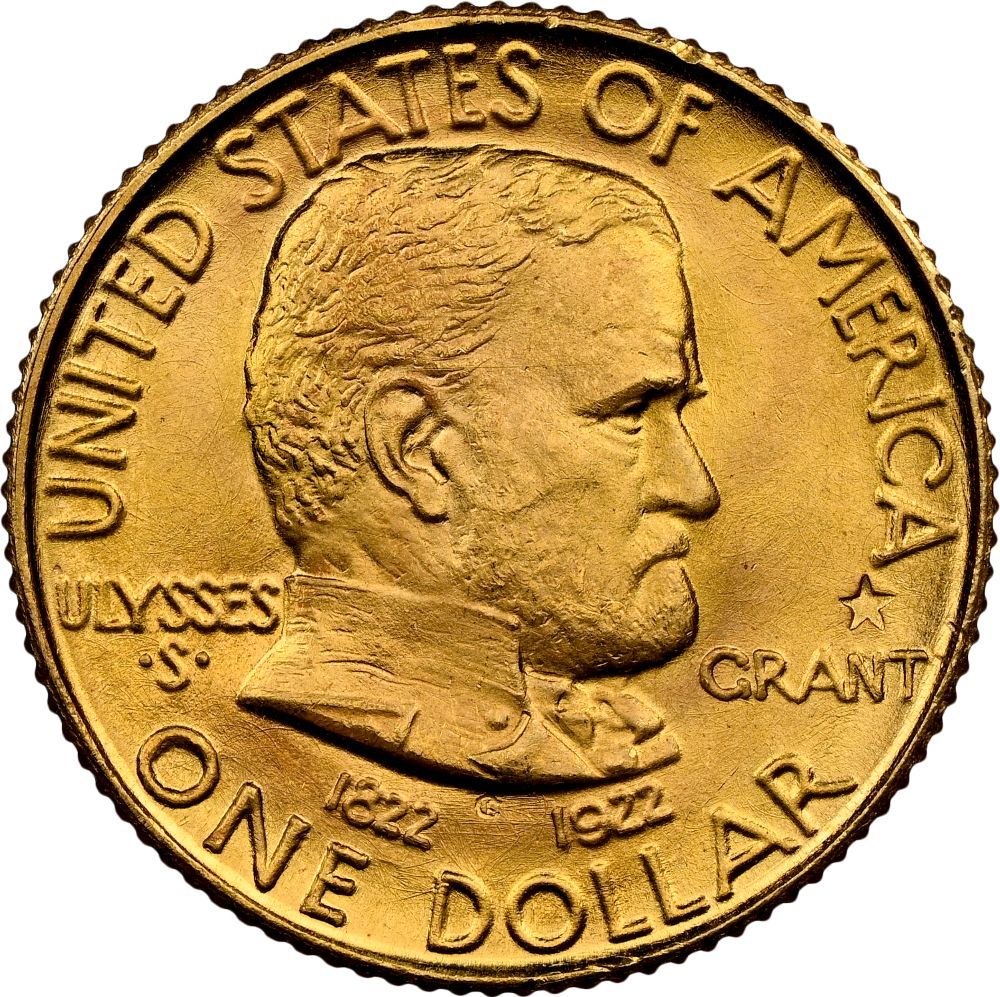
What sets this issue apart in the world of classic commemoratives is the existence of two varieties: one with a small star beneath Grant’s portrait on the obverse, and one without.
The star variety was intended to represent Grant as a general, honoring his military leadership during the Civil War. The non-star variety, by contrast, commemorates Grant as president of the United States. This dual recognition makes the Grant gold dollar unique, as it deliberately acknowledges two distinct chapters of the same life through subtle design variation.
Collectors often find this distinction especially meaningful. Owning both coins is not simply a matter of completeness, but a way to hold two perspectives on Grant’s legacy in hand.
Mintages and Survival
Both varieties were struck at the Philadelphia Mint in 1922, with total mintages remaining relatively low. Mintage varied, based on the “with star” and “without star” versions. With the star, just a bit over 5,000 were minted. Without the star, roughly 95,000 were minted. Most all of the star variety sold, but some without the star were returned to the mint for melting. This was a common outcome for US commemorative coins of all types.
The star variety is generally considered more elusive, though demand for both coins remains strong due to their shared history and paired narrative. Their small size belies their importance, and their survival today speaks to the collectors and institutions that recognized their value early on.
A Reflection of Its Era
The Grant $1 Gold Commemorative is also a reflection of the broader commemorative boom of the early 20th century. This was a time when communities across the country sought federal authorization for coins tied to local history. While some issues leaned toward excess, the Grant dollar stands out for its restraint, clarity of purpose, and historical sincerity.
It is a coin that feels thoughtful rather than promotional, rooted in genuine remembrance rather than spectacle.
Why Collectors Still Care
Today, the 1922 Grant $1 Gold remains a favorite among collectors of classic U.S. commemoratives. Its appeal lies not only in its gold content or limited mintage, but in the layered story it tells. Few coins invite collectors to consider both the military and political legacy of a single individual so directly.
Whether collected individually or as a matched pair, the Grant gold dollars offer a tangible connection to American memory, struck at a moment when the nation was consciously preserving its past for future generations.
Q&A: The 1922 Grant $1 Gold Commemorative
**Why were two versions of the Grant gold dollar created?**
The star and non-star varieties were designed to honor two aspects of Ulysses S. Grant’s life: military service and presidential leadership.
**What does the star represent?**
The star beneath Grant’s portrait signifies his role as a Union general during the Civil War.
**Are both coins made of gold?**
Yes. Both varieties are struck in gold and carry the same weight, composition, and denomination.
**Which variety is rarer?**
The star variety is generally considered slightly scarcer, though both coins are relatively rare due to low survival rates.
**Why were many Grant gold dollars melted?**
Unsold commemorative coins were often returned to the Mint and melted, reducing the number available to collectors today.
**Is this coin considered a circulating issue?**
No. The Grant $1 Gold was struck solely as a commemorative and was not intended for general circulation.







Where’s the star??
Hi Joe! I appreciate your feedback and have uploaded a new image where the star is more noticeable. Check it out, next to The Star and the Story It Tells!