The New Petrodollar Play: Why Oil-Rich Nations Are Turning to Gold
Posted on — Leave a commentHow much more are you paying for gas since the start of the war against Iran? 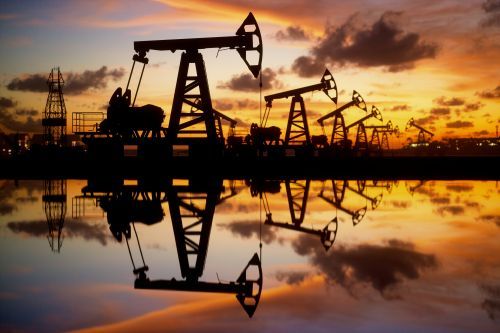
It could be fifty cents a gallon or more. Have you ever wondered what oil-producing nations do with their massive revenues? It turns out that, for decades, based on an agreement with the U.S., oil-producing countries would buy U.S. Treasuries.
Here’s why that is changing and how it is increasing long-term demand for physical gold. Quietly, and behind the scenes, there is an important shift happening as many oil-producing nations are turning their oil spike windfall of petrodollars into gold.
What Is the Petrodollar System?
In the mid‑1970s, the U.S. struck a pact with Saudi Arabia and other major OPEC producers. In simple terms, the deal boiled down to:
- Oil producers would price oil on global markets in U.S. dollars.
- Oil producers would then invest a big chunk of those U.S. dollars into U.S. Treasuries.
- In return, oil-producing nations would get U.S. security guarantees and the ability to buy advanced weaponry from the U.S.
The pact created constant global demand for U.S. dollars and for U.S. Treasuries. If any country needed oil, it first needed to buy U.S. dollars. For decades, this arrangement underpinned the dollar’s status as the world’s dominant reserve currency.
Why Oil Producers Used to Buy Treasuries
For oil exporters, the old playbook was straightforward. When oil prices surged and cash poured in, they would:
- Park a large portion of their reserves in U.S. Treasuries.
- They saw Treasuries as “risk‑free,” highly liquid, and politically aligned with their security partner.
- Earn a bit of interest while keeping funds “safe” and accessible.
This made sense when U.S. debt levels were lower, inflation was more contained, and geopolitics looked relatively stable. Treasuries were considered the bedrock asset of the global financial system. For decades, oil exporters got a predictable place to store wealth, and the U.S. got steady demand for its debt. Win-win.
Why Oil Producers Now Want to Buy Gold
Over the last decade, especially after 2020, a few big shifts pushed oil producers to rethink that old model. Here are the key drivers behind the change.
Debt and Inflation Worries
U.S. federal debt has exploded, and inflation has flared up more than once in recent years. Even when yields on Treasuries rise, the question becomes: “Is this interest enough to compensate me for the risk that the currency itself is being devalued over time?”
Meanwhile, gold doesn’t depend on anyone’s promise to pay. If you’re sitting on billions of surplus dollars from oil sales, trading some of that paper money for a precious metal can look like a safer long‑term store of value.
Sanctions and Seizure Risk
A key turning point came in February 2022, when the U.S. and its allies froze Russia’s state assets held in U.S. dollars after they invaded Ukraine. That meant $300 billion owned by the Russian Central Bank was immobilized and couldn’t be accessed by Russa.
That sent a message to other resource‑rich nations: your “reserves” can be turned off with a political decision if they sit in someone else’s banking system.
Conversely, physical gold stored under your own control cannot be frozen or canceled the same way. That difference is enormous when a country wants to access its cash.
Geopolitical Realignment and De‑dollarization
Many emerging economies, and several big oil exporters, are looking to reduce their dependence on the U.S. dollar system. They’re not abandoning it overnight, but they’re diversifying. Buying more gold and fewer Treasuries is one of the cleanest ways to do that.
After all, physical gold is neutral. It isn’t an IOU from Washington, Brussels, or Beijing.
No Counterparty Risk
Treasuries are ultimately claims on the U.S. government’s future tax revenue and borrowing ability.
Gold bullion is tangible asset. It doesn’t depend on an interest‑rate policy decision, an election, or a central bank promise.
Why This Matters for Physical Gold Investors
Large and on-going gold buying from oil‑rich states and their sovereign wealth funds can put a long-term structural bid under the precious metal market. These are not short‑term traders. Oil producing nations tend to buy with a 10‑, 20‑, or 30‑year horizon. This is additional support to the long-term uptrend in gold prices.
Also, the gradual weakening of the petrodollar‑for‑Treasuries arrangement hints at a more multipolar monetary future. That kind of transition is rarely smooth. In choppy, uncertain environments, tangible assets that have survived every monetary experiment in history, like physical gold, tend to shine.
The bottom line? The same dynamics pushing oil producers out of Treasuries and into gold may be the same ones that may help individual investors like you sleep better with a tangible asset like bullion in your possession. Do you own enough?