The Story Behind the 1936-S Bay Bridge Silver Half Dollar
Posted on — Leave a commentThe 1936-S Bay Bridge Silver Half Dollar is one of the most beloved classic commemoratives in U.S. coinage. With its bold design, regional pride, and limited production, it captures a moment in California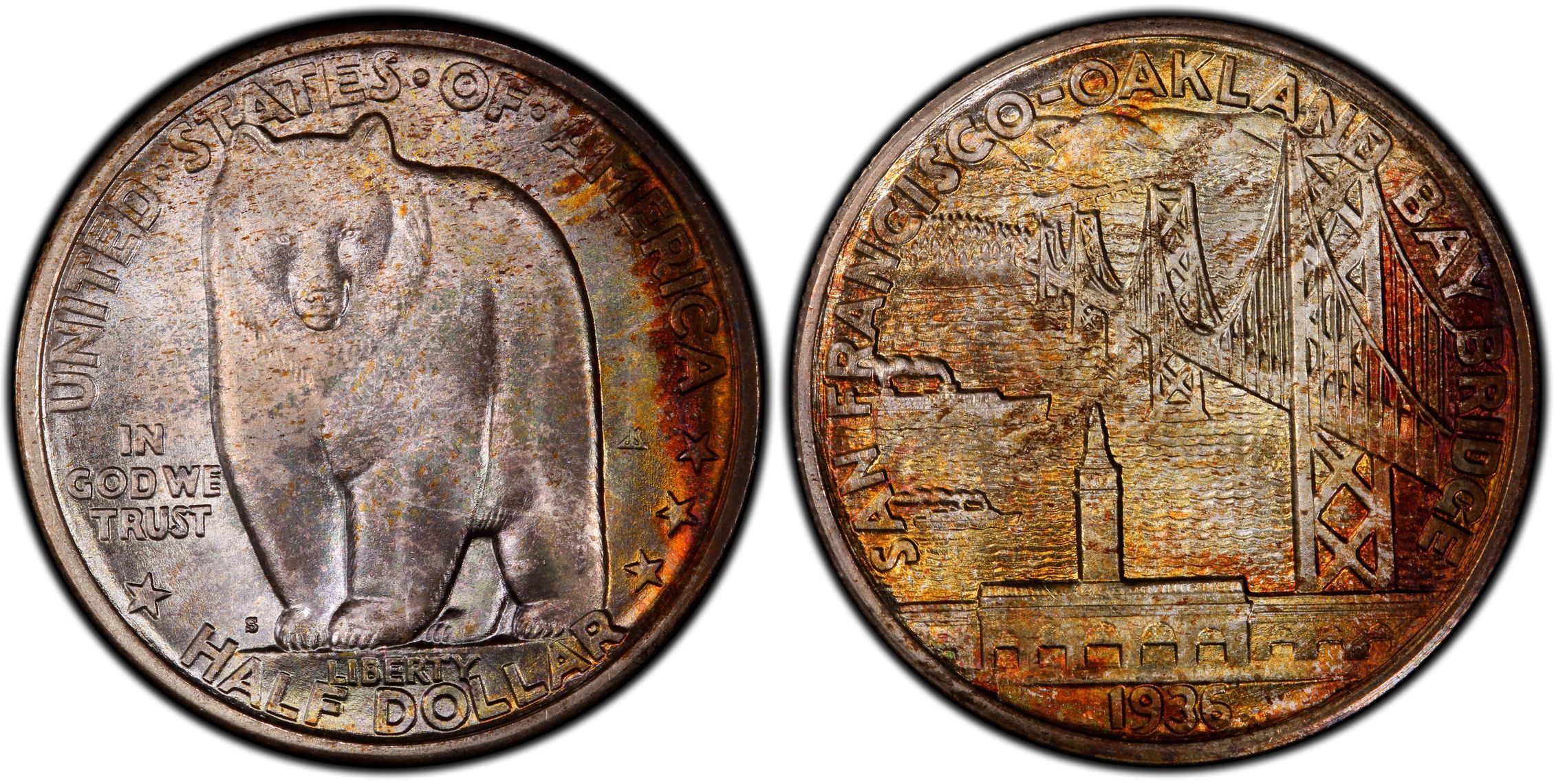 history when the West was rising in national importance. More than just a collectible coin, it is a silver time capsule that celebrates one of the greatest engineering achievements of its age: the San Francisco–Oakland Bay Bridge. This is the story of how it came to be, why it became such a standout in the commemorative series, and what continues to draw collectors to it today.
Honoring a Modern Marvel
The early to mid-1930s saw a wave of commemorative coin programs, many tied to local celebrations and anniversaries. The completion of the Bay Bridge in 1936 was a perfect candidate for a coin issue. It had taken more than three years of round-the-clock labor to complete the massive structure connecting San Francisco and Oakland. At the time of its opening, it was one of the longest steel bridges in the world and a visible symbol of American optimism during the Great Depression.
To mark this achievement, Congress authorized a commemorative half dollar to be struck at the San Francisco Mint. The coins would be sold to the public at a small premium, with proceeds supporting civic celebrations around the new bridge. The result was the 1936-S Bay Bridge Silver Half Dollar, a coin as bold and striking as the bridge itself.
A Design That Captured the Spirit of California
One reason the Bay Bridge Half Dollar remains so popular is its stunning artwork. The designer, Jacques Schnier, was a San Francisco sculptor known for his modern style. He delivered a design that felt fresh and forward-leaning, breaking from the more classical motifs that had dominated commemorative coinage.
The obverse features a powerful California grizzly bear, standing tall with a quiet sense of strength. This was not simply a regional mascot. The bear symbolized resilience, independence, and the rugged identity of California. Collectors have long admired the depth, texture, and visual weight Schnier brought to the image.
The reverse is a beautifully balanced view of the Bay Bridge stretching across the bay, with Yerba Buena Island and the San Francisco skyline rising in the background. The architectural detail is crisp, and the scene conveys the blend of artistry and engineering that defined the era. Few commemorative coins of the 1930s feel as modern or as cleanly executed as this one.
Mintage, Distribution, and Collector Appeal
The 1936-S Bay Bridge Half Dollar was struck exclusively at the San Francisco Mint, with a mintage of 100,000 coins for distribution. Another 2,000 pieces were produced for assay purposes. While most sold quickly through local committees and distributors, a portion went unsold and were returned to the Mint for melting.
This combination of limited mintage, strong regional interest, and exceptional design gave the coin a strong foothold in the commemorative market. Unlike some other 1930s issues that struggled to find an audience, the Bay Bridge Half Dollar maintained steady demand. Today, collectors appreciate its bright luster, the bold bear motif, and the artistry of its engraving. High-grade examples, especially those with strong mint luster and clean surfaces, remain particularly desirable.
A Legacy That Endures
The Bay Bridge Silver Half Dollar stands as a testament to a defining moment in California history. It honors a landmark that reshaped the region’s transportation and economy. It showcases one of the most memorable bear designs in American numismatics. And it represents the spirit of innovation that marked the 1930s United States, even during challenging economic times.
For modern collectors, the 1936-S Bay Bridge Half Dollar offers the chance to hold a piece of that history in hand. It is a classic commemorative that continues to shine, bridging the past with the present and reminding us of the bold ambitions that helped shape the American West.