Walking Liberty Half Dollar: The 1916 Art Experiment That Redefined U.S. Coin Design
Posted on — Leave a commentIn 1916, the U.S. Treasury held a competition to redesign America’s silver coins, inviting artists outside the Mint for the first time in decades. Sculptor Adolph A. Weinman seized the opportunity and created a half dollar unlike anything before it. His Liberty didn’t stand still: she walked, flag flowing behind her, striding toward the sunrise. Mint officials questioned whether the ambitious design could be produced reliably, and early strikes confirmed their concerns. Refinements in striking technique eventually made consistent production viable, and the result became one of America’s most admired coins. This article examines the origins of the Walking Liberty Half Dollar, production challenges, and key dates, explaining why it remains a cornerstone of American numismatics.
Walking Liberty Half Dollar: Historical Context and Design Origins
The silver Walking Liberty Half Dollar emerged from a pivotal moment when American coinage underwent its most significant aesthetic transformation since the nation’s founding.
The Competition That Changed American Coinage
In 1916, the U.S. Treasury launched an initiative to revitalize American coin design, marking a decisive break from decades of conservative artistic choices.
The MacNeil Competition and Treasury Vision
The Treasury Department’s 1916 design competition specifically sought to replace the aging Barber coinage series, which had circulated since 1892. Officials recognized that American coins lagged behind European counterparts in artistic merit, prompting them to invite established sculptors to submit designs. This open competition represented a fundamental shift in how the nation approached coinage aesthetics.
Adolph A. Weinman’s Artistic Background
Weinman brought exceptional credentials to the competition. A student of the renowned sculptor Augustus Saint-Gaudens – designer of the celebrated $20 gold piece – Weinman had already established himself through major commissions including architectural work for the Wisconsin State Capitol and the Panama-Pacific Exposition. His sculptural philosophy rejected the stiff, medallion-style portraiture that dominated 19th-century coinage, instead favoring dynamic compositions where figures interacted with their environment. Weinman believed coins should capture moments of action rather than frozen poses, a radical departure that positioned him perfectly to revolutionize American coinage design for the 20th century.
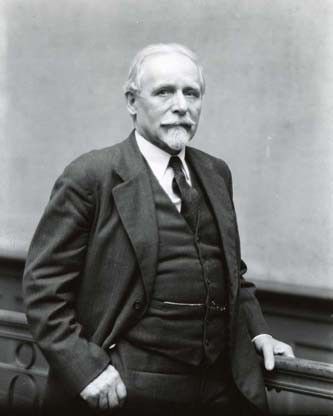
Image: Photograph of sculptor Adolph A. Weinman, known for designing the Walking Liberty Half Dollar and the Mercury dime.
Source: USA Coin Book
Dual Commission Achievement
Weinman’s talent impressed officials so thoroughly that he received commissions for both the half dollar and dime, an unprecedented achievement for a single artist. While his Walking Liberty Half Dollar captured public imagination with its dramatic imagery, his Mercury dime design proved equally revolutionary, creating a matched pair that defined American silver coinage for three decades
Public Reception and Barber Series Departure
Contemporary reactions ranged from enthusiastic praise to skeptical concern. The dramatic shift from Charles Barber’s austere designs sparked debate among collectors and the public alike. Some celebrated the artistic ambition, while practical-minded critics questioned whether such detailed designs could withstand the rigors of circulation. Time would vindicate Weinman’s vision, as both designs gained widespread appreciation.
Design Elements and Symbolism
Weinman’s Liberty Walking Half Dollar design incorporated rich symbolism and classical influences that elevated it beyond mere currency.
Obverse Imagery and Meaning
The coin’s obverse features Liberty striding confidently toward the sunrise, her right hand extended in invitation while her left carries laurel and oak branches symbolizing peace and strength. The American flag drapes across her body, billowing dramatically as she moves. This dynamic composition broke from static portrait traditions, capturing Liberty as an active force rather than a passive symbol.
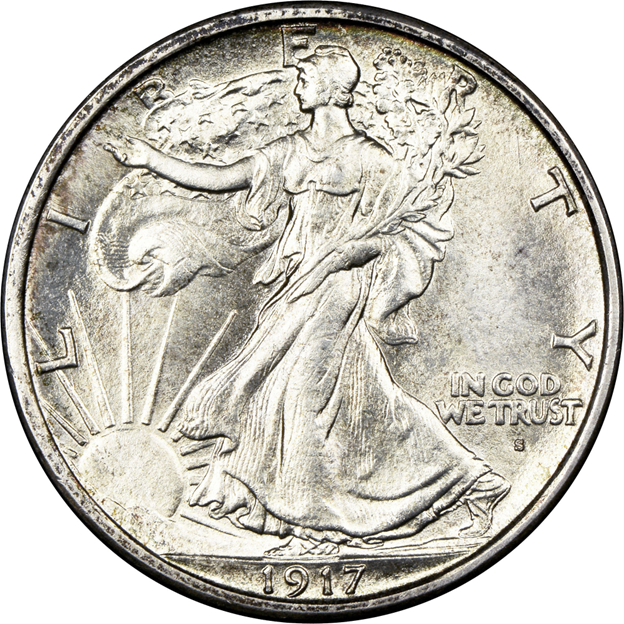
Image: 1917-S Walking Liberty Half Dollar obverse.
Source: NGC
Reverse Eagle Design
The reverse depicts a majestic American eagle perched on a mountain crag, wings partially spread as if preparing for flight. A mountain pine sapling grows from the rocky perch, symbolizing America’s strength rooted in natural foundations. The design balances power with grace, complementing the obverse’s forward motion with stability and watchfulness.
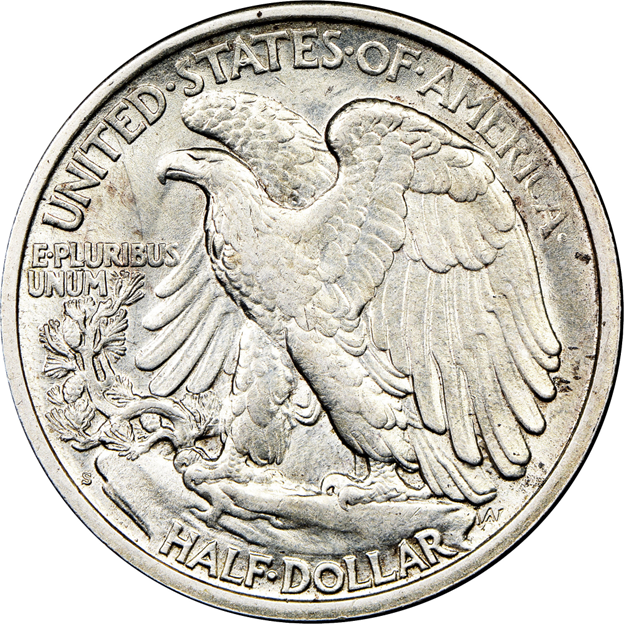
Image: 1917-S Walking Liberty Half Dollar reverse.
Source: NGC
Classical Artistic Influences
Weinman drew heavily from Greco-Roman sculptural traditions, particularly the Nike (Victory) figures of ancient Greek art. The flowing drapery and contrapposto stance echo classical techniques, while the naturalistic rendering reflects Renaissance influence. This synthesis of classical and modern approaches created a timeless quality that transcends the coin’s production era.
American Silver Eagle Legacy
In 1986, when the U.S. Mint launched its modern bullion program, officials chose Weinman’s Liberty Walking Half Dollar design for the American Silver Eagle’s obverse. This decision recognized the design’s enduring appeal and established a direct lineage between classic and contemporary American silver coinage, ensuring Weinman’s vision continues reaching new generations of collectors and investors.
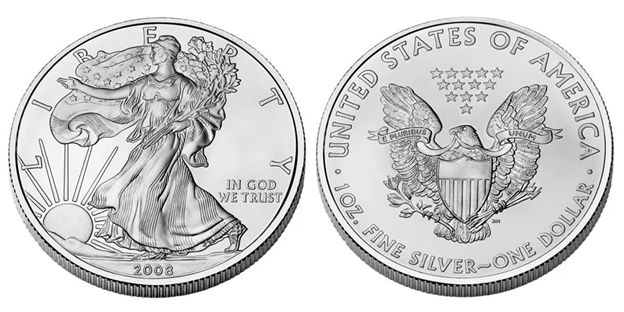
Image: 2008 American Silver Eagle bullion coin, obverse and reverse.
Source: USA Coin Book
Production History and Mintage Overview
Walking Liberty Half Dollars were struck at three U.S. Mint facilities over 32 years, with each mint contributing distinct characteristics to the series.
For a visual overview of the most valuable varieties and what sets them apart in the marketplace, watch this video on the Walking Liberty half-dollar series.
Mint Facilities and Production Spans
Philadelphia Mint Production
The Philadelphia Mint produced these coins continuously from 1916 through 1947, with coins bearing no Walking Liberty Half Dollar mint mark. Philadelphia strikes generally exhibit superior quality compared to branch mints, particularly in later years when die preparation techniques had been refined. The facility’s central role and experienced staff resulted in more consistent striking, making Philadelphia issues the benchmark for the series.
Denver Mint Contributions
Denver struck Liberty Walking Half Dollar coins intermittently from 1916 through 1947, with the “D” mint mark appearing on the obverse through mid-1917, then shifting to the reverse below the pine branch for subsequent years. Denver’s production was often characterized by weaker strikes, particularly on Liberty’s head and the eagle’s breast feathers, making well-struck Denver coins especially desirable.
San Francisco Mint Role
San Francisco produced coins from 1916 through 1947, with the “S” Walking Liberty Half Dollar mint mark following the same placement pattern as Denver. San Francisco strikes varied considerably in quality, with some years producing exceptionally sharp coins while others showed chronic weakness, making date-by-date evaluation essential for collectors pursuing this mint’s output.
Production Challenges and Characteristics
High Relief Striking Difficulties
Weinman’s artistic vision created immediate production problems. The design’s high relief required exceptional striking pressure to bring up full details, particularly on Liberty’s head and hand, and the eagle’s breast feathers. Early 1916 production proved so problematic that the Mint made subtle modifications to reduce relief, though striking challenges persisted throughout the series.
Die Life and Wear Issues
The intricate design details caused dies to wear rapidly compared to simpler designs. This accelerated wear meant dies had to be replaced more frequently, increasing production costs and creating strike quality variations even within single production runs. As dies wore, fine details disappeared first, particularly the head, hand, and skirt lines on the obverse.
Wartime Silver Priorities
World War II dramatically affected Walking Liberty production. Mintages surged as silver demand increased for wartime industrial uses, resulting in some of the series’ highest production years between 1942-1945. However, wartime urgency sometimes compromised quality control, with more weakly struck examples entering circulation during this period.
Walking Liberty Half Dollar Key Dates and Rare Varieties
This Half Dollar series presents collectors with everything from legendary rarities to affordable common dates, creating opportunities across all budget levels.
The Holy Grail: 1921 Issues
The 1921 production year produced the series’ three scarcest coins, with post-World War I economic conditions resulting in severely limited mintages across all three mints.
1921-D: The Series King
The 1921-D stands as the Walking Liberty Half Dollar’s undisputed key date, with only 208,000 pieces produced, the lowest mintage in the entire series. Denver’s minimal production, combined with heavy circulation of surviving examples, makes this coin genuinely rare in all grades. Even heavily worn examples command substantial premiums, while choice uncirculated specimens rank among American numismatics’ most valuable regular-issue half dollars.
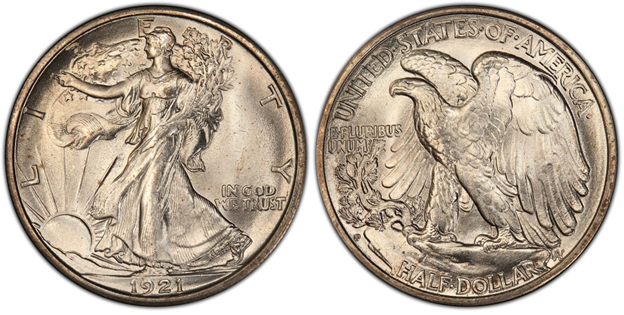
Image: 1921-D Walking Liberty Half Dollar obverse and reverse.
Source: PCGS
1921 Philadelphia
The Philadelphia Mint’s 246,000-piece production makes the 1921 the second-scarcest date in the series. This low mintage resulted from post-war economic contraction and reduced demand for silver coinage. The 1921 Philadelphia issue remains a major challenge for date collectors.
1921-S: Completing the Trio
San Francisco’s 548,000-piece mintage makes the 1921-S the most available of the three 1921 dates, yet it still qualifies as a significant rarity. The 1921-S serves as a more attainable alternative to the Denver and Philadelphia issues for collectors building complete sets.
Early Series Rarities: 1916-1917 Issues
The series’ first two years produced several important dates that command strong collector demand.
1916 First-Year Issues
The inaugural 1916 Walking Liberty Half Dollar production created three collectible dates, though none approach the rarity of the 1921 issues. The 1916 Philadelphia (608,000 mintage), 1916-D (1,014,400 mintage), and 1916-S (508,000 mintage) all attract premium interest as first-year issues. The 1916-S proves particularly challenging to locate in high grades due to typically weak strikes and heavy circulation.
1917 Obverse Mintmark Varieties
Both Denver and San Francisco struck 1917 Half Dollars with mint marks on the obverse (below “In God We Trust”) before mid-year standardization moved marks to the reverse. The 1917-D obverse and 1917-S obverse varieties are considerably scarcer than their reverse mintmark counterparts, representing important transitional issues that advanced collectors pursue intensely.
1938-D: Depression Era Rarity
The 1938-D’s 491,600 mintage makes it one of only nine Walking Liberty dates with production under one million pieces. Depression-era economic conditions limited output, creating a late-series rarity that often surprises collectors unfamiliar with 1930s mintage figures.
Common Date Opportunities
Abundant survivors from certain years provide accessible entry points for beginning collectors and bullion-focused buyers looking for a Walking Liberty Half Dollar for sale.
1940s Philadelphia Production
High-mintage Philadelphia issues from 1940-1947 remain readily available in circulated and lower mint state grades. These coins offer affordable exposure to Weinman’s design while providing substantial silver content near melt value.
Wartime Hoarding Effect
The 1942-1945 production years saw extensive public hoarding driven by wartime uncertainty and silver’s perceived value. This hoarding preserved millions of coins in above-average condition, creating unusual availability for dates that would otherwise show typical circulation wear patterns. Collectors can still occasionally find an original bank-wrapped Walking Liberty Half Dollar roll from this period, offering affordable opportunities to acquire multiple high-grade examples.
Walking Liberty Half Dollar Silver Content and Melt Value Analysis
These coins contain substantial precious metal content that provides intrinsic Walking Liberty Half Dollar value independent of numismatic considerations.
Composition Specifications
Each Walking Liberty Half Dollar consists of 90% silver and 10% copper, the standard composition for U.S. silver coinage from 1916 through 1964. This alloy balances durability with precious metal content, creating coins that could withstand circulation while maintaining significant silver weight.
Precious Metal Content
Every coin contains exactly 0.36169 troy ounces of pure silver, with a total weight of 12.5 grams (0.4019 troy ounces). The coins measure 30.6mm in diameter with reeded edges, specifications that remained consistent throughout the 1916-1947 production span.
Understanding Walking Liberty Half Dollar Melt Value
Calculating Current Worth
Determining a Walking Liberty Half Dollar’s melt value requires multiplying 0.36169 troy ounces by the current spot silver price. This calculation establishes the minimum value for any silver Walking Liberty Half Dollar regardless of condition or date.
Numismatic Premiums vs. Bullion Value
Common-date Walking Liberty Half Dollars in worn condition typically trade near melt value, attracting buyers primarily interested in silver content. However, better dates, higher grades, and coins with strong strikes command substantial premiums above their precious metal worth. The key dates discussed earlier trade at multiples of Walking Liberty Half Dollar melt value even in lower grades, while common dates in choice uncirculated condition may bring 50-100% premiums over silver content.
Market Floor Protection
The substantial Walking Liberty Half Dollar silver content provides downside protection rare among collectible coins. Even during periods of declining numismatic interest, Walking Liberty Half Dollars retain value tied to precious metal markets. This metal content floor makes them appealing to both traditional coin collectors and precious metals investors seeking tangible assets with historical significance. To learn more about diversifying with tangible assets, explore Blanchard’s Asset Options.
Date and Mint Mark Collecting Strategies
Walking Liberty Half Dollars offer multiple collecting approaches suited to different budgets and interests, from comprehensive date sets to focused type collecting.
Complete Set Assembly
Full Set Scope and Challenge
A complete Walking Liberty Half Dollar collection comprises 65 regular-issue coins spanning three mints across 32 years. This includes all Philadelphia, Denver, and San Francisco issues from 1916 through 1947, plus the scarce 1917 obverse mintmark varieties from Denver and San Francisco. Completing this set represents a significant achievement in American numismatics, requiring patience, knowledge, and substantial financial commitment for the Walking Liberty Half Dollar key dates.
Budget Considerations Across Grade Levels
Building a complete set in circulated grades (Good through Very Fine) remains achievable for dedicated collectors, though the 1921-D, 1921, and key 1916 issues will still demand four-figure investments even in worn condition. Mid-grade sets (Fine through Extremely Fine) require significantly larger budgets, with total costs reaching five figures when quality examples of scarce dates are included. Mint state sets enter serious investment territory, with gem examples of Walking Liberty Half Dollar key dates commanding premium prices that make complete uncirculated sets accessible only to advanced collectors with substantial resources.
Short Set Alternatives
Accessible Date Runs
Many collectors focus on 1934-1947 dates, which remain relatively affordable across all three mints while still presenting modest challenges. This 14-year span eliminates the problematic early dates while preserving the satisfaction of building a multi-mint collection. Another popular approach targets 1940s issues exclusively, offering high-quality coins at prices near silver melt value with minimal numismatic premiums.
Type Collecting Appeal
Walking Liberty Half Dollars serve as ideal representatives of early 20th-century U.S. silver coinage in type sets. A single high-grade common date – typically a 1940s Philadelphia issue – provides exposure to Weinman’s celebrated design without the expense of pursuing scarce dates. Type collectors often select examples with attractive toning or exceptional strikes, prioritizing aesthetic appeal over specific date requirements.
Conclusion
The silver Walking Liberty Half Dollar is one of America’s most admired coins: an enduring blend of artistry, history, and intrinsic value. Adolph A. Weinman’s dynamic design transformed U.S. coinage, while the series’ broad range continues to captivate collectors. Struck in 90 percent silver, these coins offer both tangible worth and lasting beauty. Whether beginning a collection or refining an advanced set, the Walking Liberty Half Dollar remains a cornerstone of classic U.S. coinage. Explore Blanchard’s selection of junk silver coins, including Walking Liberty Half Dollars and other classic U.S. issues, to start or expand your tangible precious-metal holdings today.
FAQs
1. How much is a Walking Liberty Half Dollar worth?
Walking Liberty Half Dollar value depends on condition, rarity, and collector demand. Common dates trade close to their silver value, while scarce or high-grade examples command significant premiums.
2. What is the rarest Walking Liberty Half Dollar?
The 1921-D is generally considered the key date of the series, prized for its low mintage and rarity in all grades.
3. How much silver is in a Walking Liberty Half Dollar?
Each coin contains roughly one-third of a troy ounce of silver, giving it intrinsic value regardless of condition.
4. How do you grade a Walking Liberty Half Dollar?
Grading focuses on strike sharpness and wear, particularly on Liberty’s head, hand, and gown lines, and the eagle’s breast feathers on the reverse. For a deeper explanation of coin grading principles and terminology, see Blanchard’s Numismatic Coin Grading Guide.
5. How much does a Walking Liberty Half Dollar weigh?
Each coin weighs 12.5 grams, which equals 0.4019 troy ounces.