Buying a 1 oz Gold Bar: Complete Guide to Pricing, Brands, and Storage

A 1 oz gold bar fits in a package smaller than a credit card, yet contains a full troy ounce of gold. This makes it one of the most widely traded physical gold investment formats worldwide. It offers a practical balance between gold content and reasonable premiums over spot prices, especially compared with smaller fractional bars. This article explains the physical specifications, pricing factors, manufacturer differences, fractional alternatives, storage options, and key considerations for buying your first gold bar.
Understanding 1 oz Gold Bars
One-ounce gold bars follow established industry standards for weight and purity, which helps ensure consistent valuation and broad market acceptance.
Physical Specifications
A 1 oz gold bar contains exactly 31.1035 grams of gold, measured in troy ounces rather than standard ounces. Investment-grade bars meet .9999 fine gold purity standards, meaning they contain 99.99% pure gold. Typical dimensions are approximately 50mm × 29mm × 1.5mm, though exact measurements vary slightly by manufacturer. For perspective, a one-ounce bar fits easily in the palm of your hand – smaller than a credit card, with a thickness similar to several stacked coins. This compact 1 oz gold bar size makes storage practical while still representing a meaningful amount of physical gold.
Bars vs. Coins
Gold bars typically carry premiums of around 1-3% over spot prices, compared with 3-5% or more for government-issued gold coins. This difference reflects simpler production, which focuses on refiner branding and specifications rather than decorative designs. Unlike coins, gold bars have no face value or legal tender status, a distinction that matters for collectors but is usually irrelevant to bullion investors. Bars derive their value almost entirely from gold content, while coins may carry additional numismatic premiums. For buyers focused on maximizing gold per dollar spent, bars are often the more cost-efficient choice at the same weight.
Watch an investor explain why he prioritizes 1 oz gold bars for building long-term wealth in this video.
Major Gold Bar Manufacturers
Manufacturer reputation directly affects gold bar premiums, liquidity, and resale value, with established refiners commanding strong market recognition.
PAMP
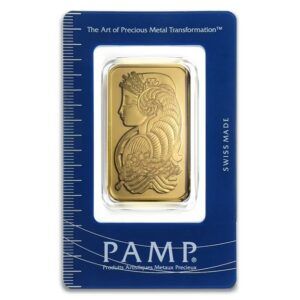
Image: PAMP Suisse Lady Fortuna 1 oz gold bar in assay packaging
Source: Blanchard
Produits Artistiques Métaux Précieux, established in Switzerland in 1977, produces widely recognized private mint gold bars. Their signature Pamp 1 oz gold bar features Lady Fortuna, the Roman goddess of fortune, in elegant relief on the obverse. PAMP pioneered VeriScan technology: a microscopic surface topography authentication system that maps each bar’s unique surface at production. This creates a digital fingerprint verifiable through smartphone apps. A 1 oz Pamp gold bar typically commands 1-2% premiums over generic manufacturers while offering superior liquidity and acceptance worldwide.
Valcambi
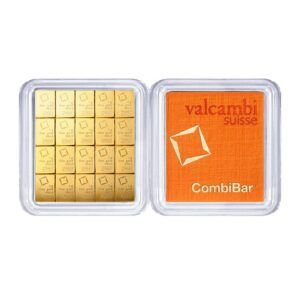
Image: Valcambi CombiBar divisible gold bar in protective packaging
Source: Valcambi
This major Swiss refiner offers quality comparable to other premium manufacturers while producing innovative products like CombiBars, i.e. divisible gold bars that break into smaller pieces along scored lines. The standard 1 oz Valcambi gold bar ships in protective assay cards documenting weight, purity, and serial numbers. Their Swiss manufacturing heritage ensures consistent .9999 fineness and strong market acceptance.
Perth Mint
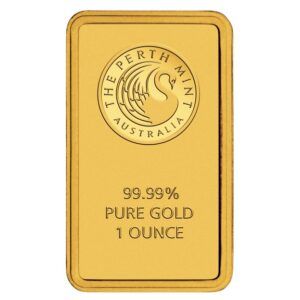
Image: Perth Mint 1 oz gold bar obverse
Source: Perth Mint
The Western Australian government owns this refiner, providing government backing that distinguishes Perth Mint from private manufacturers. Their investment-grade bars maintain .9999 purity standards. Some bar series feature distinctive kangaroo imagery reflecting Australian heritage. Perth Mint ships bars in protective packaging with comprehensive assay certificates documenting authenticity and specifications.
U.S. Gold Bar Manufacturers
Beyond premium international brands, U.S. refiners produce investment-grade gold bars that offer cost-efficient alternatives for domestic buyers.
Republic Metals Corporation and Asahi Refining
Republic Metals Corporation operated from 1980 to 2019 in Miami, Florida, producing .9999 fine gold bars with LBMA Good Delivery accreditation. The company became the first U.S. refinery to receive ISO 14001 environmental certification before entering bankruptcy in 2019. Japanese refiner Asahi Holdings acquired RMC’s assets through auction. Asahi continues operating U.S. refining facilities in Salt Lake City, producing LBMA-accredited bars from mining and recycling sources. RMC-branded bars remain in circulation as legacy products, trading at premiums typically 0.5-1% below PAMP or Valcambi.
Sunshine Minting
Based in Coeur d’Alene, Idaho since 1979, Sunshine Mint produces .9999 fine gold bars with MintMark SI security technology. This microscopic authentication feature becomes visible through an included decoder lens, displaying “VALID” at one angle and a sunburst pattern when rotated 90 degrees. Sunshine serves as a primary blank supplier to the U.S. Mint, establishing industry credibility. Their bars carry slightly lower premiums than Swiss manufacturers while offering sophisticated anti-counterfeiting protection.
Generic Manufacturers
Numerous smaller regional refiners produce basic .9999 fine gold bars without premium branding or advanced security features. These generic bars cost 0.5-1% less than branded alternatives but face wider dealer buyback spreads, often 1-2 percentage points more than a PAMP or Valcambi 1 oz gold bar. Lesser-known manufacturers without LBMA accreditation encounter skepticism affecting resale value. First-time buyers should evaluate whether upfront savings justify potentially reduced liquidity.
1 oz Gold Bar Price
Gold bar prices reflect spot markets plus manufacturer premiums and dealer margins that vary by brand, quantity, and distribution channels.
Current Price Determinants
Gold Spot Price
The London Bullion Market Association oversees the LBMA Gold Price, fixed twice daily, which serves as the global benchmark. Retail spot prices derive from this benchmark, representing the baseline value for pure gold content in bars.
Manufacturer and Dealer Premiums
Manufacturer premiums add to the spot base, with premium Swiss brands commanding higher markups than generic refiners. Dealer margins cover operational costs, storage, insurance, and profit requirements. These margins vary among retailers based on business models and overhead expenses.
Quantity Discounts
Bulk purchasing reduces per-ounce premiums. Buyers ordering multiple bars receive better pricing than single-piece purchases. Market conditions also influence premiums, with high demand periods widening the spread between spot and retail prices.
Premium Structure Breakdown
Refining and Manufacturing Costs
Refining processes including melting, assaying, and manufacturing add initial expenses beyond raw gold value. Authentication technologies like VeriScan increase production costs while providing counterfeit protection.
Packaging and Distribution
Assay cards and protective packaging represent additional manufacturing expenses that premium brands include as standard features. Distribution chains involve multiple handlers from refinery to end buyer, with each intermediary adding margin. Payment methods also affect pricing: credit card transactions typically cost more than bank wire transfers due to processing fees.
Fractional Gold Bars
Fractional bars offer lower entry costs than a gold 1 oz bar but carry higher percentage premiums over spot prices.
1/10 oz Gold Bars
Weighing 3.11 grams with dimensions varying by manufacturer but typically around 15mm x 9mm, tenth-ounce bars provide the most accessible entry point for gold ownership. These small bars enable buyers to start precious metals holdings without committing to full-ounce purchases. However, manufacturing costs relative to gold content drive premiums substantially higher than larger denominations. Practical applications of a 1/10 oz gold bar include gifts, incremental savings accumulation, or portable emergency reserves.
1/4 oz and 1/2 oz Gold Bars
A 1/4 oz gold bar weighing 7.78 grams offers a mid-range option between accessibility and cost efficiency. Their premiums fall between tenth-ounce and full-ounce rates, balancing convenience with reasonable markups. A 1/2 oz gold bar at 15.55 grams approaches full-ounce premium efficiency while requiring roughly half the capital. These denominations suit investors building positions gradually through regular purchases. Exact dimensions vary by refiner, with half-ounce pieces typically measuring around 25mm x 15mm for easy storage and handling.
1/100 oz and Smaller
Bars under one gram, such as the 1/100 oz gold bar, represent micro-gold formats with dimensions measured in millimeters. Manufacturing costs dominate pricing at this scale, creating premiums that significantly exceed larger bars. These tiny pieces function primarily as collectibles, novelty items, or small gifts rather than serious investment vehicles. Buyers prioritizing maximum gold content per dollar should focus on larger denominations.
Authentication and Security Features
Verifying gold bar authenticity protects against counterfeits through manufacturer technologies, documentation, and physical testing methods.
VeriScan Technology (PAMP)
PAMP’s VeriScan system maps each bar’s unique microscopic surface topology during production. This creates an extremely difficult to replicate fingerprint stored in PAMP’s database. Smartphone apps verify authenticity by comparing the physical bar’s surface against registered patterns. The technology prevents counterfeiting through features invisible to forgers but readable through digital verification. Products like the 1 oz gold bar PAMP Suisse Lady Fortuna VeriScan showcase this advanced authentication system in action.
Assay Certificates
Documentation and Packaging
Assay certificates document weight, purity, and serial numbers for each bar. Premium manufacturers seal bars in tamper-evident cards that prevent manipulation while allowing visual inspection. Official refiner stamps and signatures validate contents.
Resale Considerations
Maintaining original packaging with intact assay certificates preserves resale premiums. Dealers pay more for bars in unopened manufacturer packaging compared to loose pieces requiring independent verification.
Physical Inspection
Weight and Dimensions
Precise scales can help to verify the weight of a 1 oz gold bar in grams, i.e. 31.1 grams for one troy ounce. Comparing measurements against manufacturer specifications catches dimensional discrepancies that indicate counterfeits.
Gold Testing
Non-destructive testing methods confirm .9999 fineness without damaging bars. Visual inspection examines strike clarity and finish consistency. Genuine bars display sharp details and uniform surfaces, while counterfeits often show quality inconsistencies.
Storage Solutions
Gold bar storage requires balancing security, accessibility, and insurance coverage across home and professional options.
Home Storage Options
Safes and Security Systems
Fire-resistant safes rated for precious metals provide the foundation for home storage, offering both theft deterrence and environmental protection. Adding security systems with alarms and monitoring creates additional layers of defense. Some collectors use hidden storage locations to reduce theft risk, though these require careful documentation for estate planning purposes.
Insurance Limitations
Standard homeowner’s policies typically limit precious metal coverage substantially, often capping bullion at a few thousand dollars regardless of actual holdings value. Many policies exclude bullion entirely or classify it under general personal property limits that prove inadequate for serious gold investments. Separate riders or specialized policies become necessary for significant gold holdings stored at home, providing coverage specifically designed for precious metals with higher limits and comprehensive protection against theft, fire, or loss.
Professional Vault Storage
Bank Safety Deposit Boxes

Image: Interior view of a high-security vault with rows of gold bars stacked along both sides of a narrow corridor
Source: Reuters
Bank safety deposit boxes provide secure physical storage through vault-grade facilities, but this security comes with significant limitations. Banks do not insure box contents against theft, fire, or other losses, leaving responsibility for separate insurance coverage entirely with the box holder. Access restrictions to standard banking hours also can create inconvenience for investors needing to retrieve or add to holdings outside business days. These combined factors make bank boxes suitable for smaller holdings or investors prioritizing security over flexibility.
Private Vault Services
Specialized precious metal storage facilities provide allocated storage assigning specific bars to individual accounts, or segregated storage keeping individual holdings physically separated from other clients. Professional vaults typically include comprehensive insurance coverage and flexible access schedules.
Storage Box Products

Image: A handler places a gold bar onto a stack beside a black plastic tray holding additional gold bars on a metal work surface
Source: WION News
Investors protecting gold bars at home benefit from specialized storage products designed for precious metals. A dedicated 1 oz gold bar storage box provides the ideal combination of protection and accessibility for standard-sized bars. Protective capsules serve as the first line of defense, preventing scratches and handling damage that can diminish aesthetic value even when gold content remains unchanged. For larger collections, stackable boxes provide organized storage that maximizes space efficiency while keeping individual bars accessible. Display cases appeal to presentation-focused collectors who maintain smaller holdings and want to showcase their investments. Moisture control through silica packets offers additional protection in long-term storage, though gold’s natural resistance to tarnish makes this less critical than for silver or other metals prone to oxidation.
Buying Your First 1 oz Gold Bar
First-time buyers should prioritize dealer reputation, payment efficiency, and realistic timing expectations over attempting perfect market entry.
Dealer Selection
Working with established dealers like Blanchard provides security through verified business practices and transparent pricing structures. Reputable dealers display clear spot-plus-premium pricing that breaks down exactly what buyers pay beyond gold content. Understanding buyback policies before purchase matters significantly: dealers offering competitive buyback rates provide better long-term liquidity than those with wide bid-ask spreads. Access to knowledgeable customer service helps first-time buyers navigate manufacturer choices, authentication features, storage options, and available investment options without sales pressure
Payment Methods
Bank wire transfers typically offer the lowest-cost payment option, with dealers passing along savings from reduced processing fees. Credit cards provide convenience but add surcharges covering transaction costs. Cash or check payments remain available for in-person transactions at some dealers. Cryptocurrency acceptance remains limited in precious metals retail, though adoption continues expanding gradually.
Timing Considerations
Regular purchasing through dollar-cost averaging provides better results than attempting to predict gold price bottoms. Buying fixed dollar amounts at consistent intervals, e.g. monthly or quarterly, smooths volatility by acquiring more ounces when prices fall and fewer when prices rise. For smaller buyers, premium fluctuations often matter more than spot price movements. A temporary drop in premiums during low-demand periods can save more per bar than waiting for spot price dips. The most effective approach focuses on steady accumulation rather than perfect timing. Consistent purchases build positions gradually, with long-term holdings benefiting from compound growth regardless of short-term entry points.
Conclusion
The 1 oz gold bar combines a full standard unit of gold with a compact, easily stored physical format. They offer a cost-efficient way to own physical gold, typically carrying lower premiums than government-issued coins while maintaining strong resale markets. Consistent purity standards, recognized refinery practices, and sealed documentation support authenticity and liquidity across global bullion markets. For investors seeking a straightforward entry point into physical gold ownership, one-ounce bars remain a widely accepted and practical choice. Explore Blanchard’s selection of 1 oz gold bars to begin or expand your physical gold holdings with industry-standard bullion products.
FAQs
1. What are the dimensions of a 1 oz gold bar?
One-ounce gold bars typically measure approximately 50mm x 29mm with thickness around 1.5mm, though exact dimensions vary by manufacturer.
2. How much is a 1 oz gold bar worth?
A 1 oz gold bar’s worth equals the current gold spot price plus a premium covering manufacturing, authentication features, and dealer margins. Premiums typically range from a few percentage points above spot.
3. What is the best 1 oz gold bar to buy?
One-ounce gold bars from widely recognized refiners are often preferred for their ease of resale and consistent quality. Premium Swiss manufacturers such as PAMP and Valcambi are known for strong market recognition and advanced security features, while U.S. manufacturers like Sunshine Minting offer quality alternatives that may carry slightly lower premiums.
4. Where can I sell my 1 oz gold bar?
One-ounce gold bars can be sold to established precious metals dealers, local coin shops, and online bullion retailers.