Damaged Coins: From Worthless to Valuable – Understanding Post-Mint Damage vs Mint Errors

A $20 Liberty gold coin in good collectible condition typically carries a meaningful numismatic premium above its gold content. The same coin, heavily cleaned, mounted in jewelry, or significantly damaged, becomes a jewelry grade coin, valued primarily for its 0.9675 troy ounces of .900 fine gold. Jewelry grade is not an official designation. It is a market term that describes where a coin ends up when it has lost its numismatic premium but its precious metal content remains intact. This guide explains what creates that outcome, how damaged coins are valued, and what options exist for buying or selling them.
Understanding Coin Damage Categories
Not all damage is equal, and understanding the difference between a coin that has lost its numismatic premium and one that has gained value through a production error matters before buying, selling, or evaluating any damaged piece.
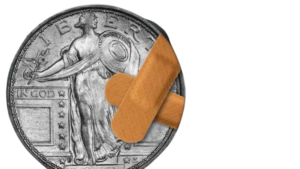 Standing Liberty quarter with bandages over damage, resting on scrap metal.
Source: Coin Week
Post Mint Damaged Coins: The Value Killer
Post-mint damage refers to any harm that occurs after a coin leaves the U.S. Mint and enters circulation or storage. It is the most common form of damage and the most consequential for value. It covers everything from physical harm like scratches, dents, gouges, and rim damage, to environmental and chemical damage such as corrosion, PVC contamination, and cleaning. What unites them is timing: none of these things happened during production, and grading services treat them as defects that eliminate or severely reduce numismatic premiums. A coin with post-mint damage will typically receive a details grade from PCGS or NGC, indicating the specific problem, which significantly reduces its collectible appeal and pushes its value toward precious metal content.
Physical Damage
Scratches and gouges are the most immediately visible form of post-mint damage. Light hairlines from mishandling affect even coins that have never circulated, while deep gouges can destroy surface detail and relief. Rim dings from drops or rough handling are equally damaging to collectibility, and intentional filing or metal removal will severely reduce numismatic value on most coins.
Environmental and Chemical Damage
Low-quality plastic holders containing PVC leach a green residue onto coin surfaces over time. Left untreated, the contamination continues to spread and becomes increasingly difficult to address without causing further harm to the surfaces beneath. Harsh chemical cleaning leaves coins with dull, lifeless surfaces that lack original mint luster, while abrasive cleaning creates visible hairlines across the fields. Whizzing, where a wire brush is used to simulate luster, produces an artificial surface texture that grading services identify immediately and that the market penalizes heavily.
Toning vs Damage
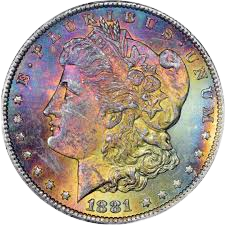
1881 Morgan silver dollar with natural rainbow toning.
Source: Numismatic News
Natural toning is not damage. Coins that have developed original color over decades of undisturbed storage are frequently more desirable than artificially brightened examples. The distinction matters because many damaged coins were cleaned precisely to remove toning, compounding the problem rather than solving it.
For a closer look at how grading services classify problem coins and what that means for damaged coins value, watch this video.
Mint Damaged Coins: When Production Mistakes Add Value
Mint errors are the opposite of post-mint damage in terms of value impact. These are mistakes that occur during the striking process itself, before the coin ever leaves the mint. Off-center strikes, double strikes, coins struck on the wrong planchet, and die breaks are among the most collectible. Because they are genuine production anomalies, they are verifiable and scarce. A dramatically off-center strike on a common date coin can command several times the value of a normal example. The critical distinction is authentication: post-mint damaged coins can sometimes resemble a mint error, and professional certification is essential before assuming a damaged coin has error value.
The Jewelry Grade Classification
Jewelry grade is not an official grading designation and will not appear on any PCGS or NGC holder. It is a practical market term used by dealers to describe coins that have lost their numismatic premium through damage, cleaning, or modification, but still carry meaningful value through their precious metal content.
What Jewelry Grade Means
A jewelry grade coin is one where the condition has deteriorated to the point that most collectors would not pay a premium above melt value for it. The damage is typically severe enough to disqualify the coin from a straight grade: heavy cleaning, mounting holes from use in jewelry, deep scratches, or significant surface alteration. Dealers price these coins at a modest premium above their melt value, reflecting the coin’s recognizability, known purity, and ease of verification compared to generic scrap gold or silver. That small premium over melt is the market acknowledging what the coin is, even if it is no longer what it was.
Common Jewelry Grade Coins
Liberty Damaged Gold Coins
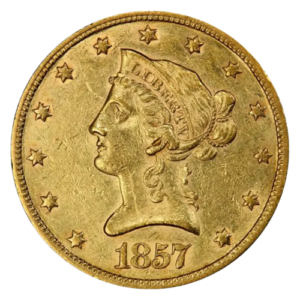
1857 $10 Liberty Eagle gold coin, jewelry grade.
The $20 Liberty Double Eagle is among the most frequently encountered jewelry grade gold coins. Many examples were mounted in jewelry, cleaned, or otherwise altered by later owners, stripping them of the original surfaces that collectors prize. Smaller denominations including the $10 Eagle and $5 Half Eagle appear in jewelry grade as well. All three contain .900 fine gold, giving them a reliable precious metal floor regardless of condition.
Silver Coins
Morgan and Peace silver dollars are the most common damaged silver coins for sale, with Walking Liberty half dollars appearing regularly as well. Both the Morgan and Peace dollar contain 0.7734 troy ounces of silver, while Walking Liberty half dollars contain 0.3617 troy ounces, meaning their melt value provides a clear pricing baseline in each case. Heavily worn or damaged 90% silver coins that fall below collector interest are often grouped into the broader junk silver category and sold by weight.
Foreign Damaged Gold Coins
British Sovereigns, French 20 Franc gold Roosters, and Swiss gold Francs also appear in jewelry grade. Like their American counterparts, their appeal in damaged condition rests entirely on gold content and the ease with which dealers can verify purity and weight.
When Damaged Coins Retain Value
Not every damaged coin is worthless. The outcome depends on what the coin is made of, how rare it is, and whether the damage happened during production or after leaving the mint.
Precious Metal Content Floor
Gold and silver coins occupy a different category from base metal coinage precisely because their material value exists independently of their condition. A $20 Liberty Double Eagle with heavy scratches and a mounting hole still contains 0.9675 troy ounces of .900 fine gold. A cleaned Morgan dollar still contains 0.7734 troy ounces of silver. For common date coins, damage typically destroys the numismatic premium but cannot touch the metal content, which is why jewelry grade coins trade at a consistent, predictable level tied directly to the spot price of gold or silver on any given day. For buyers interested purely in precious metal exposure at low premiums, jewelry grade coins can represent a practical entry point
Extreme Rarity Exceptions
Rarity can override condition in ways that surprise collectors unfamiliar with the key date market. A damaged example of a genuinely scarce coin is sometimes the only affordable version of that date available, and in extreme cases one of very few examples known to exist. Coins from the early American and colonial period, certain Carson City issues, and low-mintage branch mint coins sometimes retain substantial collector interest even in heavily damaged condition simply because better examples are unavailable or unaffordable. The rule of thumb is straightforward: the scarcer the coin, the more condition can be forgiven.
Mint Error Value Persistence
Damaged coins from the mint present a more nuanced case. A dramatic error, such as a coin struck on the wrong planchet or a major off-center strike, can retain significant collector value even if the coin has subsequently been damaged. The error itself is the collectible feature, and its presence does not disappear because the coin was later scratched or cleaned. Authentication by a professional grading service is essential in these cases, since the combination of error and damage makes verification more complex and the stakes of misidentification higher.
Special Cases and Considerations
Some damaged coins fall outside the standard categories entirely. Certain types of surface alteration that would destroy value on a typical coin actually add it, because the alteration itself has become historically significant or collectible.
Chopmarks on Trade Dollars
Chopmarks are small stamped impressions left by Asian merchants and banks on Trade dollars and other coins that circulated in the Far East during the nineteenth century. The marks were a form of verification, confirming that the silver content had been tested and accepted. A heavily chopmarked Trade dollar that would otherwise grade poorly commands genuine collector interest precisely because of those marks. They are a documented piece of commercial history stamped directly onto the coin.
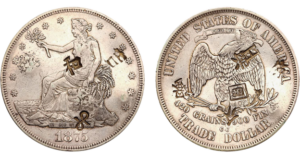
Obverse and reverse of an 1875-CC Trade dollar with chopmarks.
Source: Coin World
Love Tokens
Love tokens are coins that were intentionally smoothed on one side and engraved with initials, names, or decorative motifs, typically as personal gifts during the Victorian era. They represent an entire collectible subcategory with its own specialist market. A seated Liberty dime converted into a love token has lost all numismatic value as a coin but gained a different kind of value entirely as an artifact.
Countermarks and Historical Damage
Official countermarks, stamps applied by governments or merchants to authorize a coin for circulation in a particular territory, create numismatic interest rather than destroying it. Similarly, coins with documented provenance connecting them to specific historical events can retain collector appeal despite condition issues that would otherwise eliminate any premium.
What to Do With Damaged Coins
Determining a damaged coin’s value is only the first step. Understanding the best way to sell it is equally important.
Assessment First
Before selling or disposing of any damaged coin, a basic evaluation is worth doing. The key questions are whether the coin is gold or silver, whether it is a common or scarce date, and whether the damage might be a mint error rather than post-mint harm. For coins that could be rare dates or genuine errors, a professional opinion is worth seeking before assuming the piece has no numismatic value. Most coin dealers will provide a quick assessment at no charge, and major coin shows offer access to multiple specialist opinions in a single visit.
Selling Options
Precious Metal Dealers
For jewelry grade gold and damaged silver coins for sale, precious metal dealers are the most straightforward option. They buy on the basis of metal content, pricing relative to the current spot price, and typically offer immediate payment. The spread between spot and the dealer’s buy price varies depending on the coin, its condition, and current market liquidity, so getting more than one offer on higher-value pieces is always sensible.
Online Marketplaces
Damaged coins with specific date or type appeal can sometimes find buyers on auction platforms willing to pay above melt for a particular example. Accurate description of the damage is essential to avoid disputes and returns.
Local Coin Shops and Shows
In-person dealers offer the advantage of immediate assessment and payment, and the feedback from an experienced dealer can be genuinely useful for understanding what you have and what it is worth.
What Not to Do Before You Sell
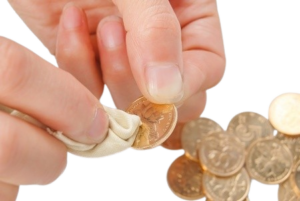
Hands cleaning a coin with a cloth.
Source: Coin Values
The single most important rule for damaged coins is to leave them alone. Attempting to clean or polish a coin before selling it will not improve its value and will almost certainly reduce it further by adding hairlines or stripping whatever original surface remains. Filling dents, soldering cracks, or attempting to straighten a bent coin destroys remaining value in the same way, since professional buyers and grading services identify repairs immediately. For coins being held rather than sold, proper storage in inert, non-PVC holders prevents additional environmental damage and preserves whatever precious metal value the coin still carries.
Market for Damaged Precious Metal Coins
Jewelry grade coins occupy a specific and practical niche in the precious metals market. They are not collectibles, but they are not generic bullion either, and that middle position gives them a distinct appeal for certain buyers.
Jewelry Grade Investment Appeal
For buyers whose primary interest is precious metal exposure rather than numismatic value, jewelry grade coins offer a straightforward proposition. The premium over melt is often lower than on many modern bullion products, meaning more metal for the same outlay. There is minimal numismatic exposure, no concern about condition affecting collectible premiums, and no complexity around grading or certification. The coins are easily recognized, their purity is established, and they can be converted to cash at prices relative to prevailing metal prices without significant difficulty.
Dealer Inventory and Pricing
Precious metal dealers carry jewelry grade coins as a lower-premium alternative to certified or collectible examples. Pricing is calculated directly from the coin’s metal content and the current spot price, with a spread reflecting handling and liquidity costs. For dealers, these coins serve a straightforward purpose: they offer customers access to historic American and foreign gold and silver at prices closer to melt than collectible examples command. For buyers, that transparency makes jewelry grade coins one of the more predictable entry points into the precious metals market, provided expectations around buy and sell spreads are realistic from the outset.
Conclusion
A damaged coin is not necessarily a worthless one. Post-mint damage removes numismatic premiums, but gold and silver coins retain their metal value regardless of condition, which is where the jewelry grade category comes from. Understanding the difference between damage that destroys value entirely, damage that merely shifts value toward precious metal content, and the rare cases where alteration adds collectible interest gives buyers and sellers a more accurate picture of what they actually hold. Browse Blanchard’s gold and silver inventory to explore options across the full range, from investment grade collectibles to jewelry grade precious metal pieces.
FAQs
1. Are damaged coins worth anything?
It depends on what the coin is made of and how rare it is. Gold and silver coins retain their precious metal value regardless of condition, while base metal coins with significant damage are generally worth little or nothing above face value.
2. What are my options for what to do with damaged coins?
The most practical options are selling to a precious metal dealer, listing on an online auction platform, or bringing the coin to a local coin shop or show for an in-person assessment. Before selling anything, it is worth checking whether the coin is a rare date or a mint error, as either can affect value significantly even in damaged condition.
3. What does jewelry grade mean for coins?
Jewelry grade is a market term for coins that have been damaged, cleaned, or altered to the point where their numismatic premium is gone. These coins are valued primarily for their precious metal content and typically trade at a modest premium above melt value.