Hot October Inflation Ignites Talk of Bigger December Fed Rate Hike

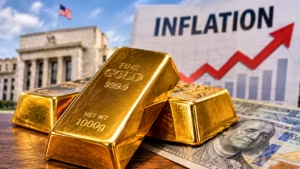 Inflation is the economic problem that just won’t go away. New data shows it’s getting worse. In October, the Consumer Price Index (CPI) jumped 0.4%, higher than the 0.3% gain economists had widely expected.
Gold and stocks fell, while Treasury yields and the U.S. dollar jumped following the inflation report.
Getting Ready for Fed Rate Hikes
The hotter-than-expected inflation data reinforced ideas that the Federal Reserve will hike interest rates when it meets next on Dec. 8-9 to try to battle rising prices. The rising inflation data sparked speculation the central bank could raise interest rates by a half a percentage point, instead of just a quarter point rate hike.
When the Federal Reserve hikes interest rates it makes borrowing more expensive, which can slow down the economy and bring inflation down. For the past five years, the Fed has allowed inflation to run above its own target of 2%.
Gold typically faces headwinds in a rising interest rate environment because bullion pays no interest.
What’s More Expensive Today
Inflation has extended beyond gasoline and into broad goods and services in the U.S. economy.
Here’s a snapshot of prices changes on select items since January 2025:
- Gasoline + 38%
- Computer software and accessories +21%
- Postage and delivery services +19%
- Electricity +9%
- Apparel +7.7%
- All Food +5%
- Appliances + 3.4%
Source: CBS News analysis of Bureau of Labor Statistics Data
Why No Annualized Rate?
The Bureau of Labor Statistics did not publish an October year-over-year inflation rate because of last year’s government shutdown. The shutdown prevented data collection in October 2025 leaving no comparison base.
Annual consumer inflation was 3.7% in September of this year, well above the Fed’s 2% target.
What’s Next for Markets
All eyes will be on the Federal Reserve when it meets next month. A quarter point rate increase is broadly expected and a half point increase would show the central bank is ready to pull out the hammer on inflation.
In the short-term Fed rate hikes could act as headwind for gold. A base is forming around the $4,000 an ounce level in gold and dips below that floor have been short-lived as investors used those as a buying opportunity. Silver has formed a base around $51-50 an ounce.
The long-term uptrend remains positive for precious metals. Central bank gold buying accelerated in the third quarter as year-to-date bullion purchases are 6% higher than last year’s level, the World Gold Council said. Central banks pointed to geopolitical risks and concerns over rising government debt levels as factors boosting bullion demand.
While inflation continues to drive up the cost of goods and services for Americans, gold has pulled back from its record highs. This presents an opportunity for long term investors to purchase more gold for fewer dollars. Next year at this time, gold could be sharply higher. Don’t wait if you’ve been considering increasing your allocation to precious metals. Blanchard is here to help.