Gold, Silver Climb, Inflation Data Cools Fed Rate Hike Ideas

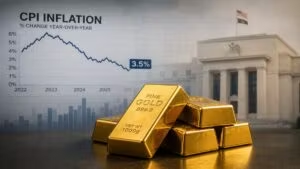 Gold and silver surged higher following news that consumer inflation eased in June. The drop in consumer inflation splashed cold water on ideas of a Federal Reserve interest rate hike in July, which is a positive factor for precious metals.
Steady to lower interest rates tend to be supportive to precious metals, which don’t pay interest. On the flip side, rising rates historically are a headwind for non-interest bearing metals.
So, the news that the June consumer price index (CPI) came in better-than-expected at 3.5% following May’s 4.2% reading took pressure off the Fed to hike rates to try to tamp down inflation. That was ultimately positive for gold and silver.
June CPI Is an Energy Story, As War Tensions Eased
The June de-escalation of the U.S.-Israel war with Iran brought down energy prices last month. That delivered some relief for Americans on a major stress on the cost of living: the price of gas.
The drop in energy prices last month was a key driver tugging consumer inflation lower. Digging into the details of the report, energy prices fell 5.7% overall amid a 9.7% decline in gasoline.
However, analysts warn that July CPI could be another story. Oil prices jumped higher again this month following the collapse of the cease-fire agreement. U.S.-Iran war tensions have heated up again over who has control of the Strait of Hormuz. Limited oil tanker traffic is moving through the waterway, creating a new crunch on energy supplies, which is pressuring oil prices higher.
Inflation Is Still Showing Up In Other Areas for Americans
Looking beyond energy, there are still other forces at play pushing everyday consumer goods items higher. Food prices rose 0.2% in June, with an equal increase of both food at home and food away from home. Notably, drought in U.S. grazing lands has been raising the cost of beef. Last month, beef and veal prices rose 1.2%, with a big 11.8% jump annually.
Inside the labor market, shortages of workers has fueled price increases for home healthcare services, nursing care services, and daycare services.
What this Means for the Fed
The latest inflation report removes immediate pressure on the central bank to pull the trigger on higher interest rates in July. The new Fed Chairman Kevin Warsh has previously made it known that his preference is to wait to hike interest rates to see if inflation will come down on its own.
However, one months of better-than-expected inflation data doesn’t mean the Fed’s job is over. Inflation still remains well above the central bank’s 2% target. While the inflation in recent months was boosted by the U.S.-Iran war, there are other factors at play including, the big jump in investment in artificial-intelligence infrastructure which could continue to push consumer prices higher even if a peace deal is negotiated.
The Outlook for Gold
Gold is consolidating in a stable range around the $4,000 level. After hitting a new all-time high earlier in 2026, bullion has pulled back and recently traded in a sideways range, which is typical after a powerful run-up.
In fact, gold returned double-digit gains the past three years in a row. Gold posted big price run-ups seen in 2023, 2024 and 2025, up 12.8%, 26.3% and 66.5%, respectively.
The long-term trend for gold points higher and the precious metal is at the end of its typical seasonal summer doldrums phase. Looking ahead, the summer pattern typically ends in July, paving the way for a strong fall and winter rally that historically peaks in February.
Looking ahead, Wall Street remains positive on the outlook for gold. Goldman Sachs forecasts gold to climb to $4,900 per ounce by the end of 2026. Morgan Stanley targets gold at $5,200 in the second half of 2026. UBS targets $5,200 over the next 12 months.