Morgan Silver Dollar Value: What It’s Worth and Why

On the afternoon of March 11, 1878, the Philadelphia Mint struck the first new silver dollar its coiner judged perfect and set it aside for President Rutherford B. Hayes, who had vetoed the law that created the coin less than two weeks earlier. Over the next 26 years the Mint struck more than half a billion Morgan dollars, far more than anyone needed, and millions went straight into storage.
Morgan silver dollar value starts with silver. Each coin holds 0.7734 troy ounces, worth about $39.50 with silver at about $51 per ounce (as of November 12, 2026), and most worn dates sell for a little more. This guide explains which dates, mint marks, and grades bring real money, including the key dates collectors chase, and how to check the dollar in your hand.
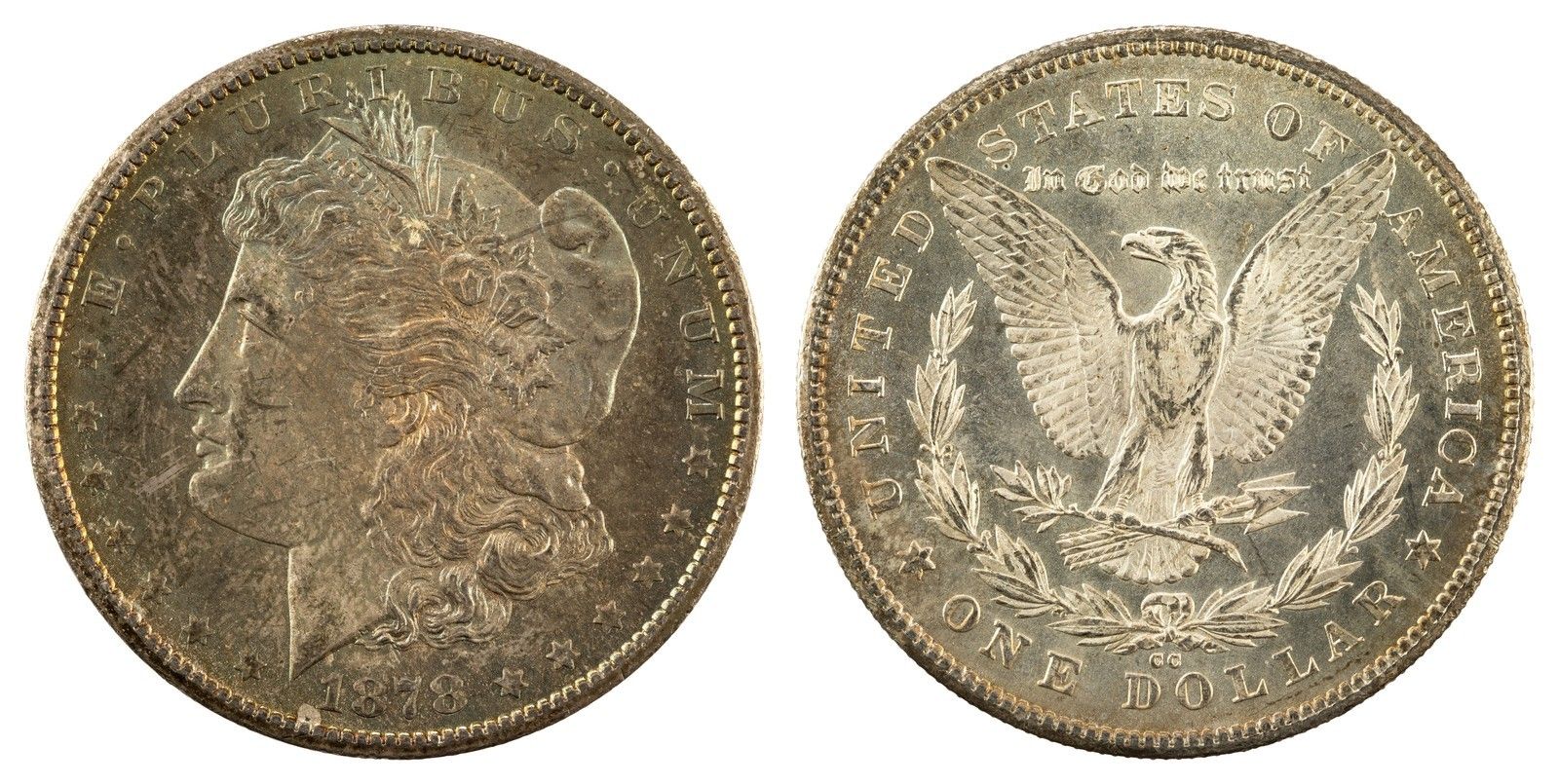
- Every Morgan dollar holds about $39.50 of silver (November 12, 2026); worn common dates bring about $45 to $55.
- Uncirculated common dates run about $110 to $130 in MS-63 and $175 to $215 in MS-65.
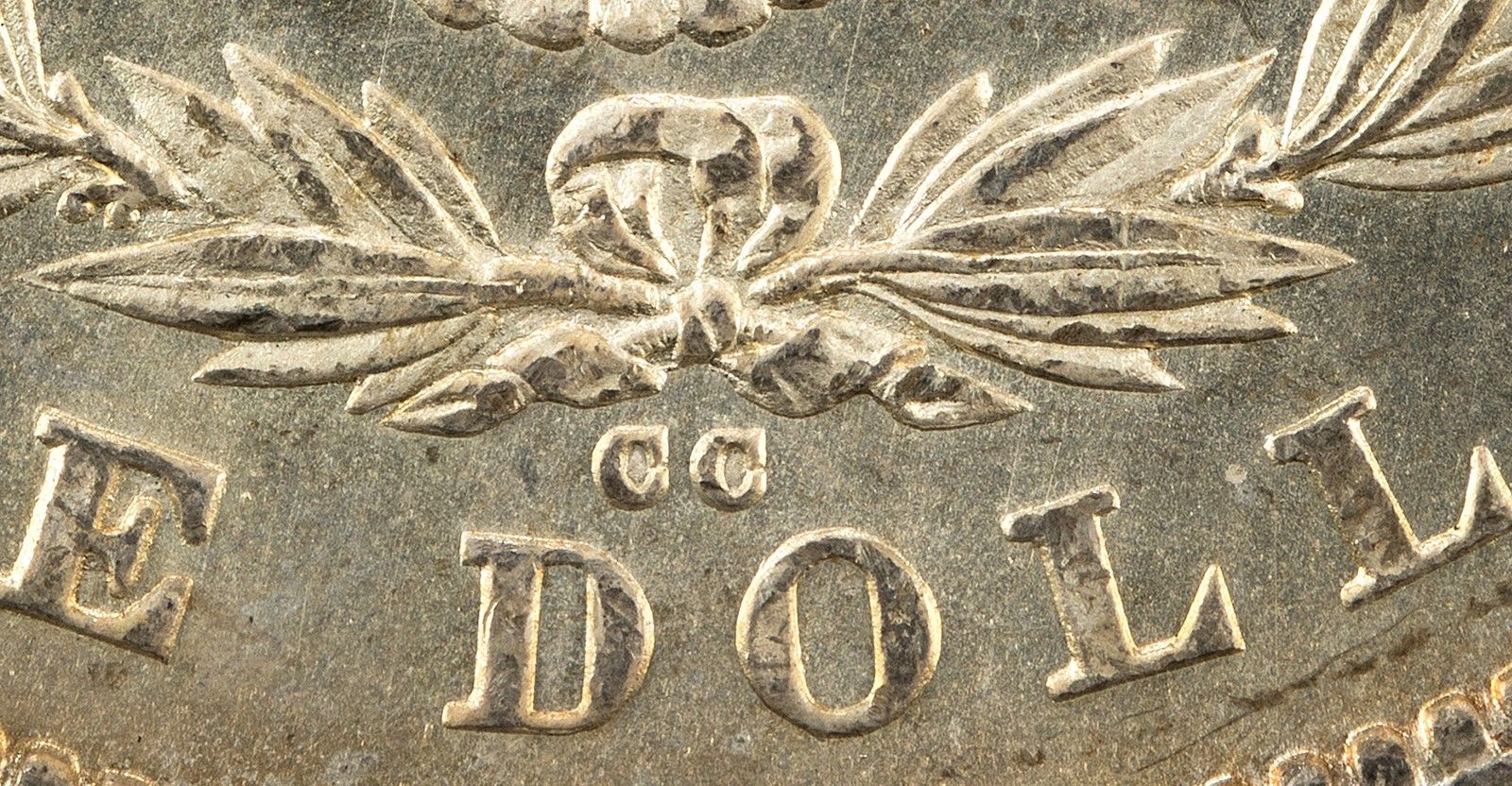
- The mint mark sits below the wreath on the reverse: CC, O, S, or D; none means Philadelphia.
- The key date is the 1893-S: 100,000 struck, $4,600 in G-4 (PCGS).
- Some dates that are common worn are rare uncirculated: an 1884-S lists at $92 in VF-20 and $50,000 in MS-63.
The Morgan Dollar: Background and History
A Dollar Born of Silver Politics
The Coinage Act of 1873 dropped the silver dollar, and the Mint struck none from 1874 through 1877. Silver-mining interests wanted it back. The Comstock Lode in Nevada was yielding ore worth $36 million a year, and its backers in Congress were led by Representative Richard Bland of Missouri.
On February 28, 1878, President Hayes vetoed the Bland-Allison Act, and Congress overrode the veto the same day. The law ordered the Treasury to buy between $2 million and $4 million worth of silver every month and coin it into dollars. In fiscal 1878, the Mint later reported, the silver in a dollar was worth 93.1 cents.
An English Engraver and a Philadelphia Teacher
Mint Director Henry R. Linderman already had his designer. In 1876 he had recruited George T. Morgan, a 30-year-old engraver from Birmingham, England, and a pupil of Leonard Charles Wyon, who sailed from Liverpool in late September and went to work at the Philadelphia Mint that October.
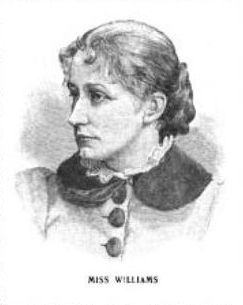
For Liberty’s portrait, the painter Thomas Eakins introduced Morgan to Anna Willess Williams, a Philadelphia teacher. Morgan persuaded her, with some difficulty, to sit for him, five times in November 1876 according to The Numismatist of May 1896. The design was first meant for the half dollar, since no new silver dollar was planned at the time.
Morgan’s thin eagle drew criticism, and some called the coin the “buzzard dollar.” His initial M appears on both sides, at the bottom of Liberty’s neck and on the left loop of the ribbon on the reverse.
Soon after production began, the Mint cut the eagle’s tail feathers from eight to seven, so 1878 Philadelphia dollars exist with eight feathers, seven feathers, and seven punched over eight. PCGS records 749,500 of the eight-feather coins.
More Dollars Than Anyone Needed
Few Americans wanted heavy silver dollars, and the Treasury stored them in bags of 1,000. The Sherman Silver Purchase Act of 1890 set the government’s purchases at 4.5 million ounces a month until its repeal on November 1, 1893. By fiscal 1894 the silver in a dollar was worth 56.5 cents.
Coinage stopped in 1904, when the bullion bought under the 1890 law ran out. The Mint’s director wrote that “the coinage of the dollar piece is at an end unless Congress at some future time shall provide for its resumption.”
Congress did, in its way.
Under the Pittman Act of April 23, 1918, the Treasury melted 270,232,722 silver dollars, nearly all Morgans, and sold most of the silver to Great Britain for shipment to India. No record was kept of which dates went into the furnaces. The law also required the dollars to be replaced, so in 1921 the Mint struck 86,730,000 more Morgans from new master dies at Philadelphia, Denver, and San Francisco before the Peace dollar took over that December.
The Vaults Open
Millions of Morgans still sat in Treasury and bank vaults, which is why so many survive in mint state.
In October 1962 a few uncirculated 1903-O dollars, then listed at $1,500 in the Guide Book, came to light. Within a week or two, several million 1898-O, 1903-O, and 1904-O dollars had surfaced from government vaults, and single coins traded at $20 to $30. The Treasury halted the payouts on March 25, 1964.
What remained, 2,937,695 coins and mostly uncirculated Carson City dollars, went to the General Services Administration, which sold them by mail in seven sales from 1972 to 1980. In January 1976 a Nevada probate court auctioned the hoard of LaVere Redfield, a Reno millionaire who had dumped bags of silver dollars down a coal chute into his basement. A-Mark Coin Company won it with a bid of $7.3 million for a cache said to number more than 407,000 coins.
Those vaults drew the Morgan price map. Dates that sat in bags are common even in mint state; dates that circulated or went to the Pittman furnaces are scarce.
Morgan Silver Dollar Value: How Much Is Yours Worth?
Start with the floor: every Morgan dollar is worth at least its silver, and most worn dates bring only a little more.
The real money sits in a short list of key dates, the Carson City issues, and dates that are common worn but rare uncirculated.
Silver Value: What Every Morgan Dollar Is Worth
Morgan dollars weigh 26.73 grams and are 90% silver and 10% copper, so each holds 0.7734 troy ounces of pure silver. To find the melt value, multiply that by the silver price. With silver at about $51 per ounce (as of November 12, 2026), a Morgan dollar holds about $39.50 of silver.
Silver moves daily, and the floor under a worn Morgan moves with it.
Common Dates: What Most Morgans Are Worth
Most Morgans are common dates, such as the 1921, 1881-S, 1885, 1886, 1887, and 1888. Worn examples trade a few dollars over their silver: about $45 to $55 from Good to Very Fine in NGC’s guide for the 1921 and 1881-S. PCGS lists coins already certified in its holders at $85 to $94 through About Uncirculated.
Uncirculated coins run about $110 to $130 in MS-63 and $175 to $215 in MS-65 (PCGS and NGC guides, November 2026). From there the climb is steep: NGC lists an 1881-S at $350 in MS-66 and $1,250 in MS-67. At this level the grade sets the price, which is why professional grading matters for uncirculated coins.
Mint Marks and the Carson City Premium
Five mints struck Morgan dollars: Philadelphia, with no mint mark, New Orleans (O), San Francisco (S), Carson City (CC), and Denver (D), which struck them only in 1921. Most worn O and S dates trade like Philadelphia coins.
Carson City is different. Its mint struck Morgans only from 1878 to 1885 and 1889 to 1893, and collectors pay for the CC even on its most plentiful dates. The 1882-CC, 1883-CC, and 1884-CC list at $155 to $165 in G-4 and $435 to $450 in MS-63 (PCGS), and the GSA hoard alone held about 2.3 million of those three dates.
The 1885-CC shows what the bags did. Carson City struck only 228,000, but some 65% survived in Treasury vaults until the GSA sales, so it lists at $610 in G-4 and only $1,050 in MS-63 (PCGS). The history of the Carson City Mint and its Morgan dollars is a story of its own.
The Key Dates
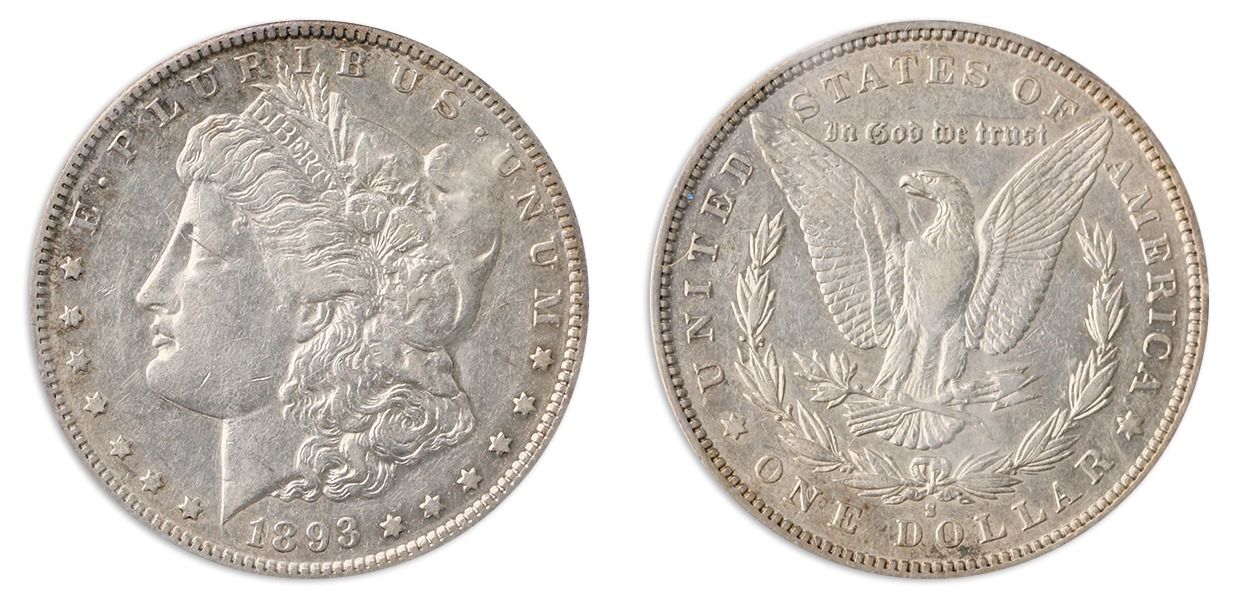
The 1893-S is the key to the series.
San Francisco struck just 100,000 in the year the Sherman Act was repealed, and nearly all of them circulated. PCGS estimates 9,948 survivors in all grades, fewer than 100 of them uncirculated. It lists at $4,600 in G-4, $16,500 in XF-40, and $450,000 in MS-63 (PCGS).
The 1889-CC comes next. Carson City struck 350,000, and PCGS estimates that 93% to 95% went to the Pittman Act melt; the GSA hoard held a single example. It lists at $900 in G-4 and $50,000 in MS-63.
Several more dates cost hundreds of dollars even when worn: the 1893-CC (677,000 struck), the 1893-O (300,000), the 1894 (110,000), the 1879-CC, the 1895-O, and the 1895-S. PCGS lists each at $250 to $800 in G-4.
One Philadelphia date exists for collectors only as a Proof, a coin struck for collectors with mirrored fields. Mint records show 12,000 business-strike 1895 dollars, but no example has ever been confirmed, and the conventional explanation is that they were melted. The 880 Proofs list at $70,000 and up in PCGS’s guide.
Condition Rarities: Common Worn, Rare Uncirculated
Mintage alone misleads with Morgans. San Francisco struck 3.2 million dollars in 1884, but most of them appear to have gone straight into circulation, so a worn 1884-S lists at $92 in VF-20, the same as a common date. In MS-63 it lists at $50,000.
The 1892-S, 1901, 1896-O, and 1886-O follow the same pattern. Philadelphia struck 6,962,000 dollars in 1901, yet few survive in high grade, and NGC suspects many bags of that date were lost to the Pittman melt.
The 1903-O runs the other way. It was considered the key to the series until the 1962 release, and today it lists at $435 in G-4 and $900 in MS-63 (PCGS).
Varieties, Prooflike Coins, and VAMs
Collectors also pay for die varieties, cataloged by Leroy C. Van Allen and A. George Mallis and known as VAMs. Popular examples include the 1878 tail-feather varieties, the 1887/6 overdate, the 1900-O/CC, the 1888-O doubled die obverse, and the 1901 doubled die reverse, which lists at $750 in VF-20 (PCGS).
Coins with mirrorlike fields are graded Prooflike (PL) or Deep Mirror Prooflike (DMPL) and collected as categories of their own.
Notable Auction Records
The top results belong to coins that are rare in mint state for one reason or another.
| Coin and Grade | Price Realized | Auction House | Sale Date |
|---|---|---|---|
| 1893-S, MS-67 (PCGS) | $2,086,875 | GreatCollections | August 2021 |
| 1893-S, MS-65 (PCGS) | $1,181,250 | GreatCollections | August 2026 |
| 1889-CC, MS-68 (PCGS) | $881,250 | Stack’s Bowers Galleries | August 2013 |
| 1884-S, MS-68 (PCGS) | $750,000 | Stack’s Bowers Galleries | November 2020 |
| 1901, MS-66 (PCGS) | $720,000 | Stack’s Bowers Galleries | August 2025 |
| 1893-S, VF-20 (PCGS) | $7,930 | Heritage Auctions | March 2026 |
How to Check Your Morgan Dollar
Five Checks for Any Morgan Dollar
- The date. It sits at the bottom of the obverse, below Liberty’s neck. Morgan dollars are dated 1878 to 1904 and 1921; the Mint’s modern collector versions began in 2021.
- The mint mark. Turn the coin over and look below the wreath, just above the letters DO in DOLLAR. An O, S, CC, or D identifies the mint; no letter means Philadelphia.
- The designer’s M. Morgan’s small initial sits at the bottom of Liberty’s neck and on the left loop of the ribbon on the reverse.
- The high points. Wear shows first on the hair above Liberty’s eye and ear, the top fold of her cap, and the eagle’s breast. Even light rubbing there keeps a coin out of mint state.
- Weight and size. A genuine Morgan weighs 26.73 grams, measures 38.1 millimeters across, and has a reeded edge.
Counterfeits and Altered Coins
NGC ranks the 1893-S among the ten U.S. coins it sees counterfeited most often, and the 1889-CC is on its top 50 as well. NGC’s counterfeit detection notes on Morgan dollars show the common methods:
- Added mint marks. Nearly all fake 1893-S dollars NGC sees are genuine 1893 Philadelphia coins with an added S, and most fake 1889-CCs carry a glued-on CC. Look for a seam or discoloration around the letter.
- Altered dates and joined halves. NGC has seen dates reshaped by moving metal, and an 1889 obverse joined to a CC reverse from another year, given away by a seam on the edge.
- Outright fakes and fake holders. Counterfeiters also strike fakes from new dies, some apparently made with lasers, and NGC has even found a fake Morgan in a counterfeit GSA holder.
When Professional Appraisal Makes Sense
For a worn common date, the silver sets most of the price, and certification adds little. It earns its cost in three cases:
- A key date or any Carson City coin
- An uncirculated coin of a condition-rarity date such as the 1884-S, 1892-S, or 1901
- A coin you suspect has been altered
Professional services like PCGS or NGC provide authentication and a grade the market trusts. If you’ve inherited a box of silver dollars and aren’t sure which deserve a second look, Blanchard’s numismatists can evaluate coins like these.
What Collectors and Investors Watch
Morgan dollars sit in two markets. Worn common dates trade largely on their silver, so their prices follow the metal. Key dates, Carson City coins, condition rarities, and gem common dates trade on grade and certified populations, where one point can multiply the price: a 1921 lists at $175 in MS-65 and $700 in MS-66 (PCGS).
The tradeoffs are real: premiums over silver on every coin, grading fees and price gaps between the grading services, and a top-grade market that rewards patience.
Added mint marks, altered dates, and counterfeit holders are common enough in this series that buying certified coins from an established dealer is the practical safeguard. Blanchard offers certified rare coins graded by PCGS and NGC, the standard any reputable dealer should meet.
Frequently Asked Questions
1. How much silver is in a Morgan silver dollar, and what is its melt value?
A Morgan dollar contains 0.7734 troy ounces of pure silver: it weighs 26.73 grams and is 90% silver and 10% copper. With silver at about $51 per ounce (as of November 12, 2026), that is about $39.50 of silver; multiply 0.7734 by the current silver price for today’s figure.
2. How much is a 1921 Morgan silver dollar worth?
The 1921 is one of the most common Morgans: 86,730,000 were struck at Philadelphia, Denver, and San Francisco. Worn examples bring about $45 to $50 in NGC’s guide, and uncirculated coins about $110 to $120 in MS-63. The 1921-D and 1921-S list at the same prices when worn and somewhat higher in mint state.
3. Which Morgan silver dollar is the most valuable?
The record belongs to the finest known 1893-S, graded MS-67 by PCGS, which brought $2,086,875 at GreatCollections in August 2021. The dates that cost the most even in low grades are the 1893-S and the 1889-CC, along with the 1895, which exists only as a Proof. For the Carson City side, see three sought-after Morgan dollars.
4. Where is the mint mark on a Morgan silver dollar, and what if there is none?
The mint mark is on the reverse, just below the wreath and above the letters DO in DOLLAR. An O means New Orleans, an S San Francisco, CC Carson City, and D Denver (1921 only). A Morgan with no mint mark was struck in Philadelphia, which is normal.
5. Is there a 1922 or 1964 Morgan silver dollar?
No. Morgan dollars are dated 1878 to 1904 and 1921, and a silver dollar dated 1922 is a Peace dollar. The Mint struck no Morgan dollars between 1921 and 2021, when it began issuing modern collector versions in 99.9% silver.
6. How can you tell if a Morgan silver dollar is fake?
Start with weight and size: 26.73 grams, 38.1 millimeters, and a reeded edge. Then check the date and mint mark under magnification for seams, tool marks, or discoloration, since added mint marks are the usual way to fake an 1893-S or 1889-CC. Any Morgan worth hundreds of dollars deserves certification by PCGS or NGC before you buy or sell it.
Conclusion
Morgan silver dollar value follows a clear order: silver under every coin, a small premium for worn common dates, $110 and up for uncirculated ones, and above them the Carson City issues, the key dates led by the 1893-S, and the condition rarities that cost tens of thousands in mint state.
Checking takes a minute: read the date, find the mint mark, and look at the high points for wear. Most will prove to be common dates, each carrying 0.7734 ounces of silver and the story of the bags it sat in.
Ready to add an authenticated Morgan to your collection? Explore Blanchard’s certified Morgan dollars, from common dates to Carson City issues.
Want to read more? Subscribe to the Blanchard Newsletter and get our tales from the vault, our favorite stories from around the world and the latest tangible assets news delivered to your inbox weekly.