Perth Mint Lunar Coin Series: Complete Guide to Zodiac-Themed Coins

Australia is home to one of the world’s largest Chinese diaspora communities, and in 1996 the Perth Mint introduced a coin series inspired by the Chinese zodiac. The Lunar coin collection spans three consecutive 12-year zodiac cycles running from 1996 through 2031, combining Chinese zodiac themes with Australian precious metal craftsmanship. Each annual release brings a new zodiac animal in gold and silver formats ranging from 1/20 oz fractional pieces to 1-kilogram coins, with strictly limited mintages that have turned early Series I dates into genuine numismatic rarities. This guide covers all three Lunar series generations, the design evolution across zodiac animals, why certain years command significant premiums, and how to approach these coins as a collector or investor.
Understanding the Chinese Zodiac
To understand the Lunar series, it helps to first understand the Chinese zodiac and how it influences both design and demand.
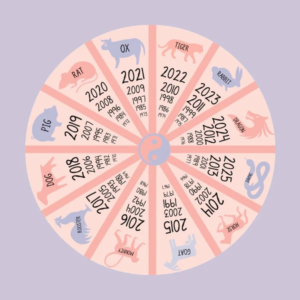
Chinese zodiac wheel showing all twelve animals and their corresponding years
Source: The Qi
The 12-Year Cycle
The Chinese zodiac is a 12-year cycle in which each year is represented by one of twelve animals: Rat, Ox, Tiger, Rabbit, Dragon, Snake, Horse, Goat, Monkey, Rooster, Dog, and Pig. Each animal carries distinct personality traits believed to shape the character of anyone born under it: qualities like the Rat’s resourcefulness, the Tiger’s courage, or the Horse’s independence. In Chinese culture these associations run deep, influencing everything from career decisions to marriage compatibility.
Lunar Calendar vs. Gregorian Calendar
Unlike the Gregorian calendar, the Chinese zodiac year doesn’t begin on January 1. Chinese New Year falls somewhere between January 21 and February 20, shifting each year. This means anyone born in January or early February could belong to either the outgoing or incoming zodiac animal depending on the exact date. For collectors pursuing birth year coins, that distinction matters, as confirming the correct animal requires checking the lunar calendar, not just the Gregorian year. The Perth Mint aligns its releases with the incoming lunar year, typically launching each new Lunar coin around Chinese New Year.
Collector Demand and Cultural Significance
Beyond personal identity, these associations also influence buying behavior. Chinese communities worldwide seek out coins representing their own birth year or that of a child, making the Lunar series as much a cultural artifact as a precious metal product. Certain animals – particularly the Dragon – generate significantly higher demand due to their auspicious status.
Lunar Coin Series I (1996-2007)
The first Lunar series ran from 1996 to 2007, completing a full 12-year zodiac cycle from the Mouse to the Pig and laying the foundation for what would become one of the world’s most collected precious metal programs.
Series Characteristics
Lunar Series I launched in 1996 as a gold-only program, with coins available in four sizes: 1/20 oz, 1/10 oz, 1/4 oz, and 1 oz. Silver wasn’t added until 1999, beginning with the Year of the Rabbit. In its early years, the series sold modestly: collectors weren’t rushing to buy, and most sizes fell well short of their mintage caps. That changed when the 2000 Lunar Dragon gold coin generated a level of demand the earlier years hadn’t seen, selling out its full production limit and signaling that the Lunar series had found its audience. From that point the program grew steadily in both size range and popularity. All gold coins throughout the series are struck in .9999 fine gold, a higher purity than many Western bullion coins of the same era.
Key Dates and Rarities
Each 1-oz gold Lunar coin in the series had a maximum mintage of 30,000. Only three years ever reached that cap: the 2000 Lunar Dragon gold coin, 2001 Snake, and 2002 Horse, i.e. the three consecutive years when the series hit its stride. Every other year fell short, meaning final mintages were whatever had sold when the Perth Mint closed the series in 2007. For the years that sold poorly, that creates genuine scarcity. The 1997 Lunar Ox gold coin, for example, reached only 13,709 coins (less than half the cap), making it the rarest 1-oz gold issue in the entire series. Fractional sizes tell a similar story: the 1996 1/10 oz gold has a confirmed mintage of just 3,792. For collectors, these numbers matter. Assembling a complete 12-year set in any size means tracking down key dates that now trade at significant premiums above their metal content.
Design Evolution
Lunar Series I established a design approach that kept gold and silver coins on distinct tracks. Gold reverses followed a clean, traditional style throughout the series: each animal rendered in classic detail against a simple background, with the Chinese character for that year’s animal, the date, and metal specifications. The 1996 Mouse Lunar gold coin reverse was designed by Tony Dean, and subsequent years brought different Perth Mint engravers, each interpreting their zodiac animal within the same restrained format.
The obverse changed once during the series. From 1996 to 1999 it carried the Raphael Maklouf portrait of Queen Elizabeth II, switching in 2000 to the Ian Rank-Broadley effigy, a transition that applied to both gold and silver coins going forward.
Silver coins followed a different path. While Lunar gold coin designs stayed consistent in approach, the silver range became a testing ground for new formats, eventually incorporating coloring, gilding, and jewel inserts as the series matured. By the mid-2000s the silver lineup had expanded into a wide range of variants in a single year, a stark contrast to the more restrained gold program running alongside it.
Watch this collector’s 10-year Lunar series video review to see how designs and sizes have evolved across the three series.
Lunar Coin Series II (2008-2019)
Series II launched in 2008 with a new Year of the Mouse design, beginning a second complete 12-year zodiac cycle that would run through 2019. Rather than simply repeating the format of Series I, the Perth Mint used the opportunity to expand the program significantly in both scale and ambition.
Series Improvements
The most significant change from Series I was scale. Series II introduced more detailed and elaborate designs, with gold and silver reverses now carrying distinct artwork from each other rather than variations of the same image. The Lunar 2018 Year of the Dog 1 oz silver coin illustrated this well: the coin depicted a German Shepherd while the gold showed a Labrador. Mintages also increased across the board, making Series II coins more attainable at issue than their Series I counterparts had been. Silver purity also shifted during the series: coins struck from 2008 to 2016 are .999 fine, while from 2017 onward the Perth Mint upgraded to .9999, bringing the Lunar program in line with its other bullion offerings.
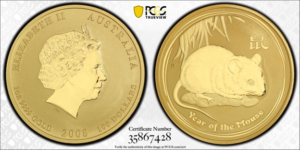
Both sides of a PCGS-graded 2008 Perth Mint Year of the Mouse Lunar gold coin
Source: PCGS
Size Range Expansion
Series II significantly extended the available formats. Gold options ranged from 1/20 oz up to 1 kg, while silver expanded to include 1/2 oz, 1 oz, 2 oz, 5 oz, 10 oz, and 1 kg coins. This made it easier for collectors to build sets at different Lunar coin price points and for investors to buy larger silver positions within the same series.
Popular Years
Dragon years consistently drive the strongest demand in the Lunar series, and Series II was no exception. The 2012 Lunar Dragon coin saw high sales across both gold and silver. The 2017 Year of the Rooster also performed strongly, with solid collector interest across multiple formats. Beyond annual designs, Series II offered both bullion and proof versions of most releases: bullion coins for investors focused on metal content, and proof editions with higher-quality finishes and lower mintages for collectors seeking scarcer variants.
Lunar Coin Series III (2020-2031)
Series III launched in 2020 with the Year of the Mouse and is currently midway through its third complete zodiac cycle, running until 2031. It carries forward the expanded size range and design quality of Series II while introducing several meaningful changes.
Current Series
Series III builds on the format established by its predecessors but introduces several notable changes. The most significant is the addition of platinum. Previous series offered gold and silver only; Series III adds a 1 oz platinum Lunar coin to the lineup for the first time, with a mintage of just 5,000 per year. All coins across gold, silver, and platinum are struck in .9999 fine metal. The obverse also changed mid-series: following the death of Queen Elizabeth II in September 2022, coins from 2023 onward carry the effigy of King Charles III.
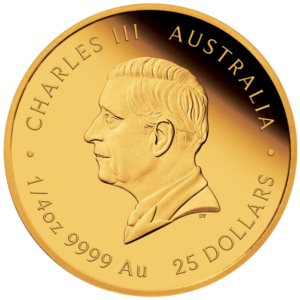
Obverse of a Perth Mint Lunar Series III gold coin featuring King Charles III
Source: Perth Mint
Design Innovation
Series III also introduced a new anti-counterfeiting measure: a micro-engraved letter embedded within the reverse design, visible only under magnification. This security feature appears on the 1 oz and 2 oz gold coins and across the Lunar silver coin range, reflecting the program’s growing scale and the need to protect against fakes in an increasingly global market.
Why Certain Years Command Premiums
Not all Lunar coins trade at the same premium above their spot price. Several factors determine why some years are worth significantly more than others.
Dragon Year Phenomenon
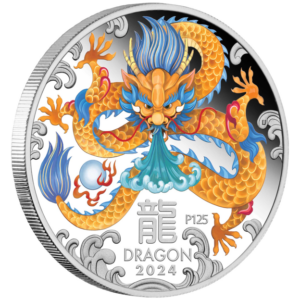
Reverse of the 2024 Perth Mint Lunar Series III Year of the Dragon colored silver proof coin
Source: Perth Mint
The Dragon is the only mythological creature in the Chinese zodiac and is widely considered the most auspicious sign. It is associated with power, prosperity, and good fortune. This cultural status translates directly into demand. Dragon year coins consistently outsell the rest of the zodiac cycle across all three series. When the 2024 Lunar Dragon coin launched, Perth Mint’s General Manager of Minted Products noted that the 2012 Dragon had seen unprecedented demand and that international interest in the new release was already high. That sustained appetite supports stronger secondary market prices long after the coins leave the primary market.
Low Mintage and Condition
The second driver is scarcity. Early Series I dates with low final mintages (particularly fractional sizes that sold poorly at issue) now trade at premiums that have nothing to do with the zodiac animal and everything to do with supply. The 1997 Lunar Ox gold coin and several early fractional gold coins are examples where modest original sales created genuine long-term rarity.
Condition adds another layer. Professional grading services like PCGS assign numerical grades to individual coins, and top-grade examples (MS69 and MS70 for bullion, PR69 and PR70 for proofs) are significantly scarcer than lower-grade pieces from the same mintage. Registry set collectors actively compete for the highest-graded coins, pushing prices on perfect specimens well above what the mintage numbers alone would suggest. Proof versions across all three series carry lower mintages than their bullion counterparts to begin with, making high-grade proofs the scarcest of all. Coins in original mint capsules and presentation packaging also tend to command stronger prices than unpackaged examples of the same date and grade.
Collecting Strategies
There is no single right way to collect the Lunar series. The approach depends on budget, goals, and how deep a commitment the collector wants to make.
Type Set Approach
The most accessible entry point is building a type set, i.e. one Lunar coin representing each of the twelve zodiac animals, regardless of series or size. A collector might choose all 1 oz silver coins from Series III, for example, or mix sizes and series based on availability and budget. This approach captures the full zodiac cycle without the pressure of chasing scarce dates or completing a specific series.
Complete Series Focus
A more demanding goal is assembling a complete series, i.e. all twelve years from Series I, II, or III in a consistent size. Series III is the most practical starting point since coins are still being issued at primary market prices. Series I is the most challenging, with several key dates commanding significant premiums on the secondary market. Completing all three series across a single size is the most ambitious goal of all, spanning 36 years of annual releases from 1996 to 2031.
Investment Priority
Collectors focused on value tend to concentrate on two things: key dates with genuinely low mintages, and Dragon years with proven secondary market demand. Buying Series III releases at issue price remains the most cost-efficient way to accumulate Lunar coins with future appreciation potential.
Birth Year Focus
Many buyers purchase Lunar coins purely for personal significance, choosing their own zodiac year, or those of children and family members. Birth year coins make culturally meaningful gifts, particularly within Chinese communities where the zodiac carries real cultural weight. Parents commonly buy the relevant Lunar coin at the birth of a child, and some collectors extend this across the whole family, acquiring a coin for each member’s zodiac year. Others turn it into an annual tradition, purchasing each new release as it comes out and treating the series as a running record of years rather than a strictly numismatic pursuit.
Conclusion
The Perth Mint Lunar series spans three generations and 36 years of annual releases, combining Chinese zodiac themes with Australian precious metal craftsmanship in gold, silver, and platinum formats from 1/20 oz to 1 kilogram. Each series expanded on the last in scope and design, but the underlying appeal has stayed consistent: limited mintages, annually changing designs, and cultural significance that drives demand well beyond the bullion market. For collectors, that means a program with genuine key dates, proven secondary market depth, and enough variety to suit any budget or strategy. For investors, it means government-issued precious metal in a format with demonstrable long-term demand. Browse Blanchard’s selection of Perth Mint Lunar gold and silver coins to find the right piece for your collection or portfolio.
FAQs
1. What are Lunar coins?
Lunar coins are precious metal coins issued annually by the Perth Mint, each featuring one of the twelve Chinese zodiac animals. They are produced in gold, silver, and platinum across a range of sizes, combining bullion value with limited mintages and cultural significance.
2. How many Perth Mint Lunar series are there?
There are three Lunar New Year coin series. Series I ran from 1996 to 2007, Series II from 2008 to 2019, and Series III began in 2020 and runs through 2031.
3. Are Lunar coins a good investment?
Lunar coins offer a combination of precious metal content and collectible appeal, with limited mintages that have supported price appreciation on many earlier dates, particularly from Series I. As with any precious metal purchase, value depends on the specific coin, the year, and market conditions at the time of sale.
4. Why are Year of the Dragon coins more expensive?
The Dragon is the most auspicious animal in the Chinese zodiac, and demand from collectors – particularly in Asian markets – consistently outpaces other years. That cultural significance has supported higher premiums at issue and stronger secondary market prices over time.