Swiss 20 Franc Gold Coins: Helvetia and Vreneli Fractional Gold Excellence
Posted on — Leave a commentFor investors seeking fractional gold without paying excessive premiums, Swiss 20 francs stand out as one of the most efficient options available. Each Swiss 20 franc gold coin contains 0.1867 troy ounces of pure gold and typically trades at just 3-5% over melt value, among the lowest premiums for fractional gold coins globally. That pricing efficiency stems from Switzerland’s participation in the Latin Monetary Union gold standard, which imposed uniform specifications on gold coinage across member nations. Understanding how this system shaped Swiss 20 franc issues helps explain their enduring liquidity, low premiums, and continued relevance for modern investors. This guide examines the Helvetia and Vreneli designs, their technical specifications, and practical considerations for acquiring these coins.
For readers who prefer a visual overview, this short video offers a clear look at a classic Swiss 20 franc gold coin, including its design details, specifications, and historical context within the Latin Monetary Union.
The Latin Monetary Union and Swiss Gold
Switzerland’s participation in the Latin Monetary Union established the foundation for its iconic 20 franc gold coins. Formed by treaty in 1865, the union introduced standardized gold and silver coinage across member nations, shaping Swiss fractional gold production for several decades under a unified European gold standard.
Switzerland’s Monetary Union Participation
In 1865, Switzerland joined France, Belgium, Italy, and Greece in forming the Latin Monetary Union, a monetary agreement designed to harmonize coinage specifications across participating countries. Coins of equivalent denominations were required to share identical weight, fineness, and precious metal content, allowing them to circulate freely throughout union territories.
This standardization produced immediate practical benefits. A Swiss 20 franc gold coin matched its French, Belgian, or Italian counterpart exactly, enabling merchants across Western Europe to accept these coins interchangeably. International trade became more efficient when gold coins from different nations carried guaranteed and identical gold content.
Gold Standard Implementation
Under the union’s rules, 20 franc gold coins were struck in .900 fine gold with a total weight of 6.45 grams, yielding a pure gold content of 0.1867 troy ounces. These specifications were deliberately chosen to balance durability for circulation with meaningful gold value, creating a practical fractional denomination for commerce.
Swiss mints adhered strictly to these standards. The Swiss 20 franc gold coin weight of 6.45 grams matched French 20 franc pieces precisely, while the .900 fineness ensured coins could withstand years of handling without excessive wear. This combination produced a widely recognized, standardized form of fractional gold – one that continues to appeal to modern investors seeking liquidity, consistency, and low-premium gold ownership.
Helvetia 20 Swiss Franc Gold Coin (1883-1896)
The Helvetia series represents Switzerland’s first contribution to Latin Monetary Union gold coinage. Produced at the Bern Mint from 1883 through 1896, these coins established a distinctly Swiss aesthetic within the standardized 20 franc format.
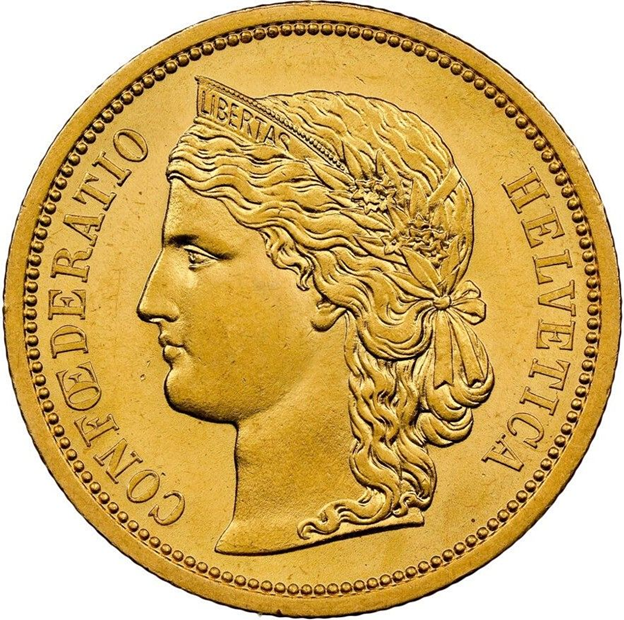
Image: Swiss Helvetia 20 franc gold coin obverse
Source: Numista
Design and Symbolism
Designed by Albert Walch and engraved by Karl Schwenzer, the 20 franc Swiss Helvetia gold coin features the head of Helvetia, Switzerland’s classical female national personification, facing left with her hair tied with a ribbon and wearing a diadem inscribed “LIBERTAS” and oak wreath. The obverse bears the legend CONFOEDERATIO HELVETICA. The reverse displays the Swiss coat of arms surrounded by a laurel wreath, with a five-pointed star above.
The design exhibits restrained elegance compared to the more ornate French 20 franc pieces of the same era. This aesthetic choice reflected Swiss cultural values: precision, clarity, and understated dignity. The Helvetia 20 franc created immediately recognizable Swiss gold coins that were widely accepted across Europe while maintaining the practical, standardized specifications required by the Latin Monetary Union.
Production Details
The Bern Mint struck the Helvetia 20 franc Swiss gold coin from 1883 through 1896, producing substantial quantities that ensure modern availability. Some years saw larger mintages than others, creating date variations that affect collector premiums, though most Helvetias trade primarily as bullion.
These coins survive in conditions ranging from heavily circulated to occasional Mint State pieces. The circulated examples typically carry minimal premiums over gold content, making them attractive to investors prioritizing cost efficiency over numismatic grade.
Vreneli 20 Swiss Franc Gold Coin (1897-1949)
The Vreneli series succeeded the Helvetia design in 1897, introducing a more personal and accessible aesthetic to Swiss gold coinage. This design would become Switzerland’s most recognizable gold coin, remaining in production, including postwar restrikes, for more than five decades.
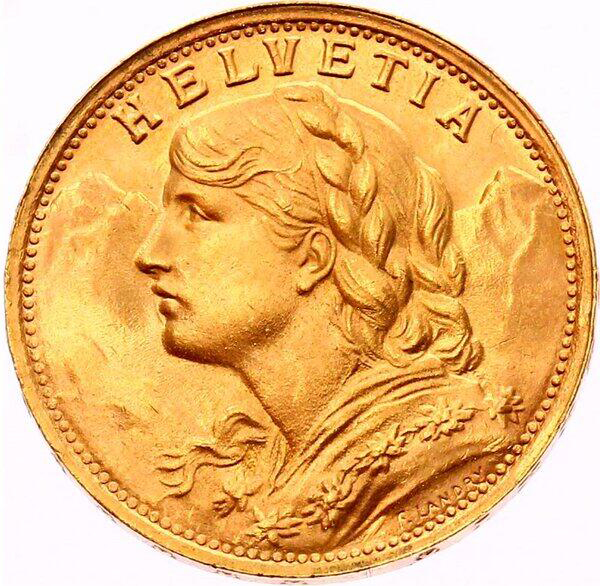
Image: Swiss Vreneli 20 franc gold coin obverse
Source: Numista
Design Evolution
Fritz Ulysse Landry created the Swiss 20 franc Vreneli gold coin with notably different imagery from the earlier Helvetia series. The obverse features a profile portrait of a young Swiss Alpine girl, earning the affectionate nickname “Little Verena” or Vreneli in Swiss German. This feminine portrait replaced the formal standing Helvetia with a more relatable, human representation of Switzerland. The reverse maintained consistency with Swiss iconography, displaying the Swiss shield surrounded by oak leaves and Alpine roses. This combination of botanical elements reinforced Switzerland’s natural heritage while preserving the dignified simplicity characteristic of Swiss coinage. The Vreneli’s approachable design appealed to both investors and collectors, contributing to its enduring popularity.
Extended Production Run
The Bern Mint struck Vrenelis regularly from 1897 through 1935, producing tens of millions of pieces across nearly four decades. This massive mintage created the abundant modern supply that keeps premiums minimal today. Production ceased in the mid-1930s as Switzerland moved away from circulating gold coinage amid changing monetary policies and global economic disruption. Minting resumed briefly in 1947 and 1949 with restrikes using earlier dates, primarily to meet postwar gold demand rather than for circulation, which has led to some confusion about actual production years. Most Vreneli dates remain readily available at premiums barely above Swiss 20 franc gold coin melt value, making them among the most cost-efficient fractional gold coins for investors seeking widely recognized European gold.
Why the 20 Swiss Franc Coin Offers Value
Swiss 20 franc gold coins occupy a distinctive position in the fractional gold market, combining low acquisition costs with high recognition and liquidity. Their appeal is not driven by rarity or speculative premiums, but by structural factors that consistently favor investors seeking efficient gold exposure.
Low Premium Structure
One of the primary reasons Swiss gold francs remain attractive is their persistently low premium structure. Millions of coins were struck and survive today, creating a deep and competitive secondary market that keeps dealer markups modest. Unlike limited-issue bullion or modern fractional products, Swiss francs are widely treated as near-bullion items, with pricing closely tied to current gold spot prices rather than collector demand. This abundance allows investors to access fractional gold with minimal overhead, making Swiss francs among the most cost-efficient historical gold coins available. Their broad market recognition also supports strong liquidity, enabling straightforward resale through dealers, auctions, and private transactions.
Swiss Reputation Benefits
Beyond pricing, Swiss gold benefits from the country’s long-standing reputation for political neutrality, financial stability, and precision manufacturing – factors that have driven affluent investors to significantly increase their gold allocations in recent years. Gold coins produced by the Bern Mint reflect Switzerland’s emphasis on consistent standards and quality control, reinforcing confidence in authenticity and specifications. The association with Swiss banking traditions and conservative financial practices adds an intangible but meaningful layer of trust, particularly for investors who value credibility and long-term reliability in precious metals. The “Swiss” designation itself carries weight in global bullion markets, contributing to steady demand even during periods of market volatility.
Practical Fractional Gold Ownership
Swiss 20 franc coins also offer practical advantages inherent to fractional gold. Their smaller size allows for incremental accumulation and flexible liquidation, making them well suited to investors who prefer not to transact exclusively in full-ounce quantities. The compact format is efficient for storage and transport relative to gold content, while decades of international acceptance reinforce their role as a recognized monetary asset rather than a niche collectible. Together, these factors make Swiss gold francs a practical choice for investors seeking gold exposure through liquid, affordable fractional pieces with long-term consistency.
Other Swiss Gold Denominations
While the 20 franc gold coin remains the most widely traded Swiss gold issue, Switzerland has produced additional gold denominations that may appeal to investors and collectors depending on objectives, availability, and premium tolerance.
The 10 Swiss Franc Coin
Swiss 10 franc gold coins represent the half-size equivalent of the 20 franc denomination, containing 0.0933 troy ounces of pure gold. These coins were issued in both Helvetia and Vreneli designs, closely mirroring the imagery and specifications of their larger counterparts. Due to smaller mintages, 10 franc pieces are noticeably less common on the market than 20 franc coins. While they offer the same standardized gold content on a proportional basis, 10 franc coins typically carry higher percentage premiums. This is largely driven by lower availability rather than increased demand, making them less efficient for investors focused strictly on gold weight per dollar. Swiss 10 franc gold coin value therefore tends to reflect both gold content and a collectibility premium. As a result, 10 franc coins are often favored by collectors or investors prioritizing smaller denominations over premium efficiency.
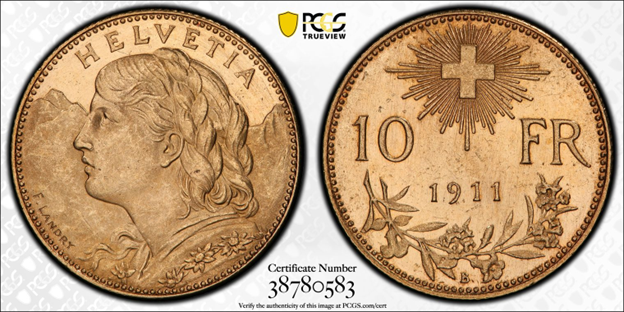
Image: Swiss 10 franc gold coin obverse and reverse
Source: PCGS
Larger Swiss Franc Coin Gold Issues
Switzerland has also issued 100 franc gold coins, primarily as commemorative pieces rather than circulating currency. These higher face value coins were struck in more limited quantities and are generally priced with a stronger numismatic component compared to standard bullion-oriented issues. In the modern era, Switzerland has produced contemporary gold bullion and commemorative programs, often aimed at collectors rather than investors seeking low premiums. These include special editions and themed releases that may command higher premiums due to design, packaging, or limited mintages. While these larger or modern Swiss gold coins offer historical or collectible appeal, they typically lack the cost efficiency and liquidity that define the classic Swiss 20 franc gold coin.
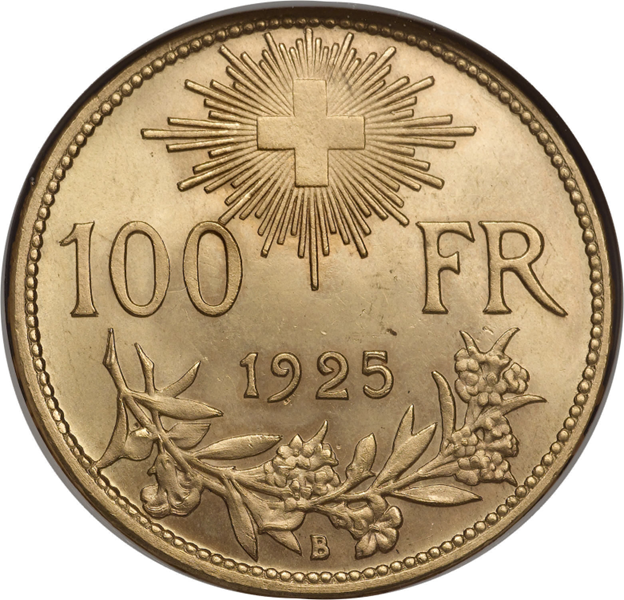
Image: Swiss 100 franc gold coin reverse
Source: Numista
Swiss Silver Franc Coinage
While Switzerland is best known for its gold francs, silver franc coinage played an important complementary role within the country’s monetary system and remains of interest primarily to collectors today.
The Swiss 5 Franc Coin
Swiss 5 franc silver coins were struck in substantial size and weight, serving as the backbone of Switzerland’s historic silver currency. These coins appeared in a variety of designs, including standard circulating types as well as commemorative issues tied to shooting festivals, anniversaries, and national themes. Although they contain meaningful silver content, market value is often driven more by numismatic interest than by melt value. Common dates remain accessible, while scarcer issues and well-preserved examples can command significant premiums.
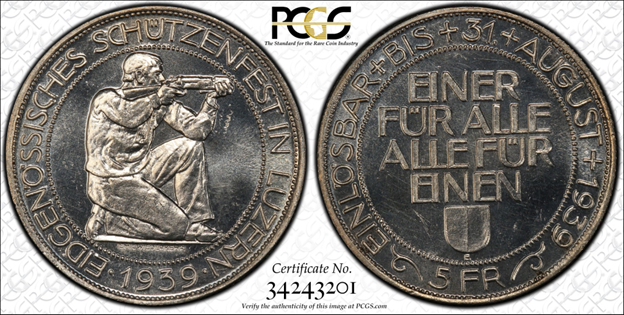
Image: Swiss 5 franc shooting thaler obverse and reverse
Source: PCGS
Smaller Silver Denominations
Smaller denominations, such as 2 franc silver coins, circulated widely and functioned as everyday currency. Earlier 1 franc and sub-franc issues were also struck in silver, though later versions transitioned to base metals as monetary standards evolved. In the modern era, Switzerland has issued an extensive range of commemorative silver francs, primarily aimed at collectors rather than bullion investors.
Investing in Swiss Gold Francs
Swiss 20 franc gold coins are widely used by investors seeking low-premium fractional gold, but realizing their full value depends on disciplined acquisition, basic authentication, and appropriate storage. Approached correctly, Swiss francs offer a straightforward, liquid form of historical bullion ownership.
Acquisition Strategies
Dealer Selection and Pricing Discipline
Most investors acquire Swiss gold francs through established precious metals dealers rather than private transactions. Reputable dealers provide transparent pricing, verified authenticity, and clear buyback policies, reducing counterparty risk. Because Swiss francs trade close to melt value, pricing differences between dealers are usually modest, making it worthwhile to compare premiums before purchasing.
Date and Condition Selection
From an investment perspective, common dates are generally preferred, as they carry little to no numismatic premium. Accepting circulated examples often maximizes gold-per-dollar efficiency, since light wear has minimal impact on bullion value. Investors focused on cost efficiency typically avoid scarce dates or high-grade pieces unless collecting is a secondary objective.
Authentication Considerations
Weight, Dimensions, and Gold Content
An authentic Swiss 20 franc gold coin adheres closely to the 6.45-gram standard, making precise weight measurement an effective first check against counterfeits. Diameter and thickness consistency provide additional confirmation. Non-destructive testing methods can be used to verify the expected .900 fineness without damaging the coin.
Visual and Market Awareness
Genuine Swiss francs display consistent strike quality and design characteristics associated with Bern Mint production. While large-scale counterfeiting is uncommon, familiarity with normal appearance and market pricing helps investors identify anomalies before purchase.
Storage and Handling
Proper storage preserves condition and resale value. Individual holders or capsules help prevent unnecessary wear, while tube storage is practical for investors holding multiple coins. Maintaining purchase records and organized storage supports insurance coverage and ensures coins remain accessible when partial or full liquidation is required.
Conclusion
Swiss 20 franc Helvetia and Vreneli gold coins combine low acquisition costs with exceptional recognition and liquidity, reflecting Switzerland’s long-standing reputation for quality and monetary stability. Produced under standardized conditions and struck in large quantities, these historic European gold coins remain widely available and consistently efficient for investors. Their practical size, reliable market acceptance, and minimal premium structure make Swiss gold francs a strong option for those seeking cost-effective fractional gold ownership. Explore Blanchard’s World Gold inventory to add Swiss gold francs to your precious metals portfolio.
FAQs
How much is a 20 Swiss franc gold coin worth?
Swiss 20 franc gold coin value generally tracks the price of gold, with the coins often trading close to their intrinsic gold value due to strong supply and liquidity.
What is the gold content of Swiss 20 franc coins?
Swiss 20 franc gold coins contain 0.1867 troy ounces of pure gold, struck in .900 fine gold under the standards of the Latin Monetary Union.
What’s the difference between Helvetia and Vreneli gold coins?
The difference between these coins is primarily in design and era of production, with Helvetia representing earlier issues and Vreneli later ones, while gold content and specifications remain the same.
Are Swiss gold francs a good investment?
Swiss gold francs are commonly favored by investors seeking low-premium, widely recognized fractional gold with strong liquidity and long-term market acceptance.