U.S. Inflation Soars Above 4%, Hitting 3-Year High. Global Central Banks Take Action

Inflation is heating up again. The cost of gas at the pump has spiked, and so have prices for everyday goods and services. Middle-class Americans continue to struggle with the high cost of living.
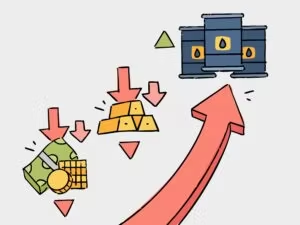
U.S. consumer inflation in May jumped at the fastest pace in over three years, climbing to 4.2% from a year ago, according to Bureau of Labor Statistics data released this week. Inflation isn’t just rising here in America. Rising inflation is a worldwide event caused by the U.S. war against Iran.
Since the start of the U.S. war in Iran in February, the closure of the Strait of Hormuz—a key oil tanker transport route off Iran’s southern coast has crippled the global energy supply chain. Inflation is rising around the world due to higher energy costs.
Europe takes action against inflation.
Notably, the European Central Bank raised interest rates in June, marking a big move to fight against rising inflation. The European Central Bank, which sets policy for the 21 countries that use the euro, lifted its key interest rate by a quarter point to 2.25%. It was the first interest rate hike by the ECB since September 2023.
Before the U.S. attacked Iran in February, inflation in the eurozone was close to the central bank’s 2% target. In May, it jumped to 3.2%.
Central bank officials in Europe are acting fast to rein in rising consumer costs as the higher energy prices feed into higher prices for food and other everyday consumer items.
Global central banks are moving fast.
The ECB isn’t the only global central bank raising rates to fight inflation from the Middle East war. Since February, the South African central bank, and Australia and Norway have also bumped their key interest rates higher to try to tame rising inflation caused by higher energy prices. The Bank of Japan is also expected to raise interest rates later in June.
Recession ahead?
The longer the U.S.-Iran war continues, economists predict that higher inflation, slower economic growth and even recession could loom ahead.
Gold has softened in recent weeks amid rising expectations that the Federal Reserve may need to keep interest rates higher for longer to battle the rising inflation Americans now face every day. Because gold is a non-yielding asset, it is more sensitive to expectations for interest rates changes.
Five years later, Fed still hasn’t won battle against inflation.
In the U.S., inflation has been above the Federal Reserve’s 2% target rate for five years. The current run of above-target inflation is the longest since the central bank adopted the 2% target level in 2012.
Will the Fed follow other global central banks in the fight against inflation with higher interest rates this year? That remains to be seen and the Fed’s new chairman Kevin Warsh faces tough challenges and a delicate balancing act with a White House that has been asking for lower interest rates.
What rising inflation means for you?
Inflation erodes the purchasing power of the dollars that you spend every day. Your dollar buys less today than it did last year. That means you need to spend more money to maintain your same standard of living.
How can you protect your purchasing power?
Historically, gold tends to perform better during times of extreme or unexpected inflation, as well as heightened geopolitical volatility, both of which we are seeing now. Recently, gold more than doubled in the two years through the end of 2025, easily outpacing consumer inflation and also beating the stock market.
The key driver? Inflation concerns following the Covid-19 supply chain inflation shock of 2021-2022, which the Fed has never fully vanquished.
Gold’s price today offers opportunity for investors
Gold has drifted lower on profit-taking by short-term traders in recent weeks. If you buy gold today, you are trading fewer dollars for more gold, and get more inflation protection for the future.
While global central banks are moving fast to rein in inflation, it’s not clear the Fed will follow suit. You can’t control the Fed, or inflation, but you can control your diversification strategy. Inflation protection is on sale right now with the recent pullback in gold. Contact Blanchard today if you’d like to discuss the economic outlook or to get personalized portfolio recommendations to help you meet your long-term financial goals.