The coin Harry Bass chose to keep

There are gold dollars. And then there’s this gold dollar.
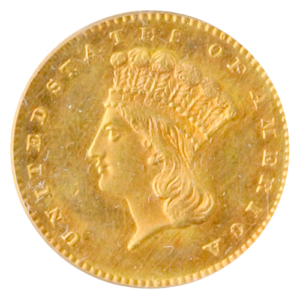
In 1867, the Philadelphia Mint struck just 5,200 gold dollars. Of those, only a handful survived the 150 years in anything close to pristine condition. Today’s coin did, and somewhere along the way, it caught the eye of Harry W. Bass Jr.
Bass built one of America’s most renowned coin collections by patiently assembling it over many decades. He didn’t collect coins as an investor chasing returns, but as a man who simply refused to own anything less than the best. When his collection was dispersed, institutions and serious collectors competed for every piece.
In other words, the Bass name on a coin isn’t a footnote; it’s a credential—a secret handshake known only to those who appreciate its significance.
This 1867 Gold Dollar carries a PCGS grade of MS65, with an attractive luster and only two others in its grade. At this grade, with such a low surviving population, coins like this don’t surface often. When they do, they don’t stay available for long.
The Type 3 Indian Princess gold dollar was the final and finest evolution of America’s smallest gold coin. Designer James Longacre enlarged the head, refined the portrait, and gave Liberty a feathered headdress that transformed a coin once criticized for weak strikes into one of the most graceful designs in American numismatics.
The obverse carries the crowned Indian Princess in sharp profile, encircled by the words “UNITED STATES OF AMERICA.” The reverse is elegantly spare: “1 DOLLAR” centered within an agricultural wreath, the date below.
Coins at the MS65 level with major collection pedigrees don’t trade often. When they do, they don’t stay available for long. Especially with this combination of low original mintage, survival across 150 years, and a name like Bass.
Blanchard is pleased to offer this 1867 $1 Gold PCGS MS65 to serious collectors and investors. Call us at 1-888-782-6405 to discuss whether it belongs in your portfolio.
1867 Historical Events Timeline
March – Nebraska Became a State
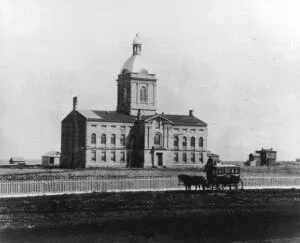
Nebraska joined the Union as the 37th state on March 1, 1867. Its admission came during Reconstruction, when Congress was reshaping the political map of the country after the Civil War.
March – Alaska Was Purchased from Russia
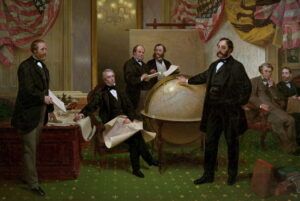
The United States agreed to buy Alaska from Russia in 1867 for $7.2 million, a deal many critics at the time mocked as “Seward’s Folly.” It later proved to be one of the most important land acquisitions in American history.
December – Charles Dickens Began His U.S. Reading Tour
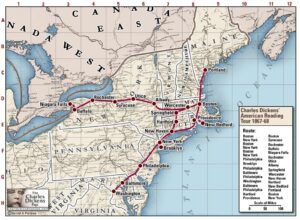
Charles Dickens launched his famous 1867–1868 American reading tour with his first public reading at Tremont Temple in Boston on December 2, 1867. The tour drew huge crowds and made him one of the era’s most celebrated literary attractions in the United States.
Nebraska State Capitol image from Nebraska State Historical Society
Signing of the Alaska Treaty image from Emanuel Leutze
Map of Dickens’ American Reading Tour image from The Charles Dickens Page