Survey: 89% See Global Central Bank Gold Reserves Climbing Over Next Year

Central banks bought an average of 1,000 tons of gold over the past four years, up significantly from the 500t average over the last decade. This marked a big jump in physical gold buying as geopolitical and economic uncertainty soared around the globe.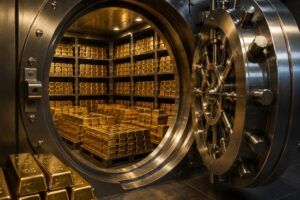
Central bankers aren’t done buying gold, not by a long shot. Over the next 12 months, 89% of global central bankers expect official gold reserves to climb, according to a new survey of central bankers conducted by the World Gold Council this spring.
Global central banks could seem like a group of faraway, opaque organizations that no one really knows much about.
This new survey directly asked central bankers themselves for their thoughts on gold, peeling back some of the secrecy that can exist around official reserve decisions.
Here’s why you should take a closer look on what central banks have been quietly doing, behind the scenes in recent years.
Global central banks aren’t trying to day trade precious metals—they are trying to de-risk their portfolio reserves. In recent years, central banks have been buying gold systematically, regardless of price. They’ve moved away from owning U.S. Treasuries and dollar-denominated assets and moved into owning gold, which is not beholden to or controlled by any country or government.
Here’s what the central bankers told the World Gold Council in a survey ending May 19. Notably, most of the central bankers’ responses were received after the start of the U.S. war against Iran.
Forty-five percent of all central banks said their own gold reserves will increase in the next 12 months. Fifty-three percent of emerging markets central banks said their own gold reserves will increase in the next 12 months.
Key reasons central bankers say they own gold:
- Performance in times of crisis: 90%
- Long-term store of value: 84%
- Effective portfolio diversifier: 83%
- Diversification policy: 80%
- Geopolitical risk hedge: 78%
More Gold, Less U.S. Dollar Holdings Ahead
What’s more, the central bankers expect gold accumulation trends to continue. Over the next five years, 84% of the central banks surveyed expect gold reserves to be higher. Meanwhile, 74% of central banks said they see moderately or significantly lower U.S. dollar holdings within global reserves over the next five years.
The U.S. dollar was the main fiat currency with a target on its back. Levels of central banks holdings of the euro and renminbi were expected to be unchanged five years from now.
Central banks buy gold for many of the same reasons that individuals like you want to own physical precious metals. Physical gold and silver are tangible assets that carry no credit or counterparty risk, they remain a trusted and recognized assets around the world when fiat currencies go up and down.
When you own gold, you own it. No one can freeze your asset and devalue your gold. Gold and silver are physical, borderless assets. Physical precious metals exist outside the digital banking system, making them immune to asset freezes or financial sanctions imposed by any nation.
Physical gold and silver carry no default risk. Unlike paper currencies, government bonds, or other securities, physical gold does not depend on an issuing institution’s ability to pay its debts. It holds intrinsic value that cannot be devalued by central bank printing presses.
Precious metals act as liquidity in times of crisis. Gold and silver are highly liquid assets that are universally recognized. In times of financial distress, you can sell precious metals anywhere quickly and privately.
Historical trust. Civilizations have trusted gold as a store of value for thousands of years. Central bank managers today use this legacy to instill confidence in a nation’s economic stability. Individual investors have peace of mind that precious metals have a 5,000-year proven track record of preserving and growth wealth.
On Wall Street, there’s an old saying: “Don’t fight the trend.”
Today, central bankers are trusting and investing in gold and plan to continue to increase gold reserves looking five years into the future. Central bankers are some of the longest timeframe investors on the planet. They don’t buy and sell gold based on short-term events or price movements—they buy gold to preserve and protect their nation’s wealth.
The recent pullback in gold prices created opportunity for long-term individual investors like you. Have you considered locking in some profits in the toppy stock market and rolling that over into precious metals? It’s never an actual profit until you take it. If the stock market is down 50% a year from now, like it was after the Dot.com crash in 2000, you’ll be happy you rolled some of that money into precious metals.