Monster Box of Silver Eagles: When Bulk Buying Saves Money

Buying 500 American Silver Eagles one at a time typically costs more than purchasing them in a sealed monster box. A monster box is the U.S. Mint’s official bulk packaging format, containing 500 one-ounce Silver Eagles in their original sealed case. Because this format is how coins enter the authorized dealer network, monster boxes are usually priced closer to wholesale levels than individual retail purchases. Depending on market conditions, buying in bulk can meaningfully reduce the per-coin premium while preserving the benefits of government-issued bullion. This guide explains what a monster box contains, how pricing compares to single-coin purchases, when bulk buying makes financial sense, and what alternative monster box options exist beyond American Silver Eagles.
What Is a Monster Box?
A monster box is the U.S. Mint’s standard bulk packaging format for American Silver Eagles, containing 500 one-ounce coins in a sealed cardboard case.
Watch this video of a sealed monster box being opened to see the packaging, tube arrangement, and coin condition firsthand.
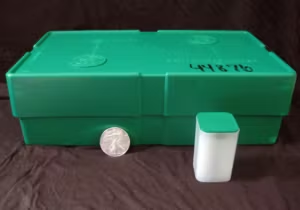
Sealed U.S. Mint monster box with green tube and Silver Eagle coin for scale.
Source: Wikimedia Commons
Wholesale Distribution Structure
When purchased in large quantities, American Silver Eagles are distributed through the U.S. Mint’s authorized purchaser network rather than sold directly to the public. To facilitate wholesale transactions, newly struck coins are packaged into standardized 500-coin cases designed for efficient handling, transport, and storage. This format supports large-volume transfers while preserving original mint packaging integrity.
Industry Recognition and Terminology
As the 500-coin case became the benchmark for substantial silver transactions, it evolved into a recognized unit of trade within the bullion market. The term “monster box” developed within the industry as an informal nickname referencing the case’s substantial size and weight, rather than as an official U.S. Mint designation.
Internal Tube Configuration
Each Silver Eagle monster box contains 25 green plastic tubes manufactured for American Silver Eagle storage. Every tube holds 20 coins stacked vertically, forming complete rolls that fit securely within the outer case. The cylindrical design allows tight nesting, reducing internal movement during shipping and handling.
Total Monster Box Silver Content
A full monster box contains exactly 500 troy ounces of .999 fine silver. This makes the sealed case a standardized bulk silver unit commonly referenced in pricing and inventory management.
Weight and Dimensions
Including packaging materials, a silver monster box weighs approximately 40 pounds. Standard dimensions measure roughly 15″ x 9″ x 5″, though minor variations can occur depending on production year.
Seal Integrity and Unopened Status
The U.S. Mint applies official tape across the box opening at the time of distribution. An intact seal indicates the case has not been opened since leaving the mint’s distribution system. While sealed status does not eliminate the need for due diligence, it provides visible evidence of original packaging condition and may command a modest premium in certain resale situations.
Exterior Labeling and Dating
The outer case displays production labeling, but monster boxes do not include individual certificates of authenticity. Boxes shipped directly from the Mint typically contain coins from a single production year. However, dealer-held inventory should be verified if year uniformity is important, as mixed-year cases may exist depending on sourcing.
Cost Comparison: Bulk vs. Individual
Monster boxes deliver lower per-coin costs than individual Silver Eagle purchases, though the advantage depends on market conditions and dealer pricing.
Wholesale Proximity Pricing
Because a monster box of Silver Eagles enters the market through authorized dealer networks rather than retail channels, it trades closer to wholesale pricing levels. Individual Silver Eagles purchased one at a time typically carry retail premiums that reflect handling, packaging, and small-quantity distribution costs. Bulk format reduces many of these intermediary handling steps, often resulting in lower per-coin premiums. The premium difference between formats fluctuates based on silver market conditions, dealer inventory levels, and overall demand for physical coins.
Per-Coin Cost Analysis
Calculating the true cost advantage requires dividing the total monster box price by 500 coins, then comparing this figure to current individual coin pricing from the same dealer. The premium gap represents actual savings on identical government-issued silver. During periods of tight supply or high retail demand, single-coin premiums often expand more rapidly while bulk pricing adjusts more gradually.
Additional Cost Factors
Beyond headline premium savings, buyers should evaluate the total cost of ownership associated with a 500-ounce purchase. A silver monster box weighs approximately 37 pounds and requires insured shipping appropriate for both its weight and declared value, increasing acquisition expenses. High-value shipments also necessitate transit insurance to mitigate loss or damage risk.
Storage considerations follow naturally from the size and value of the holding. Substantial silver positions may require upgraded home safes or professional vault services, introducing ongoing security costs.
Capital allocation is another factor. Committing funds to a single 500-ounce purchase reduces short-term liquidity compared to gradual accumulation strategies, potentially limiting flexibility in changing market conditions.
When Monster Box Buying Makes Sense
Monster boxes are not inherently superior to individual coin purchases; their advantages depend on an investor’s objectives, capital structure, and time horizon.
Investor Profiles and Objectives
The format is most practical for investors building meaningful silver positions over several years. Purchasing in 500-ounce increments reduces cumulative premium costs across large holdings and simplifies acquisition at scale. Retail dealers also rely on sealed cases to maintain inventory efficiently, using bulk pricing to support retail margins.
For individual investors, monster boxes are generally best suited to long-term holding strategies. Committing significant capital to a single sealed case makes sense when frequent partial liquidation is unlikely and when flexibility is less important than cost efficiency.
Capital Structure and Liquidity
A monster box represents a concentrated allocation of funds. Buyers should ensure the purchase does not compromise emergency reserves or create disproportionate exposure within a broader portfolio. The central trade-off is straightforward: lower per-coin premiums in exchange for reduced liquidity compared to smaller denominations.
Maintaining sufficient non-metal liquidity is essential to avoid being forced to sell silver during unfavorable market conditions.
Market Environment and Timing
Market conditions also influence whether bulk purchasing is advantageous. During silver price corrections, investors may choose to establish larger positions at more attractive entry points. Conversely, when the premium difference between bulk and single-coin formats narrows, the relative cost advantage of a monster box diminishes.
Some investors address this variability by incorporating periodic Silver Eagles monster box purchases into longer-term accumulation strategies rather than attempting to time a single large transaction. Evaluating both silver spot prices and current premium structures across purchase quantities helps determine when the format offers a meaningful advantage.
Alternative Monster Box Options
While American Silver Eagles dominate the monster box market, other government mints and private producers offer sealed bulk formats with different pricing and purity characteristics.
Canadian Maple Leaf Monster Boxes
The Royal Canadian Mint packages Silver Maple Leafs in 500-coin cases similar to the U.S. format. These boxes typically trade at lower premiums than American Eagles while offering .9999 fine silver instead of the Eagle’s .999 purity. The difference in silver content is minimal, but the premium gap can be significant depending on market conditions.
Maple Leafs also incorporate security features including radial lines and micro-engraving that aid authentication. Outside the United States, Maple Leafs often command equal or greater recognition than American Eagles, making them attractive for internationally-minded investors or those prioritizing cost efficiency over domestic brand preference.
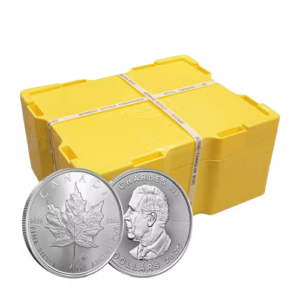
Sealed Royal Canadian Mint monster box with Canadian Silver Maple Leaf coins.
Source: Blanchard
Australian Kangaroo and Alternative Formats
The Perth Mint produces sealed cases of Silver Kangaroos, though their standard format contains 250 coins rather than 500. These coins feature annually changing kangaroo designs that add modest collectible appeal beyond pure bullion value. Pricing typically falls between American Eagles and Canadian Maple Leafs, creating a middle-tier option for buyers who value design variation. Other sovereign mints offer bulk silver formats, but liquidity and dealer acceptance vary considerably outside the three primary options.
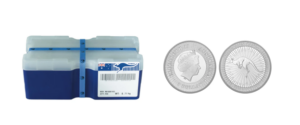
Perth Mint sealed case of Australian Silver Kangaroos with coin examples.
Source: Monster Box
Generic Silver Round Monster Boxes
Private mints package silver rounds in 500-piece cases that mirror the Silver Eagle monster box format without government backing. These cases deliver the lowest per-ounce cost among bulk options, often trading substantially below government-issued alternatives. The trade-off is reduced liquidity: dealers typically offer lower buyback premiums on private mint products compared to sovereign coins. For investors prioritizing maximum silver accumulation over resale flexibility, generic round boxes provide the most efficient metal-per-dollar ratio available in bulk format.
Gold Monster Boxes
Monster box packaging extends beyond silver into gold bullion, although the significantly higher per-ounce value introduces different storage, insurance, and liquidity considerations.
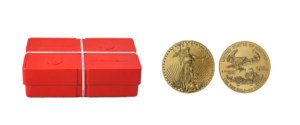
U.S. Mint monster box of fractional Gold Eagles in red sealed case.
Source: Monster Box
American Gold Eagle Monster Boxes
The U.S. Mint packages certain fractional Gold Eagle denominations (most commonly the 1/10-ounce coin) in 500-coin sealed cases. A full 1/10-ounce case represents 50 troy ounces of gold, with total values dependent on prevailing gold prices and often reaching six figures. These bulk formats are typically used by institutional buyers and high-net-worth investors seeking divisible gold positions rather than one-ounce units.
While fractional Gold Eagles carry higher premiums per ounce compared to larger denominations, they provide greater flexibility for staged liquidation.
Gold Maple Leaf Boxes
A Canadian Maple Leaf gold monster box containing 500 one-ounce coins represents 500 troy ounces of gold, with total case values frequently exceeding one million dollars at current market levels. Transactions of this scale generally involve institutional capital, professional vault storage, and specialized insurance arrangements.
Certain allocated storage programs and large-scale bullion operations utilize sealed mint cases for authentication consistency, inventory standardization, and audit efficiency.
Storage and Security
Because an American Eagle monster box concentrates 500 ounces of silver into a single sealed case, storage and insurance planning should be addressed before purchase rather than after delivery.
Home Storage Requirements
A sealed monster box weighs roughly 37 pounds and occupies a footprint of roughly 15″ x 9″ x 5″. Proper storage therefore requires more than simple concealment: it demands a safe rated for both weight capacity and structural support. Placement should account for flooring strength, particularly in elevated residential settings.
Fire resistance also deserves scrutiny. Safe ratings specify internal temperature thresholds and time exposure limits, which may not fully preserve contents during prolonged high-heat events. Since a single case can represent substantial concentrated value, layered security (i.e. alarm systems, controlled access, and discretion about holdings) is essential to mitigate theft risk.
Insurance Considerations
Insurance coverage is frequently overlooked. Standard homeowner policies often exclude precious metals or impose low coverage caps that fall well below the value of a monster box of silver. Investors storing bullion at home typically require dedicated riders or standalone policies, supported by documentation such as purchase invoices and photographic records. Premium costs vary depending on declared value and demonstrated security measures.
Professional Vault Storage
For larger holdings, professional vault storage offers structural and insurance advantages. Allocated storage assigns specific inventory to individual accounts under segregated custody, with insurance coverage commonly included in storage fees. Vault facilities also provide controlled access for full withdrawal or partial liquidation, though breaking a sealed case permanently removes its unopened status.

Professional vault storage facility with secure door and climate-controlled environment.
Source: Bloomberg
Conclusion
Monster boxes represent one of the most cost-efficient methods for acquiring American Silver Eagles in substantial quantities. The sealed 500-coin format delivers wholesale-proximity pricing that reduces per-coin premiums compared to individual purchases while maintaining the core benefits of government-issued bullion: legal tender status, universal recognition, and mint-backed credibility.
This format is best suited to investors with multi-year holding intentions who prioritize premium savings over incremental purchase flexibility. Rather than serving as a universal solution, monster boxes function as a scale-driven strategy most effective when aligned with broader allocation goals and disciplined accumulation plans.
Explore Blanchard’s silver monster box for sale inventory to determine whether bulk purchasing aligns with your accumulation objectives.
FAQs
1. What is a monster box?
A monster box is the U.S. Mint’s standard bulk packaging format for American Silver Eagles, containing 500 one-ounce coins in a sealed case.
2. How many coins are in a monster box?
A standard monster box contains 500 Silver Eagles, organized into 25 tubes with 20 coins per tube.
3. How much does a monster box of silver weigh?
A full monster box weighs approximately 40 pounds including packaging and tube materials.
4. How much does a monster box of silver cost?
Silver monster box price fluctuates based on silver spot prices and dealer premiums. Because they are sold in bulk, they typically carry lower per-coin premiums than individual Silver Eagle purchases, though exact pricing depends on market conditions.