1936 Elgin Half Dollar
Posted on — 2 CommentsThe Elgin Illinois Centennial half dollar honors the founding pioneers of Elgin, Illinois located 30 miles west of Chicago. Founded in 1835, the area eventually became a village by 1847, then finally a city in 1854.
The first person to suggest commemorating the town was Trygve Rovelstad, the son of Norwegian immigrants in the U.S. As a sculptor, he decided that he would erect a statue in Elgin to remember the pioneers that settled the town. He eventually got approval from city officials and prepared a foundation for the statue in 1934. However, not long after, Rovelstad ran into financing problems and was unable to generate the money needed. Then he had an idea.
Rovelstad decided that he could raise the money through the issuance of a commemorative coin. In 1935, he arranged for a bill to be introduced to Congress authorizing a half dollar that would commemorate Elgin’s centennial. Again, Rovelstad ran into problems, as the bill was not considered.
That same year, Rovelstad met Lyman W. Hoffecker, a coin dealer from El Paso, Texas who had learned of the bill and took an immediate interest in the project. Hoffecker offered guidance on how to earn approval from Congress. Importantly, he also offered to handle the distribution of the coins. Determined to make these coins a reality, Hoffecker didn’t reveal to Rovelstad that he was a coin dealer and even warned him in a letter that “it would not be good for either of us if the word got out you had disposed of the entire issue to me.”
By the end of 1935, Hoffecker offered to pay the Elgin committee $12,000 and sell the coins for $2.00 each. He offered to advance the Mint the face value of the coins while also covering engraving and shipping charges.
The collaboration between Rovelstad and Hoffecker was finally enough to get the bill passed and signed by President Roosevelt in 1936. The mint quantity was set at 25,000 coins and would be paid for by the Elgin committee. The Philadelphia Mint handled the issuance and, by the end of 1936, they had struck all 25,000 pieces.
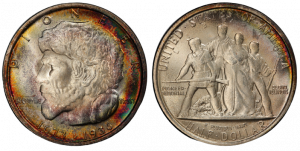
The obverse of the coin shows the profile of a pioneer and the reverse shows a group of four adult pioneers and a baby in its mother’s arms. The reverse image was, in fact, a bas relief of the model that Rovelstad originally intended for his statue. This image also appeared on the medal Rovelstad designed for Elgin’s centennial along with the words “to the men who have blazed the trails, who have conquered the soil, and who have built an empire in the land of the Illini.” The final design of the coin included “Elgin, Illinois” at the suggestion of Hoffecker.
As planned, Hoffecker sold the coins directly to collectors at the issue price rather than to speculators or dealers. Ultimately, he was able to sell about 20,000 of the total minting, with the remaining coins being returned to the Mint for melting.
In the end, Rovelstad was successful, though he did not live to see his final work. In 2001 his memorial was completed. It was all possible due to the popularity of the Elgin half dollar.
Want to read more? Subscribe to the Blanchard Newsletter and get our tales from the vault, our favorite stories from around the world and the latest tangible assets news delivered to your inbox weekly.
Gold and Silver Are Winners: Debt Ceiling Looms As another Catalyst to Keep Precious Metal Rally Going
Posted on — 1 CommentFrom bank failures to rising interest rates and still high inflation, investors around the globe are rushing into precious metals for safety, portfolio diversification, and as an asset to grow their wealth.
Gold is up 10% since the start of 2023 and recently raced above the $2,000 an ounce level. Silver is up 4% and looking ahead Wall Street remains positive on precious metals. Citigroup has a bullish forecast for gold climbing to the $2,300 ounce level in the near-term. And, a new forecast from a BofA Global Research report says a gold market close above $2,078 on both a daily and weekly basis “would go a long way in signaling significantly larger upside…such as $2,391/2,543.”
Shifting to the macroeconomic environment for a moment, some may wonder what could be the next catalyst for another upleg in gold?
Two words: Debt ceiling.
While the debt ceiling confrontation has fallen to the background in the wake of the banking system turmoil, it still has potential to trigger a new round of chaos in the financial markets.
Congressional leaders are bracing for a high-stakes standoff over raising the debt ceiling in the months ahead. Back in 2011, Congress took the nation to the brink of default with its in-fighting over raising the debt ceiling. Those political shenanigans were costly – the incident resulted in a Standard & Poor’s downgrade of U.S debt. Barron notes that that has meant the yield on U.S. Treasuries has consistently been one to two percentage points higher than German government bonds since that time.
What could this mean for gold in 2023?
The last time Congress held the debt ceiling hostage and took the U.S. to the brink of default was in August 2011 and gold soared to its then all-time high above $1,900, as global investors turned to the precious metal as a safe haven.
A debt ceiling standoff 2.0 in 2023 would open the door for another round of massive gold buying, as investors rush to the safety of precious metals, which are attached to no government debt or obligations like the U.S. dollar is.
What could happen if Congress doesn’t raise the debt ceiling and the U.S. defaults on its debt payments?
As we’ve talked about before, a Congressional failure to raise the debt limit would destroy the global market’s confidence in American Treasuries and the U.S. Dollar the reserve currency. It would trigger a recession in the U.S., causing millions of Americans to lose their jobs and the stock and bond markets would crash. Social Security checks would stop coming. Interest rates would soar because in order to continue funding the massive U.S. debt, America would be forced to pay extremely high rates of interest on new bonds because no one would trust Treasuries anymore.
This is a dark scenario indeed, and one that we hope our politicians will never create. It would be a self-induced economic crisis – perhaps one of the most serious that you have ever seen in your lifetime.
In the meantime, gold has become a favored asset of choice in 2023. It’s no surprise. Gold offers investors so many tangible benefits – including a physical asset they can own and hold in their hand. Gold has no counter-party risk and you can have access to physical metals you own at any time you like.
If the current economic environment has you questioning, it may be time to consider increasing your allocation to physical metals. Consider trading some of your U.S. dollars for gold. Investing in gold and silver offer you peace of mind in ownership of an asset that has served as a store of value for thousands of years – and can protect and grow your wealth today.
Want to read more? Subscribe to the Blanchard Newsletter and get our tales from the vault, our favorite stories from around the world and the latest tangible assets news delivered to your inbox weekly.
Gold Races above $2,000: Three Reasons It Can Keep Going Higher
Posted on — 1 CommentGold soared through the $2,000 level yesterday fueled by steady investor buying following weaker-than-expected economic reports and a big jump in crude oil prices. The early April OPEC announcement of a planned crude oil production cut triggered a 6% jump in oil prices to $80 per barrel. And, higher crude oil prices can boost the already high levels of inflation in the economy.
Investors turned to the safety of gold in recent weeks amid bank failures, concerns about recession, rising interest rates and still-high inflation. The shiny yellow metal soared 12% in the past month and has climbed 25% from its November low.
You may be wondering – can gold still climb higher? Citigroup says yes – with a near-term price forecast of $2,300, which would stand as a new all-time record high. The current record high for gold sits at $2,059.90, scored in 2020.
Here are three reasons gold can still climb higher from here.
The U.S. dollar slid to its lowest level since February this week. The dollar is in a downtrend, has been declining since its October 2022 peak and appears to have more to fall. The recent weak economic reports increased the odds that the Federal Reserve will need to pull back on additional aggressive interest rate hikes to fight inflation, ultimately meaning that the fed funds rate will peak out at a lower rate than previously expected.
Because gold is bought and sold in U.S. dollars on the world marketplace, an ounce of gold is worth more dollars when the greenback weakens. As the dollar weakens even more, it creates additional momentum for gold to climb higher.
2. Falling Bond Yields
Bond yields are falling, which increases the attractiveness of gold as a portfolio diversifier and safe haven asset. Two-year U.S. Treasury note yields slid from 5.1% last month to 3.8% this week.
3. Increased Risk Aversion
Investors worldwide have been spooked by the recent bank failures, worries about a U.S. recession, and high inflation that the Fed just can’t seem to get rid of. Gold has served as a store of value for thousands of years and in times of uncertainty, precious metals increase in value. As worries about systemic financial system risk grow, investors are moving assets into gold, which has no counter-party credit risk.
It’s not too late to buy gold. Precious metals are in an uptrend and have more room to run.
Want to read more? Subscribe to the Blanchard Newsletter and get our tales from the vault, our favorite stories from around the world and the latest tangible assets news delivered to your inbox weekly.
The Mercury Dime: Liberty of Thought
Posted on — Leave a commentThe Mercury dime, struck from 1916 to 1945, gets its unusual name from its depiction of a young Liberty. Her image on the obverse shows her wearing a winged Phrygian cap which gives her a look similar to that of the Roman god Mercury.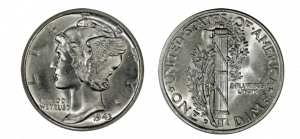
While the model used as inspiration for the design is unknown, many believe that Elsie Stevens, the wife of American poet Wallace Stevens, served as the basis for the image. The design is the work of German-born American sculptor Adolph Weinman. He was selected for the design work after winning a competition with two other sculptors. Though the imagery was well-received, minor modifications were required to get the coin to work with vending machines of the time. AT&T also warned officials that the original coins were too thick to work in their pay phones.
Weiman’s motivation for the famous winged cap was to express “liberty of thought”. Others suggest that Weiman crafted this design simply because he liked the look of feathers in relief. The reverse of the coin shows a fasces which is a bound bundle of wooden rods. Traditionally, this image is intended to represent a magistrate’s power and jurisdiction. Weiman’s intent was to use the image to represent war and justice.
The first Mercury dimes entered circulation in October 1916. The design received nearly universal praise. The mint continued to strike the coin until 1930 with a pause in 1922 due to an economic downturn.
Today, there are a few Mercury coin mintings that are particularly sought after. One example is the 1916-D issuance struck at the Denver Mint. Only 264,000 were minted because officials had to pause their minting when an unusually large order for quarters had to be fulfilled. This relatively low number of Mercury coins makes that particular issuance somewhat rare.
Another unusual minting is the 1942/41 overdate which is a double die error. The obverse die used had one impression from a 1942 hub and one from a 1941 hub. As a result, the date 1942 on the obverse also has a “1” appearing over the “2.” The error is easy to spot as the date appears to have five digits instead of four.
The 1945-S variety is also an outlier. The coin has an abnormally small mint mark. This error was the result of the mint having to resort to different equipment stemming from wartime resource demands.
The rarest Mercury dimes were those that were flown into space aboard the Mercury-Redstone 4 sub-orbital mission on July 21, 1961. This was the second US human space flight. The coins ultimately sank with the capsule in the Atlantic Ocean but were recovered from the ocean floor in 1999.
The US Mint also released a gold 2016 centennial version of the Mercury dime. The coin was so popular that they were sold out within 45 minutes of its release.
Today, the coins are still appreciated for their unique design and unusual journey into space and into the depths of the ocean.
Want to read more? Subscribe to the Blanchard Newsletter and get our tales from the vault, our favorite stories from around the world and the latest tangible assets news delivered to your inbox weekly.
Call Option Volume Offers Clues us About Future Gold Prices
Posted on — Leave a commentGold prices have been rising. Since the end of the third quarter of 2022, gold is up about 18% and reached a 12-month high in the last week. Many investors think it will rise even further.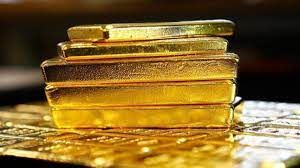
How do we know this? We know because the 5-day rolling trading volume of call options on the SPDR Gold Trust has risen more than five-fold in recent weeks. In fact, these inflows into bullish call options on gold have reached near-record levels.
Investors purchase call options when they believe the value of an asset will rise. The call option contract gives them the right, but not the obligation, to purchase an asset – in this case, gold – at a fixed price. In contrast, a put option gives the contract holder the right to sell an asset at a fixed price. Recent data shows that the ratio of calls to puts on gold prices has increased dramatically indicating that the market believes gold has even more room to rise.
Investors appear so bullish that they have increased their purchase of “out of the money” options. These are contracts that give them the right to buy gold at a price that is above the current market price. Clearly, investors believe that buying gold above the market value is an investment that will pay off.
It’s likely that this optimistic outlook is being fueled by SVB’s collapse and troubles in the banking industry. These developments have led many to question if their bank has the capital to fund withdrawals. The spot price of gold made a steep ascent after the news of SVB’s demise. As other banks faltered, both in the US and abroad, many account holders lost faith in their banks. Gold is giving these individuals an alternative because it is an asset that is recognized the world over.
Importantly, it is also an asset that, when held in physical form, is free of counterparty risk which is the risk that other parties involved in a financial transaction will not fulfill their obligations.
These recent bank failures have surfaced uncomfortable memories of the 2008 global financial crisis even though the two scenarios have many differences. However, despite those differences, many investors appear more vigilant today and more eager to act quickly and decisively by moving more assets into gold.
This decisiveness is seen in the increase of gold buying activity not only in options contracts, but also futures contracts, and exchange-traded funds. As Akash Doshi, head of commodities for North America at Citigroup, recently remarked, “it has been pretty much one-directional buying.”
This trend is likely to continue as Fed rate increases continue to weigh on the equities market and as new regulations emerge to deal with excessive risk-taking among banks.
Want to read more? Subscribe to the Blanchard Newsletter and get our tales from the vault, our favorite stories from around the world, and the latest tangible assets news delivered to your inbox weekly.
Gold Soars As Bank Failures Spark Worries of Larger Crisis
Posted on — Leave a commentIn a span of 10 days in mid-March, gold surged 9.8% higher as investors parked cash in the safety of precious metals. A loss of confidence in the banking sector is spreading following the nation’s second and third-largest bank failures. While the Federal Reserve pumped $300 billion in credits to banks in mid-March, investors and depositors remain skittish – and gold is shining bright in its role as a safe haven.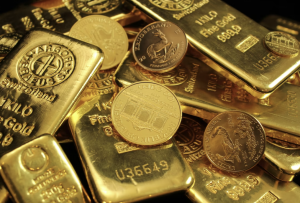
As you know, on March 10 and March 12, Silicon Valley Bank in Santa Clara, CA, and then Signature Bank in New York NY failed – meaning they shut their doors permanently and depositors could no longer get their cash. What’s more, teetering First Republic Bank got a $30 billion bailout in the last few days from a deal between eleven giant banks.
Simply put, banks fail when they can no longer meet their obligations to their depositors or creditors.
What caused these 2023 bank failures? The recent spate of bank failures can be blamed on a number of factors including the Federal Reserve’s rapidly rising interest rate campaign, a collapse in technology stocks, and the blowout in the speculative cryptocurrency sector. Add in bad risk management by bank managers and you have bank failures.
What may come next? While we don’t have a crystal ball, Blackrock CEO Larry Fink’s recent insight on the banking turmoil is instructive:
“The price of easy money – are the dominoes starting to fall?”
The Fed took away the easy money punch bowl and look what happened.
Every day Americans, businesses big and small, and even governments are trying to adjust to the end of the easy money, zero-interest rate punch bowl that the Fed left out on the table far too long.
Since the 2008 global financial crisis, the Fed kept interest rates at abnormally and historically low levels for over a decade. With those ultra-low, near-zero interest rates, the Fed lit the match of the inflation that has now turned into a raging fire that even the most powerful fire engines aren’t able to douse.
Money managers are warning: This isn’t the end of the financial sector instability, it may be just the beginning.
Gold is insurance for your wealth
The current spate of big bank failures are a reminder of how important it is to take risk management seriously.
When you buy a home, you buy home insurance to protect your dwelling in case of storm damage, theft, or fire. When you buy a car, you buy car insurance to protect against an accident that wrecks your new vehicle. As you build your wealth and work toward your financial goals, investing in precious metals offers you the same ability to buy insurance and protect your wealth.
As we’ve seen in mid-March when banks collapse and the stock market sinks, the price of gold climbs. Precious metals ownership gives you the opportunity not only to protect but to grow your wealth with the safety of gold and silver. Do you own enough?
Want to read more? Subscribe to the Blanchard Newsletter and get our tales from the vault, our favorite stories from around the world, and the latest tangible assets news delivered to your inbox weekly.
State of the Economy and Gold: American’s Credit Card Debt Hits All-Time High
Posted on — Leave a commentJust charge it. As high inflation squeezes consumers at the checkout line, credit card debt just hit an all-time record high at $986 billion, according to the New York Reserve Bank. Americans are drowning in credit card debt as everyday necessities like housing costs, food and interest rates on anything borrowed remain uncomfortably high. In the meantime, total U.S. household debt surged to a record $16.9 trillion during the fourth quarter, a jump of 2.4% from the prior three-month period.
Why is this happening? Interest rates sit at their highest levels in 15 years, inflation is off it’s 40-year high, but still elevated and wages just aren’t keeping up. Americans have gone through their pandemic savings accounts – boosted by government stimulus payments – and are now turning to their credit cards to make ends meet.
What this means for gold: The rising debt levels on the consumer front reveal cash-strapped spending. Overall consumer spending will suffer in 2023 as high prices and high-interest rates and mass layoffs derail spending plans. Gold tends to increase in value during slowing economic periods and slower consumer spending means slower economic growth. Remember, consumer spending makes up two-thirds of the American GDP.
Stock market earnings reports disappoint
As fourth quarter earnings season nears its end, overall company reports were grim. From Apple, Amazon and Google to Home Depot and Domino’s Pizza – companies reported worse than expected fourth quarter earnings in recent weeks. What’s worse? Looking ahead to full-year 2023 estimates, company results could be the worst in over 20 years according to a new UBS forecast. The firm expects companies to continue to downgrade their earnings forecasts in 2023 amid weak growth and cost pressures on top of recession risk.
UBS economists expect a U.S. recession between the second and fourth quarters of this year, leaving aggregate S&P 500 earnings per share about 11% lower, MarketWatch reported.
What this means for gold: While the stock market posted a minor recovery in early 2023, following 2022’s double digit losses, weaker-than-expected earnings will pull the stock market down again later this year. Look for renewed stock market weakness to support additional gains in gold in the second and third quarters as investors seek diversification and safety from volatility.
Fed nearing the end of its interest rate hikes
The Federal Reserve is widely expected to raise interest rates again at its March meeting. From there all bets are off on future interest rate hikes. With signs that aggressive rate hikes throughout 2022 are taking a toll on consumers and the economy, the Fed may be forced to stand back from additional interest rate increases.
What this means for gold: This is positive for gold and could propel the yellow metal above the $2,000 mark, Wayne Gordon of UBS Global Wealth Management told CNBC earlier this month. He said the Federal Reserve is going to pause after its next interest rate increase and gold will continue to be a “very good hedge” against renewed weakness in the U.S. dollar.
If you have questions about the state of the economy or would like to discuss how you can protect your wealth in the current environment, talk to a Blanchard portfolio manager today. We have been helping clients grow and preserve their wealth through diversification into tangible assets since 1975 and we can help you too
Want to read more? Subscribe to the Blanchard Newsletter and get our tales from the vault, our favorite stories from around the world and the latest tangible assets news delivered to your inbox weekly.
The Transition from Large Cent to Small Cent: The 1856 Flying Eagle
Posted on — Leave a commentThe 1856 Flying Eagle Cent holds a unique place in the annals of American numismatic history. As the first small-sized cent in U.S. coinage, it marked a significant departure from the larger, copper-based coins that came before it. The Flying Eagle Cent was minted for only a short period, from 1856 to 1858, making it a rare and sought-after coin for collectors. This article will explore the design, history, and significance of the 1856 Flying Eagle Cent.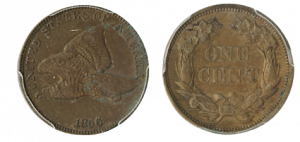
Designed by James B. Longacre, the Chief Engraver of the United States Mint, the Flying Eagle Cent featured an obverse with a striking image of an eagle in flight, surrounded by 13 stars to represent the original colonies. The reverse depicted a simple wreath enclosing the denomination “ONE CENT” and the inscription “UNITED STATES OF AMERICA.”
Prior to the introduction of the Flying Eagle Cent, the United States had relied on large copper cents, which had been in circulation since 1793. However, by the 1850s, the price of copper had risen, making the production of large cents economically unfeasible. Moreover, the large size and weight of these coins were increasingly unpopular among the public.
In response to these challenges, the U.S. Mint sought to create a new, smaller cent. The Coinage Act of 1857 authorized the production of the small-sized cent, and the Flying Eagle design was chosen. The 1856 Flying Eagle Cent was initially produced as a pattern coin, with only a limited number minted for government officials and dignitaries to review. Estimates suggest that approximately 1,500 to 2,000 coins were struck with the 1856 date.
Due to the positive response to the new design, the Flying Eagle Cent went into full-scale production in 1857. Despite its brief run, the coin played a crucial role in American numismatic history, as it set the stage for the Indian Head Cent, which followed in 1859, and the eventual introduction of the Lincoln Cent in 1909.
The 1856 Flying Eagle Cent is a highly desirable coin for collectors due to its historical significance and rarity. The limited number of coins minted and the fact that it was a pattern coin make it a valuable addition to any numismatic collection.
Coins in higher grades are particularly rare, and their value can range from several thousand dollars to over $20,000, depending on the condition. Even in lower grades, the 1856 Flying Eagle Cent can command a premium due to its status as the first small-sized cent in U.S. history.
Want to read more? Subscribe to the Blanchard Newsletter and get our tales from the vault, our favorite stories from around the world and the latest tangible assets news delivered to your inbox weekly.
Why the Shield Nickel Earned an Important Place in Numismatic History
Posted on — Leave a commentAt the start of the Civil War, the United States government halted specie payments – or the mechanism by which citizens could turn in their paper money and redeem it for gold or silver. This led to widespread hoarding of gold and silver coins during the war and these coins disappeared from circulation.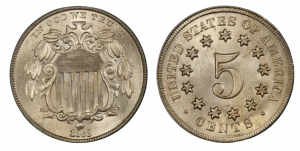
In order to alleviate this crisis, Congress authorized the creation of five-cent coins made of a 75% copper-25% nickel blend.
Today known as the Shield Nickel – this prized coin marks the point in history when 5-cent coins stopped being minted as small silver disks and became the base metals coins they still are today.
The Shield Nickel was issued from 1866 through 1883 – and the series boasts two proof-only years (1877 and 1878). The Shield Nickel proofs can indeed be elusive for collectors to find and these years stand as one of the great classic rarities among the late 19th-century proof coins.
Mint Engraver James Barton Longacre designed the new nickel. The obverse features a large shield with arrows intertwined at its base. A lovely wreath hangs over the shield with a cross at the top. The date is marked at the bottom with the motto IN GOD WE TRUST in small letters around the top. On the coin’s reverse, a large numeral 5 is the feature, surrounded by 13 small stars and 13 glory rays as well. At the top reads the UNITED STATES OF AMERICA with the word CENTS at the bottom.
Mint officials discovered the hard way that the inclusion of the rays on the reverse was problematic due to the combination of metals. The copper and nickel together created a very hard planchet that was difficult to fully strike with the intended designs. To correct this problem, mint officials ordered the removal of the rays in mid-1867, creating two varieties: With Rays and No Rays. However, striking problems persisted, resulting in a series of coins noted for inconsistent strikes and die cracks.
For collectors interested in building a series of Shield Nickels, circulated coins and those in lower Mint State grades are relatively easy to obtain. However, gems are rare and the survivor rate for all years falls dramatically above the MS 66 level. The early mintages are fairly large, yet the series boasts tiny mintages as well which creates intrigue around building a complete set.
Is it an everlasting contribution to our nation’s coinage? Today, the Shield Nickel is the reason we refer to five-cent coins as nickels.
Want to read more? Subscribe to the Blanchard Newsletter and get our tales from the vault, our favorite stories from around the world and the latest tangible assets news delivered to your inbox weekly
How to Get a Coin Graded
Posted on — 34 CommentsEver wondered what your grandfather’s coin is worth? Inherited an interesting old coin collection? New to the numismatic world? Not to worry, coin grading is a process that involves several steps, but it’s fairly straightforward. With a lot of online resources, anyone can do it. And, of course, there’s also an app for that.
What Is Coin Grading?
First, what is coin grading? Grading is an industry term for determining the physical condition of a coin. As PCGS explains:
“Grading is a way of determining the physical condition of a coin. Grades range from Poor (almost completely worn out) to Perfect Uncirculated (a coin with absolutely no wear and no flaws of any kind). Over 99.9% of all coins fall somewhere between these two extremes.”
Uncirculated coins can also be referred to using another industry term, Mint State. That’s because they were carefully and properly stored since the moment they were minted. If the coin has been circulated for a short time but still looks new it’s graded as About Uncirculated.
Why You Want to Grade Your Coin
It’s simple: If you want to know how much the coin is worth you need to get it graded. Coin grading and authentication emerged as a solution to rampant counterfeiting and coin doctoring in the collectible coin industry. Depending on the type of coin, minute differences in grade can sometimes mean thousands of dollars difference in a coin’s market value.
A Word About the Sheldon Grading Scale
Until notable numismatist, Dr. William H. Sheldon, developed what is referred to as the Sheldon Scale in 1949, there were no industry standards for evaluating coins. What looked great to one dealer another would describe (and therefore the coin’s value) very differently.
The Sheldon grading scale determines the condition of a coin based on a 70-point system. Why 70 and not 100? We are not sure. Apparently, to Dr. Sheldon, a coin that received a “70” would be worth 70 times as much as a coin that received a “1.” Regardless, this grading system became the industry standard all reputable third-party coin certification companies use.
The ANA Grading Standards
The American Numismatic Association (ANA) also bases its coin grading standards largely on the Sheldon Scale but includes the addition of a clearly defined description of each numerical grade. Here’s a quick list of coin grades:
- Proof – (PF/PR): A specially made coin distinguished by sharpness of detail, minted primarily for collectors and not released for general circulation.
- Mint State (MS): A term interchangeably used with Uncirculated (UNC) to describe the coin without any trace of wear.
- Perfect Uncirculated (MS-70): The coin is in new condition showing no trace of wear. Very few regular-issue coins are ever found in this condition.
- Gem Uncirculated (MS-65 to MS-69): Very few signs of wear and contact marks.
- Choice Uncirculated (MS-63 to MS-64): Similar to GU above, but a grade lower, maybe lightly toned, with a few contact marks.
- Uncirculated (MS-60 to MS-62): No wear but has contact marks and maybe some spotting.
- Choice About Uncirculated (AU-55 TO AU-58): Light wear, but still in very good condition.
- About Uncirculated (AU-50 TO AU-53): Light wear, some luster remains.
- Choice Extremely Fine (XF-45 or EF-45): Light wear shows, but details are still clear. Minor mint luster is present.
- Extremely Fine (XF-40 or EF-40): The design is lightly worn throughout, but all features are clear and well-defined. Traces of luster may show.
- Choice Very Fine (VF-30 to VF-35): Light wear throughout, major features including lettering still visible but not clearly.
- Very Fine (VF-20 top VF-25): Moderate wear, major features including lettering still visible but not clearly.
- Fine (F-12 to F-15): Moderate to considerable even wear. The entire design is still visible but is worn.
- Very Good (VG-8 to VG-10): Well-worn with main features clear.
- Also Good (G-4 to G-6): Heavily worn, details not clearly visible.
- Also About Good (AG-3): Very heavily worn, with portions of the lettering, date, and legends worn smooth. The date is barely readable. Rims merge into the lettering.
- Fair (2): Most of the design details are worn completely smooth. Rims are flat or missing. May have serious nicks, dents, and defects.
- Poor (1): Only the basic coin type is identifiable. The date and mintmark must be strong enough to be readable. The entire surface is worn and may sport numerous blemishes.
The CGC Grading Scale
The Certified Guaranty Company (CGC) grading scale is another standardized system used to assess the condition and quality of coins. CGC is one of the leading independent grading services for coins, offering an unbiased and consistent method for determining a coin’s grade.
The scale ranges from 1 to 70, with each number corresponding to a specific level of preservation and visual appeal. Coins graded at the top of the scale, such as MS-70 or PR-70, are considered perfect, with no visible imperfections, while lower grades reflect varying degrees of wear, damage, or imperfections that have accumulated over time.
The CGC Grading Scale is divided into two primary categories: Mint State (MS) for uncirculated coins and Proof (PR) for specially minted coins with a higher level of detail. Mint State coins, such as MS-60 to MS-70, are further defined by their level of sharpness, luster, and the presence of any marks or abrasions. An MS-60 coin may show visible marks and wear, while an MS-70 will be flawless, often described as perfect.
On the other hand, Proof coins, which are struck using specially polished dies, range from PR-60 to PR-70, and their grade depends on their surface quality, design details, and overall appearance. A PR-70 coin is considered flawless, with sharp contrasts between the design and background fields.
Each grade on the CGC scale has its own detailed criteria, designed to ensure that coins are evaluated fairly and consistently. For example, a coin graded AU-50 (About Uncirculated) shows slight wear, usually on the high points of the design, while a coin graded VF-20 (Very Fine) will exhibit more noticeable wear, but its basic features will still be clearly visible. As the grade decreases, more wear and imperfections are present, with coins in Good (G-4) condition showing significant erosion of design details, but still identifiable as the original coin.
At first glance, the CGC and Sheldon grading scales may appear quite different due to their numerical ranges. The Sheldon Scale goes up to 70, while the CGC scale tops out at 10. However, when you look at the number of actual grades in use, the two systems are fairly similar. The CGC typically uses 25 grades, and the Sheldon Scale uses about 29, making them roughly comparable.
Why Grade Coins Professionally
If you are a coin collector, you can probably learn to grade your coins with some accuracy, but to get it authenticated, certified as genuine, and professionally graded requires the expertise and precision of experts.
With professional coin grading not only will you get peace of mind but the numeric grade assigned by experts will be recognized and accepted by dealers and collectors worldwide. Each coin is given a unique registration number which serves to catalog the coin at the grading service. It’s also sonically sealed in an archival acrylic holder to preserve its condition and permanently attest to its grade and its authenticity after grading.
Your Options for Coin Grading Services
The go-to in the industry are Professional Coin Grading Services (PCGS) and Numismatic Guaranty Company (NGC). They offer an unbiased appraisal of the condition or grade of each coin, which is accepted in the marketplace.
But there’s a new kid on the block. Certified Acceptance Corp (CAC) has refined their service, introducing CAC Grading.
This initiative started with an early launch in mid-June 2023, during which nearly 50,000 coins were certified. Grading was fully available by October 2023.
Previously, CAC was known for affixing green stickers to coins already graded by other services, indicating that the coin met their high standards. With the introduction of their own grading service, CAC now offers comprehensive authentication, grading, and encapsulation services. This move allows collectors and dealers to submit coins directly to CAC for evaluation, streamlining the process and potentially reducing costs associated with multiple submissions.
CAC will not be stickering coins any longer with their iconic green bubble. Instead, their new grading service adds more competition to the grading market, adding pressure to ensure that industry leaders maintain the standards collectors have come to expect.
How to ID a Coin: The DIY Approach
PCGS Photograde is a helpful tool to use when you want to identify your coin. It won’t give you the price, but it may help you get the necessary info for your submission form and avoid that pesky fee. We have used Photograde to drill down the images to ID our sample coin, and it was very easy. Turns out, we had an 1879 Morgan dollar MS65 on our hands (pictured, front and back). We found it on sale for $109.99 at the PCGS auction. Again, this is not grading, just identifying, and does not accurately reflect the condition or the value of the coin.
The Bottom Line
Three major factors determine the grade the coin will be awarded: how the coin was made, handled, and stored. The best-preserved coins tend to have the greatest value. You’ll want a professional to grade your coin, someone who can authenticate your coin and whose expert opinion is accepted in the marketplace.
Want to read more? Subscribe to the Blanchard Newsletter and get our tales from the vault, our favorite stories from around the world, and the latest tangible assets news delivered to your inbox weekly.