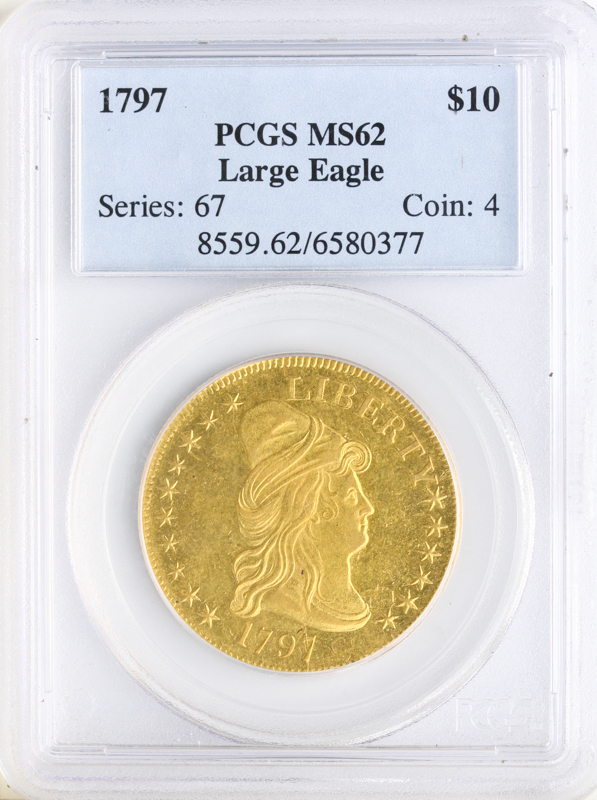
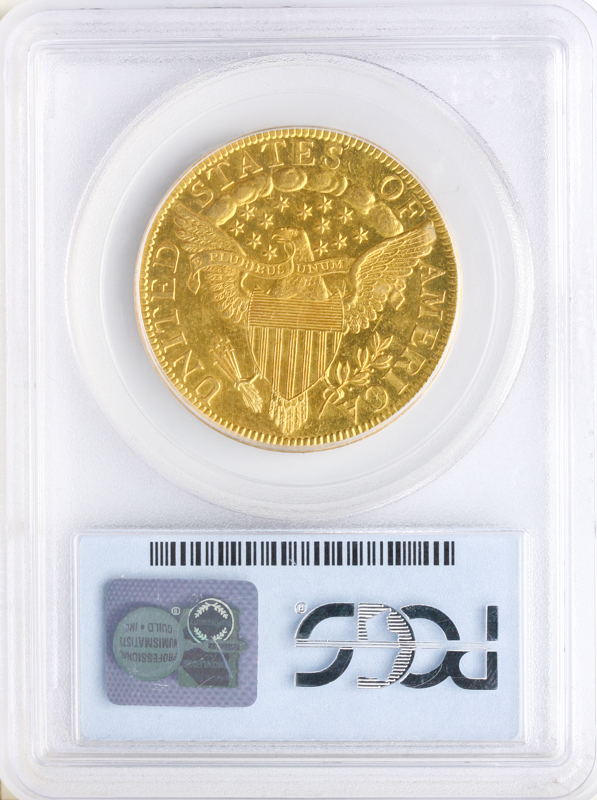
1797 $10 Draped Bust Large Eagle PCGS MS62
.
Blanchard prides itself on sourcing the highest quality numismatics available anywhere. If there is a coin that you are searching for, contact us today. Learn more
2026/09/01
ordered just once before and i loved the quality of all the coins i recieved
2026/09/01
Very easy to manage purchasing coins.
2026/08/31
Great place
2026/08/30
Ok experience so far good price, will update upon arrival
2026/08/28
Love doing business with Blanchard
2026/08/28
Pretty easy and seamless
Introduction
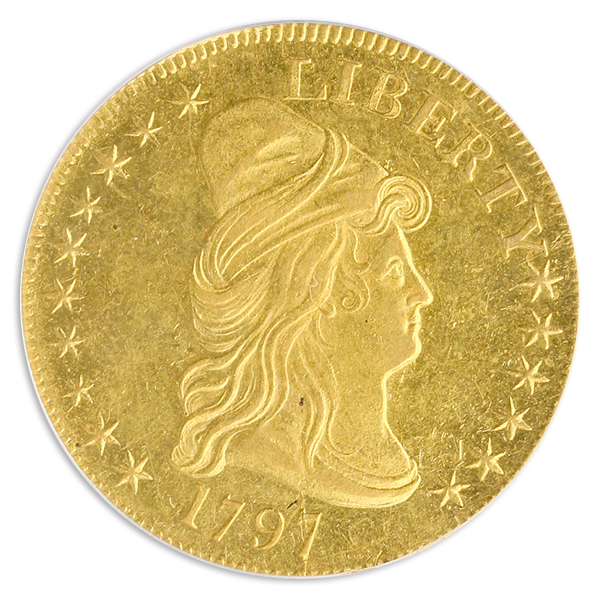
The 1797 $10 Draped Bust Large Eagle Gold Eagle graded PCGS MS62 is an exceptional survivor from the earliest years of United States gold coinage. Certified Mint State 62 by Professional Coin Grading Service (PCGS), this coin was struck just two years after the United States Mint first produced the $10 Eagle, then the highest denomination authorized for American coinage. As a first-year example of the Heraldic, or Large Eagle, reverse and one of only an estimated 200 to 250 survivors across all grades, it represents a significant rarity from the formative years of the federal Mint.
History
The Draped Bust Gold Eagle debuted in 1795 under the authority of the Coinage Act of 1792. Designed by Chief Engraver Robert Scot, the $10 Eagle represented the largest denomination in the young nation’s monetary system. Early production was modest, limited in part by the amount of gold brought to the Mint for coinage and a preference among depositors for the more convenient $5 Half Eagle.
The year 1797 marked an important transition for the denomination. Earlier Eagles featured a relatively small naturalistic eagle on the reverse, but during 1797 the Mint introduced a new heraldic design adapted from the Great Seal of the United States. Both Small Eagle and Large Eagle varieties were produced with the 1797 date, making the year a tangible dividing line between the first two major designs of America’s $10 gold coin. PCGS estimates that only about 200 to 250 examples of the 1797 Large Eagle survive today across all grades, with Mint State coins representing an especially small portion of that population.
Design
The obverse features Robert Scot’s Draped Bust portrait of Liberty facing right, her flowing hair tied with a ribbon and LIBERTY inscribed above. Sixteen stars surround the portrait, representing the sixteen states then in the Union, with the date positioned below. The practice of adding a star for each new state soon proved impractical, making these early star arrangements a fascinating record of the nation’s growth.
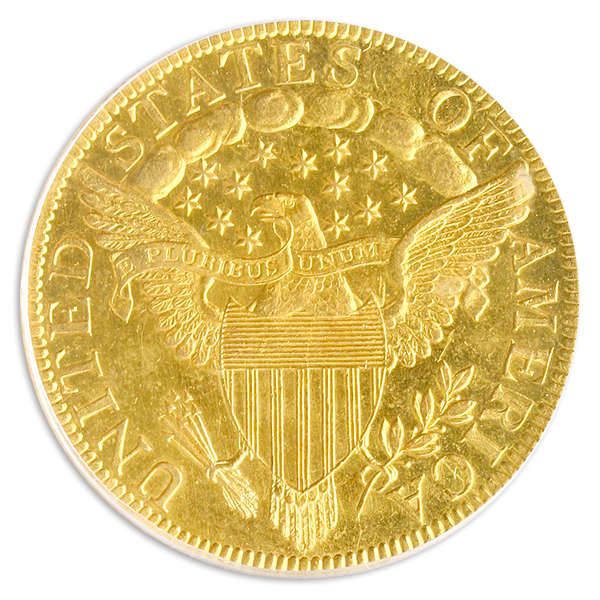
The reverse introduces the Heraldic, or Large Eagle, design adapted from the Great Seal of the United States. A bald eagle bears a Union shield across its breast while holding an olive branch and arrows in its talons. A ribbon inscribed E PLURIBUS UNUM appears near the eagle, with stars and clouds above and UNITED STATES OF AMERICA surrounding the design. More than two centuries later, the 1797 Large Eagle remains a remarkable artifact from a period when both the nation and its federal coinage were still taking shape.
| Year | 1797 |
|---|---|
| Metal | Gold |
| Grade | MS62 |
| Mint | Philadelphia |
| Weight | 0.4838 |
| Fineness | 0.9167 |
| Diameter | 33 mm |
Comparison Chart