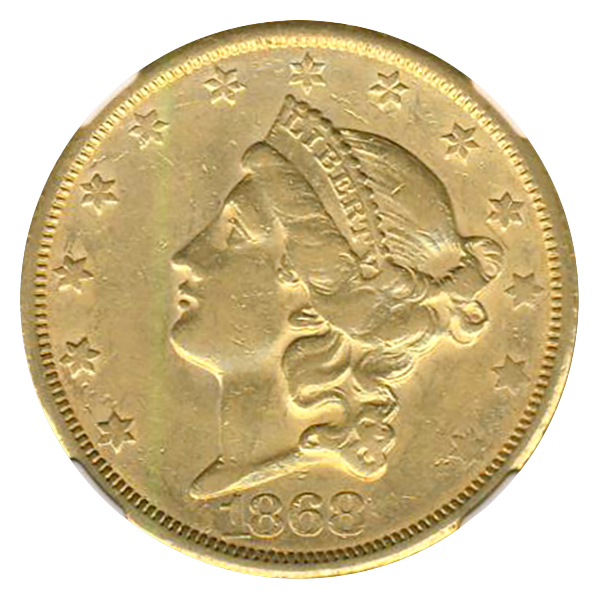
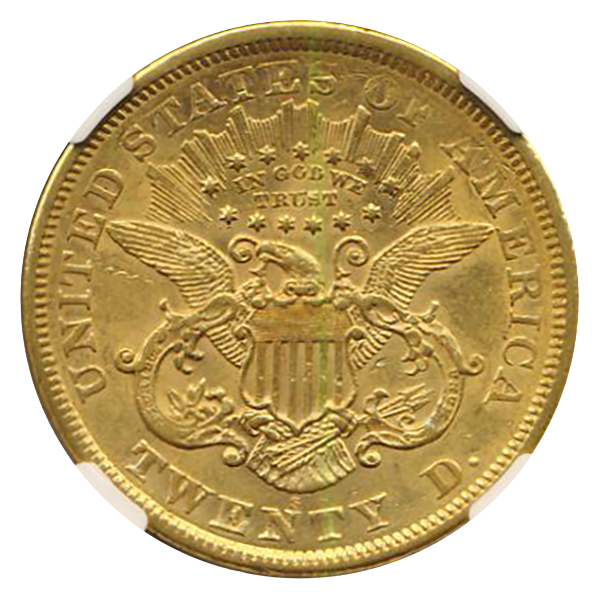
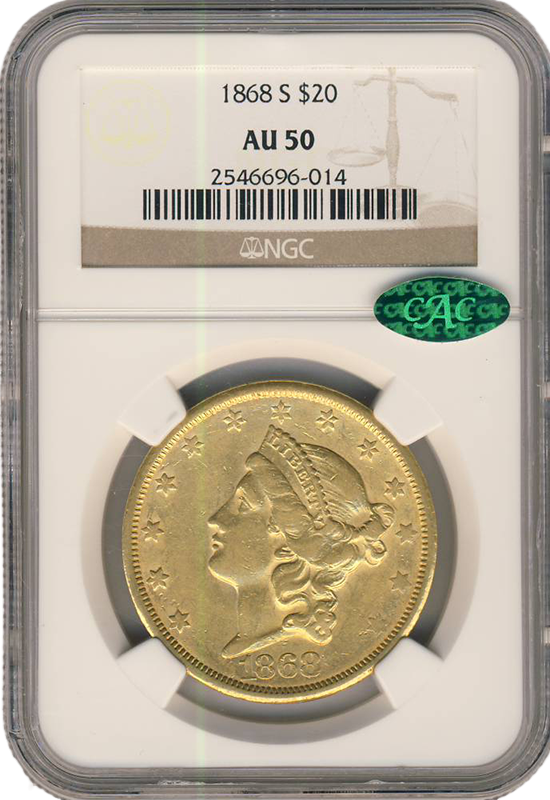
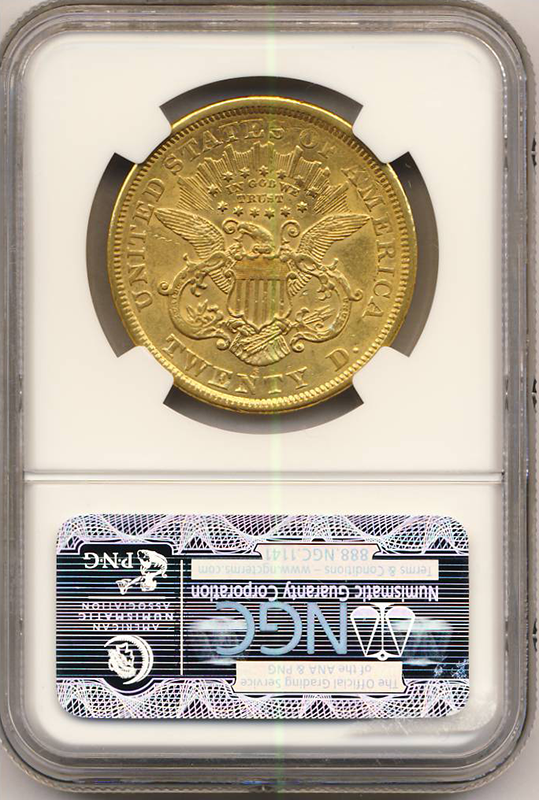
1868-S $20 Liberty NGC AU50 CAC


.
Blanchard prides itself on sourcing the highest quality numismatics available anywhere. If there is a coin that you are searching for, contact us today. Learn more
2026/08/31
Great place
2026/08/30
Ok experience so far good price, will update upon arrival
2026/08/28
Love doing business with Blanchard
2026/08/28
Pretty easy and seamless
2026/08/27
My order has been submitted, ask for my rating when you deliver what I have paid for
2026/08/27
First time buy here and it could not have gone smoother.
Introduction
The 1868-S $20 Liberty Gold Double Eagle graded NGC AU50 CAC is a well-preserved circulated example of classic nineteenth-century United States gold coinage. Certified About Uncirculated 50 by Numismatic Guaranty Company (NGC) and approved by Certified Acceptance Corporation (CAC), this San Francisco Mint issue retains substantial design detail while reflecting an era when gold coinage played an important role in American commerce and finance. Containing approximately .9675 troy ounces of pure gold, the 1868-S Double Eagle combines substantial precious metal content, branch-mint history, and numismatic appeal.
History
The Liberty Head Double Eagle was introduced in 1850 following the California Gold Rush, which dramatically increased the nation's gold supply and created the need for a larger gold denomination. Designed by U.S. Mint Chief Engraver James B. Longacre, the $20 Double Eagle provided an efficient way to convert newly mined gold into federal coinage and became an important instrument in banking, large commercial transactions, and international trade.
The San Francisco Mint struck 837,500 Double Eagles in 1868. By this period, the San Francisco facility played an important role in converting gold from the western United States into federal coinage. The 1868-S belongs to the Type II Liberty Head Double Eagle design, distinguished by the addition of IN GOD WE TRUST and the denomination TWENTY D. on the reverse. Produced during Reconstruction, the 1868-S offers collectors a tangible connection to an important period of economic and political transition in American history. Graded NGC AU50 with CAC approval, this example combines About Uncirculated preservation with the added appeal of a historic San Francisco Mint issue.
Design
The obverse features James B. Longacre's left-facing portrait of Liberty wearing a coronet inscribed with LIBERTY. Thirteen stars representing the original states surround the portrait, while the date 1868 appears below. Longacre's classical design established a distinctive identity for the nation's largest circulating gold denomination.
The reverse depicts a heraldic eagle with a shield across its breast, holding an olive branch and arrows in its talons. An ornate arrangement of rays, stars, and scrollwork surrounds the eagle, with IN GOD WE TRUST appearing within the oval of stars above. The inscriptions UNITED STATES OF AMERICA and TWENTY D. identify the issuing nation and denomination, while the S mintmark denotes production at the San Francisco Mint.
| Year | 1868 |
|---|---|
| Metal | Gold |
| Grade | AU50 |
| Mint | San Francisco |
| Weight | 0.9675 |
| Fineness | .900 |
| Diameter | 34mm |
A LITTLE STICKER MAKES A BIG DIFFERENCE.
Within each number of the coin grading scale is a small range of condition from low-end to high-end. Certified coins of the same grade can be of varying quality. Many of today’s collectors want coins that are solid or premium quality for their assigned grade. CAC holds coins to a higher standard so you can be confident in the value of yours. We verify previously graded coins … and award our sticker only to those coins that meet the standard for today’s selective buyer.
WHAT THE CAC STICKER MEANS:
- Verified. Your coin has been verified as meeting the standard for strict quality within its grade.
- Guaranteed. CAC stands behind our verification.
THE CAC STICKER IS BACKED BY EXPERIENCE.
CAC was founded by leading members of the numismatic community, including John Albanese, a respected authority on coin grading and the rare coin market.
Comparison Chart